
Nexo Earn with Nexo
Trump to hold Situation Room meeting on military options against Iran

Trump to hold Situation Room meeting on military options against Iran

The US and Israel are reportedly preparing military strike options against Iran, with a critical meeting scheduled for Tuesday that could reshape geopolitical risk across global markets.

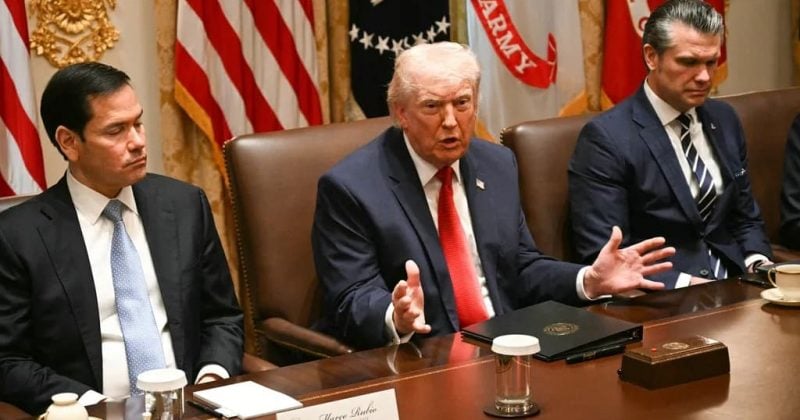
Donald Trump is set to convene a Situation Room meeting on Tuesday to discuss military options against Iran, with the US and Israel reportedly preparing strike plans that could be authorized in the near term. The meeting comes amid an escalating standoff over the Strait of Hormuz, one of the world’s most critical oil chokepoints, where Tehran has been accused of imposing a de facto blockade.

What’s on the table

Military planners have been considering high-impact options that go well beyond symbolic gestures. Among the scenarios reportedly under discussion: seizing Kharg Island, Iran’s primary oil export terminal, and targeting Iranian military assets that threaten free passage through the Strait of Hormuz.

This isn’t the first Situation Room session on the topic either. Trump has convened multiple meetings focused on Iran from April through May 2026, driven by what the administration has characterized as a Strait of Hormuz “crisis” and a ceasefire that has effectively stalled.

Advertisement

US domestic law requires congressional approval to continue military operations beyond 60 days from February 28, 2026, the date marked as the onset of the current hostilities. That clock is ticking, which explains the urgency behind Tuesday’s meeting.

The internal dynamics of the administration appear more complicated than the public rhetoric suggests. Trump has reportedly been described as a paradoxical obstacle to escalation, despite his bellicose language regarding Iran.

The crypto angle: war drums and digital gold

Historical patterns from prior US-Iran confrontations support this playbook. During previous escalations, BTC has tended to rise amid geopolitical fears, reinforcing its narrative as a store of value when the world feels less stable. The January 2020 Soleimani strike is perhaps the most cited example, when Bitcoin jumped in the immediate aftermath as investors rotated into assets perceived as uncorrelated to traditional geopolitical risk.

Crypto markets have also shown vulnerability to broader risk-off selloffs during sustained geopolitical crises, particularly when liquidity dries up across all asset classes. The initial move tends to be bullish for BTC. The follow-through depends entirely on whether tensions escalate into actual sustained conflict or resolve through diplomacy.

Why this is different from past saber-rattling

The Strait of Hormuz dimension makes this situation uniquely impactful for global markets. Roughly 20% of the world’s oil passes through that narrow waterway. Any disruption, whether from Iranian military action or from a US operation to break a blockade, sends immediate shockwaves through energy prices.

The 60-day congressional authorization window creates an artificial deadline that could force action. If the administration believes it needs to act before requiring formal congressional approval, the timeline for potential strikes compresses significantly.

Disclosure: This article was edited by Editorial Team. For more information on how we create and review content, see our Editorial Policy.

Trump to hold Situation Room meeting on military options against Iran

Trump to hold Situation Room meeting on military options against Iran

The US and Israel are reportedly preparing military strike options against Iran, with a critical meeting scheduled for Tuesday that could reshape geopolitical risk across global markets.

Donald Trump is set to convene a Situation Room meeting on Tuesday to discuss military options against Iran, with the US and Israel reportedly preparing strike plans that could be authorized in the near term. The meeting comes amid an escalating standoff over the Strait of Hormuz, one of the world’s most critical oil chokepoints, where Tehran has been accused of imposing a de facto blockade.

What’s on the table

Military planners have been considering high-impact options that go well beyond symbolic gestures. Among the scenarios reportedly under discussion: seizing Kharg Island, Iran’s primary oil export terminal, and targeting Iranian military assets that threaten free passage through the Strait of Hormuz.

This isn’t the first Situation Room session on the topic either. Trump has convened multiple meetings focused on Iran from April through May 2026, driven by what the administration has characterized as a Strait of Hormuz “crisis” and a ceasefire that has effectively stalled.

Advertisement

US domestic law requires congressional approval to continue military operations beyond 60 days from February 28, 2026, the date marked as the onset of the current hostilities. That clock is ticking, which explains the urgency behind Tuesday’s meeting.

The internal dynamics of the administration appear more complicated than the public rhetoric suggests. Trump has reportedly been described as a paradoxical obstacle to escalation, despite his bellicose language regarding Iran.

The crypto angle: war drums and digital gold

Historical patterns from prior US-Iran confrontations support this playbook. During previous escalations, BTC has tended to rise amid geopolitical fears, reinforcing its narrative as a store of value when the world feels less stable. The January 2020 Soleimani strike is perhaps the most cited example, when Bitcoin jumped in the immediate aftermath as investors rotated into assets perceived as uncorrelated to traditional geopolitical risk.

Crypto markets have also shown vulnerability to broader risk-off selloffs during sustained geopolitical crises, particularly when liquidity dries up across all asset classes. The initial move tends to be bullish for BTC. The follow-through depends entirely on whether tensions escalate into actual sustained conflict or resolve through diplomacy.

Why this is different from past saber-rattling

The Strait of Hormuz dimension makes this situation uniquely impactful for global markets. Roughly 20% of the world’s oil passes through that narrow waterway. Any disruption, whether from Iranian military action or from a US operation to break a blockade, sends immediate shockwaves through energy prices.

The 60-day congressional authorization window creates an artificial deadline that could force action. If the administration believes it needs to act before requiring formal congressional approval, the timeline for potential strikes compresses significantly.

Disclosure: This article was edited by Editorial Team. For more information on how we create and review content, see our Editorial Policy.