
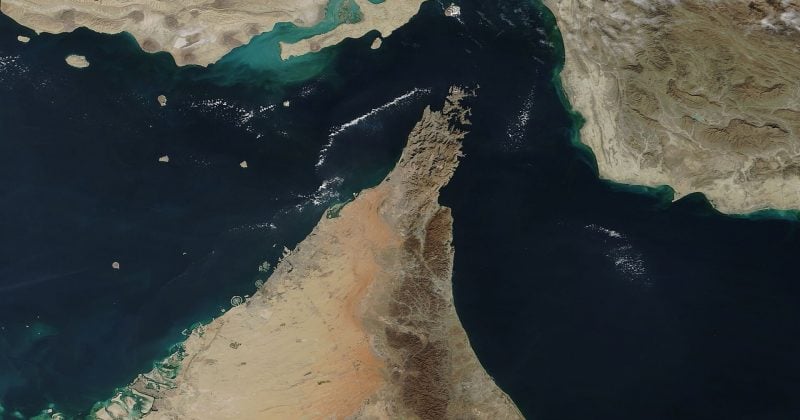
Trump proposes 20% charge on cargo passing through Strait of Hormuz, risking global energy price shock
The proposal would levy a percentage of commercial cargo value on ships transiting the world's most critical oil chokepoint, potentially violating international maritime law and rattling energy markets.
Donald Trump has proposed imposing a 20% charge on the commercial value of all cargo passing through the Strait of Hormuz, the narrow waterway between Iran and Oman that handles roughly 20% of the world’s oil supply.
The proposal is difficult to categorize as conventional energy policy. Analysts have pointed out it would likely violate foundational principles of the UN Convention on the Law of the Sea, which guarantees freedom of navigation through international straits. It would also raise energy costs across the board, an outcome that cuts directly against the stated goal of restoring stability.
What this would actually mean for energy markets
A 20% levy on the commercial value of that cargo would represent a staggering cost increase for energy transport. Those costs would ripple through global supply chains, showing up in higher prices for crude oil, natural gas, refined fuels, and ultimately consumer goods.
The unintended climate policy
Several analysts have noted that a 20% cargo charge on Hormuz transit could accelerate the global energy transition. If fossil fuel transport costs spike dramatically, alternative energy sources become comparatively cheaper. Solar, wind, nuclear, and battery storage all become more attractive on a relative cost basis when the logistics of moving oil and gas get significantly more expensive.
Legal and geopolitical complications
The UN Convention on the Law of the Sea establishes that ships of all nations enjoy the right of transit passage through straits used for international navigation. The Strait of Hormuz falls squarely into that category.
Macro, rates, and crypto—what moved markets and what matters next.
Daily. Free. Join 34,000+ readers across crypto, finance, and policy.
From a geopolitical standpoint, Gulf Cooperation Council nations that depend on unimpeded Hormuz transit for their economic survival would view this as hostile. Meanwhile, Iran, which shares the northern shore of the strait, would likely use any such measure as justification for its own disruptive actions in the waterway.
What this means for investors
Energy prices feed into mining costs for proof-of-work chains like Bitcoin, influence inflation expectations that drive Federal Reserve policy, and shape the broader risk appetite that determines whether capital flows into digital assets or retreats to safer harbors.
No direct connections between this proposal and specific blockchain or crypto projects have surfaced as of July 14, 2026. No related entities in shipping or energy sectors are currently linked to the proposal.