
Nexo Earn with Nexo
Trump swears in Kevin Warsh as Federal Reserve chair, marking a pro-crypto shift at the central bank

Trump swears in Kevin Warsh as Federal Reserve chair, marking a pro-crypto shift at the central bank

The youngest-ever Fed governor returns to lead the central bank with over $100 million in personal crypto holdings and a vision for integrating digital assets into the financial system.


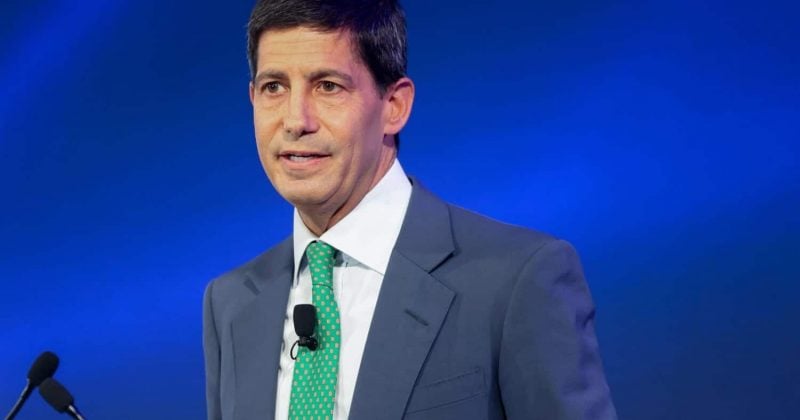
Kevin Warsh is officially the new chair of the Federal Reserve. President Trump will host the swearing-in ceremony at the White House, installing a central banker who holds more than $100 million in crypto investments across over 30 digital asset projects.

That’s not a typo. The person now responsible for US monetary policy has significant personal stakes in Bitcoin, the Lightning Network startup Flashnet, prediction market Polymarket, and decentralized exchange dYdX, among others. For an institution that spent years treating crypto like a suspicious package left at the airport, this is a dramatic pivot.

From Wall Street crisis manager to crypto-friendly Fed chair

Warsh isn’t exactly a newcomer to the Fed. He served as a governor from 2006 to 2011, a period that included navigating the 2008 financial crisis as a key intermediary between Wall Street and Washington. When he joined the board at age 35, he became the youngest-ever Fed governor. He’s now 56.

Trump nominated Warsh back in January 2026. The Senate confirmed him on May 13 with a 54-45 vote, largely along party lines. He replaces Jerome Powell, whose tenure was marked by an adversarial relationship with the crypto industry and frequent public clashes with Trump over interest rate policy.

Here’s the thing about Warsh: he’s not just passively crypto-friendly in the way politicians sometimes nod politely at Bitcoin during fundraisers. He has publicly stated that Bitcoin “does not make him nervous” and has advocated for treating digital assets as a legitimate part of the financial services landscape. During his earlier stint at the Fed, he pushed for what he called “policy regime change” at the central bank, signaling a willingness to challenge institutional orthodoxy.

Advertisement

That combination, a reformist streak plus deep personal investment in digital assets, makes him a fundamentally different kind of Fed chair than anything the crypto industry has dealt with before.

What a pro-crypto Fed chair actually means

Look, having a Fed chair who owns Bitcoin doesn’t mean the central bank is about to start accepting Dogecoin. But the implications for regulatory tone and institutional adoption are significant.

The Fed doesn’t directly regulate crypto exchanges or set token classification rules. That’s largely the SEC and CFTC’s territory. But the Fed controls something arguably more important: the banking system’s relationship with digital assets. Under Powell, banks received subtle and not-so-subtle signals that engaging with crypto was career risk. Warsh’s appointment reverses that dynamic entirely.

Pro-crypto lawmakers are already celebrating. Senator Cynthia Lummis, who has been one of the loudest voices in Congress pushing for clear crypto regulation, has expressed optimism that Warsh’s leadership will produce concrete regulatory guidelines rather than the enforcement-by-ambiguity approach that characterized the previous era.

Warsh’s stance on a US central bank digital currency is worth noting too. He’s been cautious about the idea of a Fed-issued CBDC, which puts him in alignment with Trump’s own executive orders opposing a digital dollar. For the privacy-focused corner of the crypto world, this is welcome news. For those who hoped a government-backed digital currency might accelerate mainstream adoption, less so.

Monetary policy meets market expectations

Beyond crypto, Warsh takes over during a period where markets are anticipating shifts in monetary policy. Trump has consistently pushed for lower interest rates, and Warsh’s appointment is widely interpreted as installing a chair more sympathetic to that preference.

The intersection of rate policy and crypto markets matters more than casual observers might think. Historically, periods of monetary easing have correlated with bullish crypto cycles. Lower rates push investors toward riskier, higher-yield assets, and crypto sits firmly in that category. If Warsh moves toward cuts, the tailwind for digital assets could be substantial.

His background as a Wall Street intermediary during the 2008 crisis also suggests he understands systemic risk in ways that might make him more comfortable with institutional crypto adoption, provided appropriate safeguards exist. He’s spoken about integrating digital assets into the financial system with necessary protections, a position that splits the difference between the “ban everything” and “regulate nothing” camps.

What investors should watch

The crypto market has spent years waiting for regulatory clarity from Washington. Under Warsh, the Fed’s posture toward banks holding digital assets on their balance sheets could shift meaningfully. If major banks receive clearer guidance that crypto custody and services won’t trigger regulatory backlash, the capital flow into the space could accelerate considerably.

There’s a risk angle here too. A Fed chair with over $100 million in crypto holdings will face constant scrutiny over conflicts of interest. Every policy decision that touches digital assets will be examined through the lens of his personal portfolio. Whether he recuses himself from crypto-adjacent decisions or establishes a blind trust arrangement will matter for public trust in the institution.

The 54-45 confirmation vote also tells a story. This wasn’t a consensus pick. Nearly half the Senate voted against him, which means Warsh enters the role without bipartisan goodwill. If markets turn volatile or if his crypto connections become politically inconvenient, he’ll have limited political cover. For crypto investors, the best-case scenario is that Warsh moves quickly on regulatory frameworks before the political window closes. Washington’s mood can shift fast, and a midterm election cycle has a way of making bold policy moves harder to execute.

Disclosure: This article was edited by Editorial Team. For more information on how we create and review content, see our Editorial Policy.

Trump swears in Kevin Warsh as Federal Reserve chair, marking a pro-crypto shift at the central bank

Trump swears in Kevin Warsh as Federal Reserve chair, marking a pro-crypto shift at the central bank

The youngest-ever Fed governor returns to lead the central bank with over $100 million in personal crypto holdings and a vision for integrating digital assets into the financial system.

Kevin Warsh is officially the new chair of the Federal Reserve. President Trump will host the swearing-in ceremony at the White House, installing a central banker who holds more than $100 million in crypto investments across over 30 digital asset projects.

That’s not a typo. The person now responsible for US monetary policy has significant personal stakes in Bitcoin, the Lightning Network startup Flashnet, prediction market Polymarket, and decentralized exchange dYdX, among others. For an institution that spent years treating crypto like a suspicious package left at the airport, this is a dramatic pivot.

From Wall Street crisis manager to crypto-friendly Fed chair

Warsh isn’t exactly a newcomer to the Fed. He served as a governor from 2006 to 2011, a period that included navigating the 2008 financial crisis as a key intermediary between Wall Street and Washington. When he joined the board at age 35, he became the youngest-ever Fed governor. He’s now 56.

Trump nominated Warsh back in January 2026. The Senate confirmed him on May 13 with a 54-45 vote, largely along party lines. He replaces Jerome Powell, whose tenure was marked by an adversarial relationship with the crypto industry and frequent public clashes with Trump over interest rate policy.

Here’s the thing about Warsh: he’s not just passively crypto-friendly in the way politicians sometimes nod politely at Bitcoin during fundraisers. He has publicly stated that Bitcoin “does not make him nervous” and has advocated for treating digital assets as a legitimate part of the financial services landscape. During his earlier stint at the Fed, he pushed for what he called “policy regime change” at the central bank, signaling a willingness to challenge institutional orthodoxy.

Advertisement

That combination, a reformist streak plus deep personal investment in digital assets, makes him a fundamentally different kind of Fed chair than anything the crypto industry has dealt with before.

What a pro-crypto Fed chair actually means

Look, having a Fed chair who owns Bitcoin doesn’t mean the central bank is about to start accepting Dogecoin. But the implications for regulatory tone and institutional adoption are significant.

The Fed doesn’t directly regulate crypto exchanges or set token classification rules. That’s largely the SEC and CFTC’s territory. But the Fed controls something arguably more important: the banking system’s relationship with digital assets. Under Powell, banks received subtle and not-so-subtle signals that engaging with crypto was career risk. Warsh’s appointment reverses that dynamic entirely.

Pro-crypto lawmakers are already celebrating. Senator Cynthia Lummis, who has been one of the loudest voices in Congress pushing for clear crypto regulation, has expressed optimism that Warsh’s leadership will produce concrete regulatory guidelines rather than the enforcement-by-ambiguity approach that characterized the previous era.

Warsh’s stance on a US central bank digital currency is worth noting too. He’s been cautious about the idea of a Fed-issued CBDC, which puts him in alignment with Trump’s own executive orders opposing a digital dollar. For the privacy-focused corner of the crypto world, this is welcome news. For those who hoped a government-backed digital currency might accelerate mainstream adoption, less so.

Monetary policy meets market expectations

Beyond crypto, Warsh takes over during a period where markets are anticipating shifts in monetary policy. Trump has consistently pushed for lower interest rates, and Warsh’s appointment is widely interpreted as installing a chair more sympathetic to that preference.

The intersection of rate policy and crypto markets matters more than casual observers might think. Historically, periods of monetary easing have correlated with bullish crypto cycles. Lower rates push investors toward riskier, higher-yield assets, and crypto sits firmly in that category. If Warsh moves toward cuts, the tailwind for digital assets could be substantial.

His background as a Wall Street intermediary during the 2008 crisis also suggests he understands systemic risk in ways that might make him more comfortable with institutional crypto adoption, provided appropriate safeguards exist. He’s spoken about integrating digital assets into the financial system with necessary protections, a position that splits the difference between the “ban everything” and “regulate nothing” camps.

What investors should watch

The crypto market has spent years waiting for regulatory clarity from Washington. Under Warsh, the Fed’s posture toward banks holding digital assets on their balance sheets could shift meaningfully. If major banks receive clearer guidance that crypto custody and services won’t trigger regulatory backlash, the capital flow into the space could accelerate considerably.

There’s a risk angle here too. A Fed chair with over $100 million in crypto holdings will face constant scrutiny over conflicts of interest. Every policy decision that touches digital assets will be examined through the lens of his personal portfolio. Whether he recuses himself from crypto-adjacent decisions or establishes a blind trust arrangement will matter for public trust in the institution.

The 54-45 confirmation vote also tells a story. This wasn’t a consensus pick. Nearly half the Senate voted against him, which means Warsh enters the role without bipartisan goodwill. If markets turn volatile or if his crypto connections become politically inconvenient, he’ll have limited political cover. For crypto investors, the best-case scenario is that Warsh moves quickly on regulatory frameworks before the political window closes. Washington’s mood can shift fast, and a midterm election cycle has a way of making bold policy moves harder to execute.

Disclosure: This article was edited by Editorial Team. For more information on how we create and review content, see our Editorial Policy.