
Nexo Earn with Nexo
Donald Trump says US in final stages of negotiations with Iran

Donald Trump says US in final stages of negotiations with Iran

The president has extended a temporary ceasefire by three to five days while warning that military strikes could resume if diplomacy stalls.

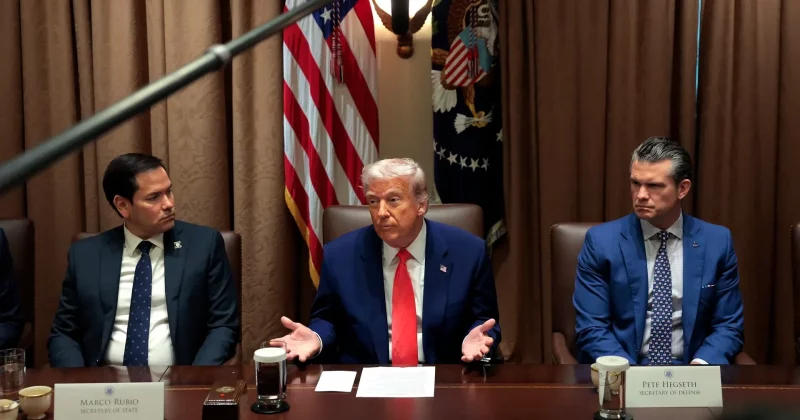
Donald Trump announced the United States is nearing the end of its negotiations with Iran, extending a temporary ceasefire window by three to five days to give diplomacy one more shot. The move buys time, but not much of it. Trump has made clear that military options remain on the table if talks collapse.

The message is classic Trump negotiation theater: an olive branch in one hand, a cruise missile in the other. He warned that strikes could come within two to three days if Iran doesn’t reach an agreement, framing the situation as one where patience is running thin and the clock is very much ticking.

The ceasefire extension and what’s at stake

The three-to-five-day extension is designed to create space for what Trump describes as final-stage negotiations. The core issues on the table are familiar ones: Iran’s nuclear program, the web of US sanctions choking Tehran’s economy, and the broader security architecture of the Middle East.

Here’s the thing. According to a US source, Trump privately believes the military options have been largely exhausted in terms of their strategic value. But he’s not saying that publicly. Instead, the public posture remains aggressive, with explicit warnings that strikes could resume on a very short timeline if diplomacy doesn’t deliver results.

That gap between private assessment and public rhetoric is where the real negotiation happens. Trump is essentially telling Iran: I’d rather not bomb you again, but I absolutely will if you make me look weak at the table. It’s a posture that requires Iran to believe the threat is credible even if the preference is clearly for a deal.

Advertisement

Trump has specifically pointed to the Strait of Hormuz as a pressure point, arguing that keeping the critical waterway open is essential to Iran’s economic survival. He has claimed the strait represents roughly $500 million a day in value for Iran, which gives Washington enormous leverage. If Iran depends on that revenue to keep its economy from collapsing entirely, the implicit threat of disrupting it, whether through military action or tightened sanctions, becomes a powerful bargaining chip.

Domestic politics complicating the table

Trump isn’t just negotiating with Tehran. He’s also managing a hawkish wing of his own party that has zero interest in any deal that leaves Iran with a pathway to nuclear weapons.

Sen. Lindsey Graham has been vocal on this point, insisting the US cannot allow Iran to develop nuclear capabilities under any circumstances. That kind of rhetoric narrows the range of deals Trump can actually accept. Any agreement perceived as too soft on Iran’s nuclear ambitions would face immediate political blowback from Republicans who view Tehran as an existential threat to US allies in the region, particularly Israel and Saudi Arabia.

This creates a familiar bind for any president trying to negotiate with an adversary. The deal has to be tough enough to survive domestic scrutiny but reasonable enough that the other side actually signs it. That’s a narrow window, and it gets narrower every time a senator goes on cable news to draw a red line.

Meanwhile, Pakistani mediators have reportedly been working behind the scenes to unify Iran’s various political and military factions into a coherent negotiating position. Iran’s internal politics are notoriously fragmented, with hardliners, reformists, and the Islamic Revolutionary Guard Corps often pulling in different directions. A deal means nothing if only one faction in Tehran agrees to it.

The Pakistani mediation effort is significant because it suggests the negotiation infrastructure extends well beyond the two principals. Regional powers have a vested interest in preventing a full-scale US-Iran military conflict, which could destabilize energy markets, shipping lanes, and the broader Middle Eastern security balance overnight.

What this means for markets and investors

Look, this isn’t a crypto story on its face. But US-Iran tensions have historically been one of the most reliable triggers for oil price volatility, which cascades into inflation expectations, Federal Reserve policy calculations, and ultimately risk asset pricing across the board, including digital assets.

The Strait of Hormuz handles roughly a fifth of global oil traffic. Any disruption there, whether from military action or Iranian retaliation, would send energy prices surging. That’s the kind of macro shock that tends to push investors toward safe havens, and in recent years, Bitcoin has increasingly been discussed (if not consistently proven) as one of those havens during geopolitical crises.

If a deal materializes, the relief rally in traditional markets could pull capital away from crypto as risk appetite broadens. If talks collapse and strikes resume, expect volatility everywhere, with crypto likely whipsawing alongside equities before finding its own footing.

The two-to-three-day timeline Trump has floated for potential military action means this situation could escalate or resolve very quickly. For traders and investors, the practical implication is straightforward: this is not the week to be over-leveraged in any direction. Geopolitical binary events, where outcomes swing between “deal” and “bombs,” are notoriously difficult to position for. The smart move is to watch the headlines, keep powder dry, and remember that the loudest threats at the negotiating table are often the ones least likely to be carried out.

Disclosure: This article was edited by Editorial Team. For more information on how we create and review content, see our Editorial Policy.

Donald Trump says US in final stages of negotiations with Iran

Donald Trump says US in final stages of negotiations with Iran

The president has extended a temporary ceasefire by three to five days while warning that military strikes could resume if diplomacy stalls.

Donald Trump announced the United States is nearing the end of its negotiations with Iran, extending a temporary ceasefire window by three to five days to give diplomacy one more shot. The move buys time, but not much of it. Trump has made clear that military options remain on the table if talks collapse.

The message is classic Trump negotiation theater: an olive branch in one hand, a cruise missile in the other. He warned that strikes could come within two to three days if Iran doesn’t reach an agreement, framing the situation as one where patience is running thin and the clock is very much ticking.

The ceasefire extension and what’s at stake

The three-to-five-day extension is designed to create space for what Trump describes as final-stage negotiations. The core issues on the table are familiar ones: Iran’s nuclear program, the web of US sanctions choking Tehran’s economy, and the broader security architecture of the Middle East.

Here’s the thing. According to a US source, Trump privately believes the military options have been largely exhausted in terms of their strategic value. But he’s not saying that publicly. Instead, the public posture remains aggressive, with explicit warnings that strikes could resume on a very short timeline if diplomacy doesn’t deliver results.

That gap between private assessment and public rhetoric is where the real negotiation happens. Trump is essentially telling Iran: I’d rather not bomb you again, but I absolutely will if you make me look weak at the table. It’s a posture that requires Iran to believe the threat is credible even if the preference is clearly for a deal.

Advertisement

Trump has specifically pointed to the Strait of Hormuz as a pressure point, arguing that keeping the critical waterway open is essential to Iran’s economic survival. He has claimed the strait represents roughly $500 million a day in value for Iran, which gives Washington enormous leverage. If Iran depends on that revenue to keep its economy from collapsing entirely, the implicit threat of disrupting it, whether through military action or tightened sanctions, becomes a powerful bargaining chip.

Domestic politics complicating the table

Trump isn’t just negotiating with Tehran. He’s also managing a hawkish wing of his own party that has zero interest in any deal that leaves Iran with a pathway to nuclear weapons.

Sen. Lindsey Graham has been vocal on this point, insisting the US cannot allow Iran to develop nuclear capabilities under any circumstances. That kind of rhetoric narrows the range of deals Trump can actually accept. Any agreement perceived as too soft on Iran’s nuclear ambitions would face immediate political blowback from Republicans who view Tehran as an existential threat to US allies in the region, particularly Israel and Saudi Arabia.

This creates a familiar bind for any president trying to negotiate with an adversary. The deal has to be tough enough to survive domestic scrutiny but reasonable enough that the other side actually signs it. That’s a narrow window, and it gets narrower every time a senator goes on cable news to draw a red line.

Meanwhile, Pakistani mediators have reportedly been working behind the scenes to unify Iran’s various political and military factions into a coherent negotiating position. Iran’s internal politics are notoriously fragmented, with hardliners, reformists, and the Islamic Revolutionary Guard Corps often pulling in different directions. A deal means nothing if only one faction in Tehran agrees to it.

The Pakistani mediation effort is significant because it suggests the negotiation infrastructure extends well beyond the two principals. Regional powers have a vested interest in preventing a full-scale US-Iran military conflict, which could destabilize energy markets, shipping lanes, and the broader Middle Eastern security balance overnight.

What this means for markets and investors

Look, this isn’t a crypto story on its face. But US-Iran tensions have historically been one of the most reliable triggers for oil price volatility, which cascades into inflation expectations, Federal Reserve policy calculations, and ultimately risk asset pricing across the board, including digital assets.

The Strait of Hormuz handles roughly a fifth of global oil traffic. Any disruption there, whether from military action or Iranian retaliation, would send energy prices surging. That’s the kind of macro shock that tends to push investors toward safe havens, and in recent years, Bitcoin has increasingly been discussed (if not consistently proven) as one of those havens during geopolitical crises.

If a deal materializes, the relief rally in traditional markets could pull capital away from crypto as risk appetite broadens. If talks collapse and strikes resume, expect volatility everywhere, with crypto likely whipsawing alongside equities before finding its own footing.

The two-to-three-day timeline Trump has floated for potential military action means this situation could escalate or resolve very quickly. For traders and investors, the practical implication is straightforward: this is not the week to be over-leveraged in any direction. Geopolitical binary events, where outcomes swing between “deal” and “bombs,” are notoriously difficult to position for. The smart move is to watch the headlines, keep powder dry, and remember that the loudest threats at the negotiating table are often the ones least likely to be carried out.

Disclosure: This article was edited by Editorial Team. For more information on how we create and review content, see our Editorial Policy.