
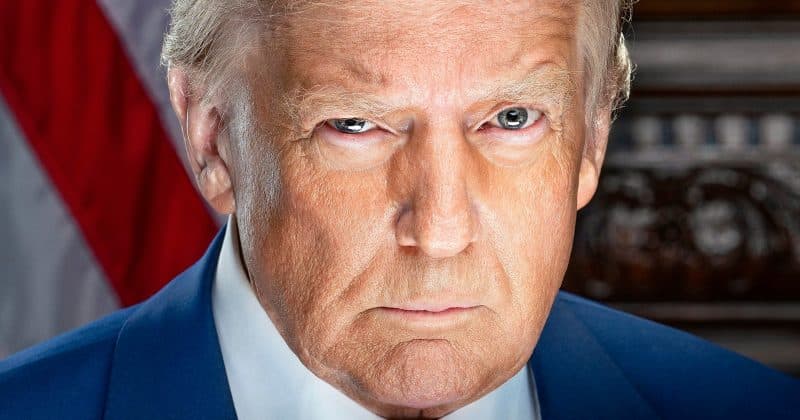
Donald Trump says the US is ‘taking over crypto’ as his family’s digital asset income hits $1.4 billion

Donald Trump says the US is ‘taking over crypto’ as his family’s digital asset income hits $1.4 billion

The president's bullish declaration comes as his administration pushes regulatory frameworks and his personal crypto ventures generate staggering returns

President Donald Trump declared that the United States is “taking over crypto,” framing the digital asset industry as too massive for the country to ignore.

The declaration lands at a moment when Trump’s personal financial entanglement with crypto has never been deeper. His family reported over $1.4 billion in crypto-related income for 2025, a figure that makes his enthusiasm for the industry look less like policy conviction and more like portfolio management.

The money trail

The $TRUMP memecoin generated roughly $635 million in royalties alone. World Liberty Financial, the Trump family’s decentralized finance venture known as WLFI, contributed an estimated $600 million to the total haul.

Advertisement

Policy meets portfolio

In March 2025, Trump signed an Executive Order establishing a Strategic Bitcoin Reserve alongside a broader US Digital Asset Stockpile.

The GENIUS Act followed, creating the first federal regulatory framework specifically targeting stablecoins. Stablecoins, the dollar-pegged tokens that serve as crypto’s plumbing infrastructure, now operate under a defined set of federal guidelines rather than the patchwork of state-level oversight that previously governed them.

Trump has repeatedly pledged to make the US the “crypto capital of the world” during official statements. The administration’s broader strategy has centered on reducing regulatory barriers that the industry has long complained about, particularly the enforcement-first approach that characterized previous administrations.

The ethical tightrope

The $TRUMP memecoin is particularly notable in this regard. Memecoins derive their value almost entirely from cultural relevance and community enthusiasm rather than underlying technology or utility. When the President of the United States launches one, the cultural relevance is essentially guaranteed by the office itself.

World Liberty Financial raises its own set of questions. A DeFi platform connected to the presidential family operates in the same regulatory environment that the president’s appointees are actively shaping.

What this means for investors

The Strategic Bitcoin Reserve signals that the US government views Bitcoin as a legitimate reserve asset. The GENIUS Act’s stablecoin framework could unlock significant institutional capital. Banks, asset managers, and payment companies that were previously hesitant to engage with stablecoins now have a federal rulebook to follow.

The EU’s MiCA framework is fully operational, and Asian financial centers are rolling out their own regulatory sandboxes.

Disclosure: This article was edited by Editorial Team. For more information on how we create and review content, see our Editorial Policy.

Donald Trump says the US is ‘taking over crypto’ as his family’s digital asset income hits $1.4 billion

Donald Trump says the US is ‘taking over crypto’ as his family’s digital asset income hits $1.4 billion

The president's bullish declaration comes as his administration pushes regulatory frameworks and his personal crypto ventures generate staggering returns

President Donald Trump declared that the United States is “taking over crypto,” framing the digital asset industry as too massive for the country to ignore.

The declaration lands at a moment when Trump’s personal financial entanglement with crypto has never been deeper. His family reported over $1.4 billion in crypto-related income for 2025, a figure that makes his enthusiasm for the industry look less like policy conviction and more like portfolio management.

The money trail

The $TRUMP memecoin generated roughly $635 million in royalties alone. World Liberty Financial, the Trump family’s decentralized finance venture known as WLFI, contributed an estimated $600 million to the total haul.

Advertisement

Policy meets portfolio

In March 2025, Trump signed an Executive Order establishing a Strategic Bitcoin Reserve alongside a broader US Digital Asset Stockpile.

The GENIUS Act followed, creating the first federal regulatory framework specifically targeting stablecoins. Stablecoins, the dollar-pegged tokens that serve as crypto’s plumbing infrastructure, now operate under a defined set of federal guidelines rather than the patchwork of state-level oversight that previously governed them.

Trump has repeatedly pledged to make the US the “crypto capital of the world” during official statements. The administration’s broader strategy has centered on reducing regulatory barriers that the industry has long complained about, particularly the enforcement-first approach that characterized previous administrations.

The ethical tightrope

The $TRUMP memecoin is particularly notable in this regard. Memecoins derive their value almost entirely from cultural relevance and community enthusiasm rather than underlying technology or utility. When the President of the United States launches one, the cultural relevance is essentially guaranteed by the office itself.

World Liberty Financial raises its own set of questions. A DeFi platform connected to the presidential family operates in the same regulatory environment that the president’s appointees are actively shaping.

What this means for investors

The Strategic Bitcoin Reserve signals that the US government views Bitcoin as a legitimate reserve asset. The GENIUS Act’s stablecoin framework could unlock significant institutional capital. Banks, asset managers, and payment companies that were previously hesitant to engage with stablecoins now have a federal rulebook to follow.

The EU’s MiCA framework is fully operational, and Asian financial centers are rolling out their own regulatory sandboxes.

Disclosure: This article was edited by Editorial Team. For more information on how we create and review content, see our Editorial Policy.