
Nexo Earn with Nexo
Trump expresses reluctance to renew USMCA amid trade discussions

Trump expresses reluctance to renew USMCA amid trade discussions

The president's comments arrive just weeks before a mandatory six-year review that could reshape North American trade for the next decade

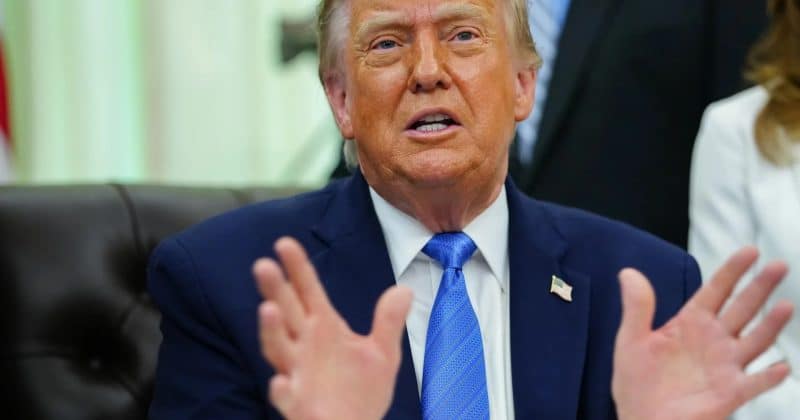
President Donald Trump told reporters on June 10 that he is “not looking to renew” the United States-Mexico-Canada Agreement, the trade pact his own first administration negotiated to replace NAFTA. He hasn’t decided on a specific course of action yet, but the message to Canada and Mexico was clear: the current deal isn’t cutting it.

The timing is not accidental. The USMCA’s first mandatory joint review is scheduled for July 1, 2026, just three weeks away. That review forces all three nations to decide whether to extend the agreement for another 16 years or let it drift toward expiration in 2036. Trump’s public skepticism reads less like a breakup letter and more like an opening bid.

What the USMCA review actually means

The USMCA, which took effect on July 1, 2020, was designed with a built-in checkpoint. Every six years, the US, Canada, and Mexico sit down and decide whether the deal still works for everyone.

Advertisement

If all three countries agree to extend it in 2026, the pact runs through 2036 with a fresh 16-year window. If they don’t agree, the agreement doesn’t immediately collapse. Instead, it triggers a series of annual reviews until 2036, at which point the deal expires unless the parties reach consensus somewhere along the way.

US Trade Representative officials have already signaled they would not recommend renewal without securing changes to the agreement first. That aligns with Trump’s broader posture: use the review mechanism as leverage to extract better terms rather than simply rubber-stamp the existing deal.

Trump’s negotiating playbook

During his remarks, Trump emphasized that the US doesn’t need goods from Canada or Mexico, arguing that both countries are more dependent on American products than the reverse. He pointed to US trade deficits as evidence that the current arrangement favors America’s neighbors.

The original USMCA included modernized provisions covering labor rights, digital trade, and automotive rules of origin, areas where NAFTA had become outdated after more than two decades. Any renegotiation would likely revisit these same categories.

What this means for investors

The immediate market impact of Trump’s comments centers on industries with deep North American supply chain integration. Automotive manufacturers, agricultural exporters, and energy companies all operate under frameworks shaped by USMCA provisions.

The more concrete crypto angle involves digital trade provisions within the USMCA itself. The original agreement included some of the first trade-agreement language around digital commerce between the three nations. Any renegotiation could theoretically update those provisions to address cryptocurrency transactions, stablecoin regulations, or cross-border digital asset transfers, areas that barely existed in their current form when the deal was finalized.

Even in the worst-case scenario where no renewal happens, the agreement continues operating under annual reviews until 2036. That’s a decade-long runway.

Disclosure: This article was edited by Editorial Team. For more information on how we create and review content, see our Editorial Policy.

Trump expresses reluctance to renew USMCA amid trade discussions

Trump expresses reluctance to renew USMCA amid trade discussions

The president's comments arrive just weeks before a mandatory six-year review that could reshape North American trade for the next decade

President Donald Trump told reporters on June 10 that he is “not looking to renew” the United States-Mexico-Canada Agreement, the trade pact his own first administration negotiated to replace NAFTA. He hasn’t decided on a specific course of action yet, but the message to Canada and Mexico was clear: the current deal isn’t cutting it.

The timing is not accidental. The USMCA’s first mandatory joint review is scheduled for July 1, 2026, just three weeks away. That review forces all three nations to decide whether to extend the agreement for another 16 years or let it drift toward expiration in 2036. Trump’s public skepticism reads less like a breakup letter and more like an opening bid.

What the USMCA review actually means

The USMCA, which took effect on July 1, 2020, was designed with a built-in checkpoint. Every six years, the US, Canada, and Mexico sit down and decide whether the deal still works for everyone.

Advertisement

If all three countries agree to extend it in 2026, the pact runs through 2036 with a fresh 16-year window. If they don’t agree, the agreement doesn’t immediately collapse. Instead, it triggers a series of annual reviews until 2036, at which point the deal expires unless the parties reach consensus somewhere along the way.

US Trade Representative officials have already signaled they would not recommend renewal without securing changes to the agreement first. That aligns with Trump’s broader posture: use the review mechanism as leverage to extract better terms rather than simply rubber-stamp the existing deal.

Trump’s negotiating playbook

During his remarks, Trump emphasized that the US doesn’t need goods from Canada or Mexico, arguing that both countries are more dependent on American products than the reverse. He pointed to US trade deficits as evidence that the current arrangement favors America’s neighbors.

The original USMCA included modernized provisions covering labor rights, digital trade, and automotive rules of origin, areas where NAFTA had become outdated after more than two decades. Any renegotiation would likely revisit these same categories.

What this means for investors

The immediate market impact of Trump’s comments centers on industries with deep North American supply chain integration. Automotive manufacturers, agricultural exporters, and energy companies all operate under frameworks shaped by USMCA provisions.

The more concrete crypto angle involves digital trade provisions within the USMCA itself. The original agreement included some of the first trade-agreement language around digital commerce between the three nations. Any renegotiation could theoretically update those provisions to address cryptocurrency transactions, stablecoin regulations, or cross-border digital asset transfers, areas that barely existed in their current form when the deal was finalized.

Even in the worst-case scenario where no renewal happens, the agreement continues operating under annual reviews until 2036. That’s a decade-long runway.

Disclosure: This article was edited by Editorial Team. For more information on how we create and review content, see our Editorial Policy.