
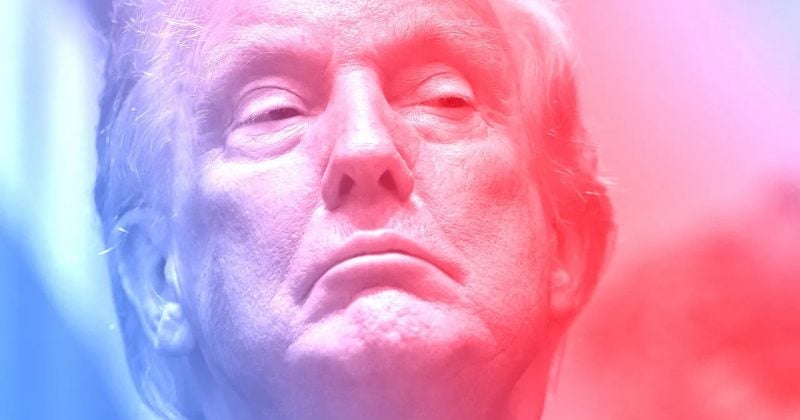
Trump warns of resuming bombing if Iran fails to honor agreements

Trump warns of resuming bombing if Iran fails to honor agreements

The president called the recently signed memorandum of understanding 'non-final' and threatened renewed military strikes, injecting fresh uncertainty into crypto markets already whipsawed by months of geopolitical volatility.

President Trump on June 17 warned that the US could resume bombing Iranian targets if Tehran fails to comply with the terms of a memorandum of understanding signed just days earlier. The threat came alongside a pointed clarification: the MOU should not be mistaken for a final deal.

What the MOU actually covers

The preliminary agreement, virtually signed on June 15 with Trump, Vice President JD Vance, and Iranian officials reportedly present, is designed to accomplish two immediate goals: end active hostilities and reopen the Strait of Hormuz.

The MOU deliberately separates these urgent items from the harder, longer-term questions. Iran’s nuclear program and the sanctions architecture surrounding it are carved out for a separate 60-day negotiation window that is set to begin once a formal signing takes place, expected around June 19-20.

Trump’s comments on June 17 made clear that the US views Iran’s obligations as extending beyond whatever is literally written in the MOU text. He referenced “understandings not written in the memorandum of understanding,” a phrase that introduces substantial ambiguity into what compliance actually means.

Advertisement

The conflict so far

The current situation traces back to February 2026, when US and Israeli military strikes targeted Iranian nuclear facilities. Those strikes triggered a cascade of retaliatory actions, including a naval blockade of the Strait of Hormuz that sent oil prices surging and rattled global supply chains.

Since February, the pattern has been remarkably consistent. Strikes happen, markets sell off, a ceasefire gets announced, markets rally, the ceasefire frays, and the cycle repeats. Multiple interim ceasefires have been declared and extended, each one buying time for diplomatic talks.

The latest MOU represented the most substantial diplomatic progress to date, which is why crypto markets responded with notable enthusiasm when news of the virtual signing broke on June 15. Bitcoin and other digital assets posted gains on the back of what looked like a genuine step toward de-escalation.

Why crypto traders should care

Bitcoin has consistently responded more favorably to peace signals than to threats of escalation. The reverse is equally true. When a sitting president publicly floats the possibility of resuming airstrikes against a nation that controls access to one of the world’s most important shipping lanes, traders tend to reduce exposure to volatile assets.

Trump isn’t pointing to a specific clause Iran might violate. He’s referencing unwritten understandings, which means the trigger for renewed military action could be almost anything. That kind of uncertainty is harder for markets to price than a concrete, measurable threshold.

The formal signing expected around June 19-20 will be the first major test. If it proceeds smoothly, expect a relief rally in risk assets. If it hits snags, or if Trump issues further warnings, expect the opposite.

Bitcoin has rallied on peace and sold on war throughout this conflict, behaving more like a tech stock than digital gold. Traders treating Bitcoin as a safe haven during the Iran situation have largely been on the wrong side of the trade. Those treating it as a high-beta risk asset have fared better.

Disclosure: This article was edited by Editorial Team. For more information on how we create and review content, see our Editorial Policy.

Trump warns of resuming bombing if Iran fails to honor agreements

Trump warns of resuming bombing if Iran fails to honor agreements

The president called the recently signed memorandum of understanding 'non-final' and threatened renewed military strikes, injecting fresh uncertainty into crypto markets already whipsawed by months of geopolitical volatility.

President Trump on June 17 warned that the US could resume bombing Iranian targets if Tehran fails to comply with the terms of a memorandum of understanding signed just days earlier. The threat came alongside a pointed clarification: the MOU should not be mistaken for a final deal.

What the MOU actually covers

The preliminary agreement, virtually signed on June 15 with Trump, Vice President JD Vance, and Iranian officials reportedly present, is designed to accomplish two immediate goals: end active hostilities and reopen the Strait of Hormuz.

The MOU deliberately separates these urgent items from the harder, longer-term questions. Iran’s nuclear program and the sanctions architecture surrounding it are carved out for a separate 60-day negotiation window that is set to begin once a formal signing takes place, expected around June 19-20.

Trump’s comments on June 17 made clear that the US views Iran’s obligations as extending beyond whatever is literally written in the MOU text. He referenced “understandings not written in the memorandum of understanding,” a phrase that introduces substantial ambiguity into what compliance actually means.

Advertisement

The conflict so far

The current situation traces back to February 2026, when US and Israeli military strikes targeted Iranian nuclear facilities. Those strikes triggered a cascade of retaliatory actions, including a naval blockade of the Strait of Hormuz that sent oil prices surging and rattled global supply chains.

Since February, the pattern has been remarkably consistent. Strikes happen, markets sell off, a ceasefire gets announced, markets rally, the ceasefire frays, and the cycle repeats. Multiple interim ceasefires have been declared and extended, each one buying time for diplomatic talks.

The latest MOU represented the most substantial diplomatic progress to date, which is why crypto markets responded with notable enthusiasm when news of the virtual signing broke on June 15. Bitcoin and other digital assets posted gains on the back of what looked like a genuine step toward de-escalation.

Why crypto traders should care

Bitcoin has consistently responded more favorably to peace signals than to threats of escalation. The reverse is equally true. When a sitting president publicly floats the possibility of resuming airstrikes against a nation that controls access to one of the world’s most important shipping lanes, traders tend to reduce exposure to volatile assets.

Trump isn’t pointing to a specific clause Iran might violate. He’s referencing unwritten understandings, which means the trigger for renewed military action could be almost anything. That kind of uncertainty is harder for markets to price than a concrete, measurable threshold.

The formal signing expected around June 19-20 will be the first major test. If it proceeds smoothly, expect a relief rally in risk assets. If it hits snags, or if Trump issues further warnings, expect the opposite.

Bitcoin has rallied on peace and sold on war throughout this conflict, behaving more like a tech stock than digital gold. Traders treating Bitcoin as a safe haven during the Iran situation have largely been on the wrong side of the trade. Those treating it as a high-beta risk asset have fared better.

Disclosure: This article was edited by Editorial Team. For more information on how we create and review content, see our Editorial Policy.