
Nexo Earn with Nexo
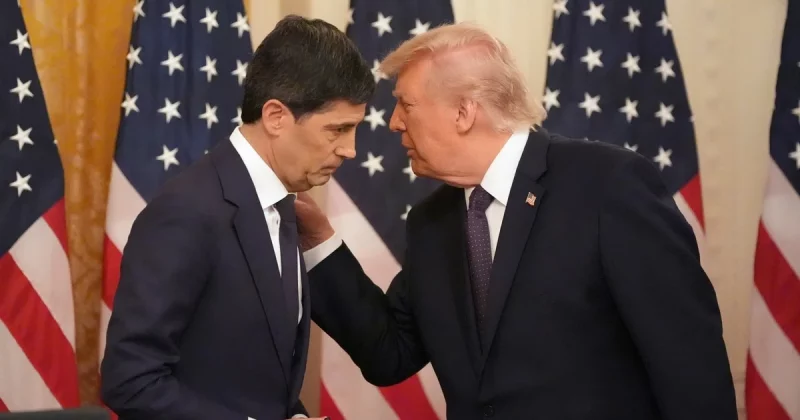
Trump urges Warsh to be independent as Federal Reserve chair during White House swearing-in

Trump urges Warsh to be independent as Federal Reserve chair during White House swearing-in

The new Fed chair inherits a 3.8% inflation problem and a president who says he won't meddle, which is exactly what you'd expect a meddler to say.

Kevin Warsh was sworn in as chair of the Federal Reserve on May 22, 2026, in a White House ceremony that hasn’t happened for a Fed chief since Alan Greenspan took the oath in 1987. President Trump, standing nearby, told Warsh to be “totally independent” and not to look at him while making decisions.

Supreme Court Justice Clarence Thomas administered the oath. The Senate had confirmed Warsh just nine days earlier, on May 13, with a 55-45 vote that split largely along party lines.

Warsh succeeds Jerome Powell, whose term ended the week before the swearing-in. Powell’s tenure was marked by persistent public clashes with Trump over interest rate policy.

Advertisement

Warsh is not a newcomer to the Fed. He served as a governor on the Federal Reserve Board from 2006 to 2011, a stretch that included the 2008 financial crisis and its chaotic aftermath. During that period, he developed a reputation as someone willing to question the Fed’s more aggressive interventionist policies, sometimes publicly.

Throughout his confirmation hearings, Warsh hammered home two themes: central bank independence and data-driven policymaking. He dismissed any suggestion that he had made prior commitments on interest rates. His background includes work at Morgan Stanley before his first Fed stint, and a fellowship at the Hoover Institution at Stanford, where he has written and spoken extensively about monetary policy frameworks.

Inflation at 3.8% in April sits well above the Fed’s long-standing 2% target. That gap means the new chair faces an immediate credibility test. If he moves too slowly on tightening, inflation expectations could become unanchored. On the other hand, aggressive rate hikes carry their own risks, slowing economic activity and squeezing corporate margins.

For crypto investors, Bitcoin and digital assets have shown increasing sensitivity to interest rate expectations over the past several years. A hawkish stance, meaning higher rates for longer, would likely pressure Bitcoin and altcoins as investors rotate into safer yield-bearing assets like Treasuries. A more patient approach, holding rates steady while waiting for more data, could sustain the current risk appetite that has supported crypto markets.

The 55-45 confirmation vote also tells a story. Warsh doesn’t have bipartisan consensus behind him, which means any controversial policy move will face political headwinds.

Disclosure: This article was edited by Editorial Team. For more information on how we create and review content, see our Editorial Policy.

Trump urges Warsh to be independent as Federal Reserve chair during White House swearing-in

Trump urges Warsh to be independent as Federal Reserve chair during White House swearing-in

The new Fed chair inherits a 3.8% inflation problem and a president who says he won't meddle, which is exactly what you'd expect a meddler to say.

Kevin Warsh was sworn in as chair of the Federal Reserve on May 22, 2026, in a White House ceremony that hasn’t happened for a Fed chief since Alan Greenspan took the oath in 1987. President Trump, standing nearby, told Warsh to be “totally independent” and not to look at him while making decisions.

Supreme Court Justice Clarence Thomas administered the oath. The Senate had confirmed Warsh just nine days earlier, on May 13, with a 55-45 vote that split largely along party lines.

Warsh succeeds Jerome Powell, whose term ended the week before the swearing-in. Powell’s tenure was marked by persistent public clashes with Trump over interest rate policy.

Advertisement

Warsh is not a newcomer to the Fed. He served as a governor on the Federal Reserve Board from 2006 to 2011, a stretch that included the 2008 financial crisis and its chaotic aftermath. During that period, he developed a reputation as someone willing to question the Fed’s more aggressive interventionist policies, sometimes publicly.

Throughout his confirmation hearings, Warsh hammered home two themes: central bank independence and data-driven policymaking. He dismissed any suggestion that he had made prior commitments on interest rates. His background includes work at Morgan Stanley before his first Fed stint, and a fellowship at the Hoover Institution at Stanford, where he has written and spoken extensively about monetary policy frameworks.

Inflation at 3.8% in April sits well above the Fed’s long-standing 2% target. That gap means the new chair faces an immediate credibility test. If he moves too slowly on tightening, inflation expectations could become unanchored. On the other hand, aggressive rate hikes carry their own risks, slowing economic activity and squeezing corporate margins.

For crypto investors, Bitcoin and digital assets have shown increasing sensitivity to interest rate expectations over the past several years. A hawkish stance, meaning higher rates for longer, would likely pressure Bitcoin and altcoins as investors rotate into safer yield-bearing assets like Treasuries. A more patient approach, holding rates steady while waiting for more data, could sustain the current risk appetite that has supported crypto markets.

The 55-45 confirmation vote also tells a story. Warsh doesn’t have bipartisan consensus behind him, which means any controversial policy move will face political headwinds.

Disclosure: This article was edited by Editorial Team. For more information on how we create and review content, see our Editorial Policy.