
Nexo Earn with Nexo
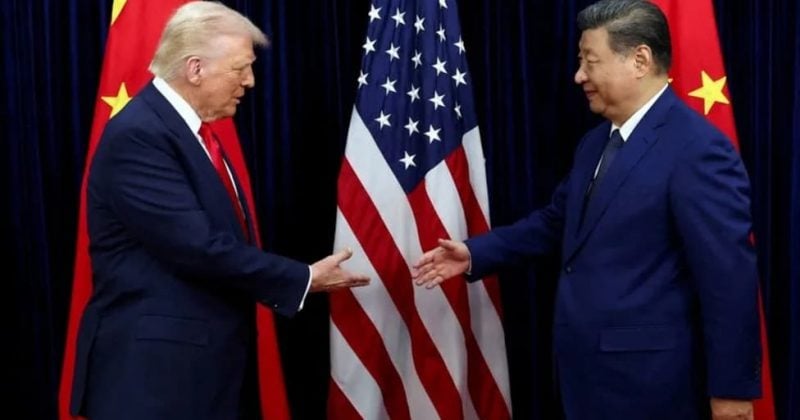
Trump and Xi discuss potential deal to revive US energy exports to China

Trump and Xi discuss potential deal to revive US energy exports to China

US LNG shipments to China collapsed 99.4% in 2025, and a Beijing summit aims to reverse the damage with a new energy agreement.

US liquefied natural gas exports to China fell off a cliff in 2025. We’re talking about a drop from 4.15 million tonnes in 2024 to just 26,000 tonnes, a 99.4% decline that essentially erased one of the largest energy trade corridors on the planet.

Now, a Trump-Xi summit scheduled for May 14-15, 2026, in Beijing is attempting to put that relationship back together. The central agenda item: getting China to buy American LNG and oil again, as part of a broader effort to stabilize commercial relations that were shredded by the trade war.

What’s on the table in Beijing

The summit builds on a framework agreement reached in November 2025, which covered far more than just energy. That deal included commitments on agricultural imports, rare earth element export controls, and semiconductor supply chains.

Under that November framework, China agreed to eliminate export controls on rare earths and suspend retaliatory tariffs on US agricultural products. Beijing also committed to purchasing at least 12 million metric tons of US soybeans in late 2025, with a minimum of 25 million metric tons annually through 2028.

Export controls on rare earths and other critical minerals were suspended specifically for US end users as part of the deal.

But energy was the piece left most conspicuously unfinished. The near-total evaporation of LNG trade between the two largest economies created a gap that neither side could ignore indefinitely. The Beijing summit is designed to address that gap head-on.

China’s leverage problem

The November 2025 deal illustrated this dynamic. The Trump administration made concessions on rare earth restrictions, a move that signaled just how much leverage Beijing holds over critical supply chains.

Experts have warned that any energy commitments China makes at the summit may be largely symbolic. China might agree to buy more LNG on paper while retaining the flexibility to source energy from wherever it wants in practice.

The 99.4% collapse in LNG imports wasn’t an accident or a market fluctuation. It was a deliberate response to trade tensions, and reversing it requires structural commitments that China may not be eager to make when it holds the stronger hand.

The broader trade war context

The November 2025 agreement addressed several of the most contentious areas. Agricultural trade got a lifeline through the soybean purchase commitments. Semiconductor supply chains were included in the framework discussions. And the rare earth concessions represented a significant shift in the power dynamics between the two countries.

What this means for markets

If a meaningful LNG deal does materialize, the most immediate beneficiaries would be US natural gas producers and LNG terminal operators who built capacity partly on the assumption of continued Asian demand.

The key variable to watch isn’t whether an agreement gets announced. It’s whether China’s LNG imports from the US actually recover in the months following any deal.

Disclosure: This article was edited by Editorial Team. For more information on how we create and review content, see our Editorial Policy.
Advertisement

Trump and Xi discuss potential deal to revive US energy exports to China

Trump and Xi discuss potential deal to revive US energy exports to China

US LNG shipments to China collapsed 99.4% in 2025, and a Beijing summit aims to reverse the damage with a new energy agreement.

US liquefied natural gas exports to China fell off a cliff in 2025. We’re talking about a drop from 4.15 million tonnes in 2024 to just 26,000 tonnes, a 99.4% decline that essentially erased one of the largest energy trade corridors on the planet.

Now, a Trump-Xi summit scheduled for May 14-15, 2026, in Beijing is attempting to put that relationship back together. The central agenda item: getting China to buy American LNG and oil again, as part of a broader effort to stabilize commercial relations that were shredded by the trade war.

What’s on the table in Beijing

The summit builds on a framework agreement reached in November 2025, which covered far more than just energy. That deal included commitments on agricultural imports, rare earth element export controls, and semiconductor supply chains.

Under that November framework, China agreed to eliminate export controls on rare earths and suspend retaliatory tariffs on US agricultural products. Beijing also committed to purchasing at least 12 million metric tons of US soybeans in late 2025, with a minimum of 25 million metric tons annually through 2028.

Export controls on rare earths and other critical minerals were suspended specifically for US end users as part of the deal.

But energy was the piece left most conspicuously unfinished. The near-total evaporation of LNG trade between the two largest economies created a gap that neither side could ignore indefinitely. The Beijing summit is designed to address that gap head-on.

China’s leverage problem

The November 2025 deal illustrated this dynamic. The Trump administration made concessions on rare earth restrictions, a move that signaled just how much leverage Beijing holds over critical supply chains.

Experts have warned that any energy commitments China makes at the summit may be largely symbolic. China might agree to buy more LNG on paper while retaining the flexibility to source energy from wherever it wants in practice.

The 99.4% collapse in LNG imports wasn’t an accident or a market fluctuation. It was a deliberate response to trade tensions, and reversing it requires structural commitments that China may not be eager to make when it holds the stronger hand.

The broader trade war context

The November 2025 agreement addressed several of the most contentious areas. Agricultural trade got a lifeline through the soybean purchase commitments. Semiconductor supply chains were included in the framework discussions. And the rare earth concessions represented a significant shift in the power dynamics between the two countries.

What this means for markets

If a meaningful LNG deal does materialize, the most immediate beneficiaries would be US natural gas producers and LNG terminal operators who built capacity partly on the assumption of continued Asian demand.

The key variable to watch isn’t whether an agreement gets announced. It’s whether China’s LNG imports from the US actually recover in the months following any deal.

Disclosure: This article was edited by Editorial Team. For more information on how we create and review content, see our Editorial Policy.
Advertisement