
Two-year Treasury yield hits 16-month high amid oil price surge

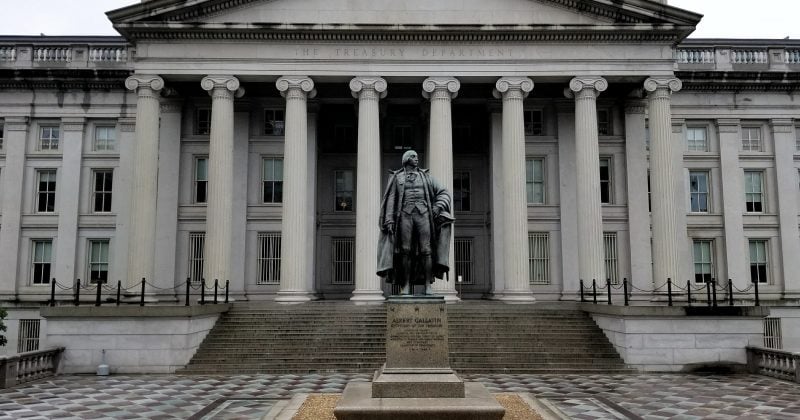
https://en.wikipedia.org/wiki/Treasury_Building_(Washington,_D.C.)

Two-year Treasury yield hits 16-month high amid oil price surge

Fed decision June and July

The two-year U.S. Treasury yield has reached its highest level in over 16 months, driven by a surge in oil prices following renewed geopolitical tensions involving Iran. This development has prompted speculation that the Federal Reserve might tighten monetary policy to address potential inflationary pressures. The yield increase reflects market concerns about sustained inflation as oil prices briefly spiked to $76.98 per barrel, exacerbated by U.S. airstrikes and sanctions on Iranian oil exports. The current inflation rate projection stands at 2.7%, above the Fed’s 2% target, indicating possible rate hikes from the existing federal funds rate of 3.50%–3.75%.

Advertisement

Key Takeaways

  • The increase in Treasury yields appears to suggest that market participants are anticipating a potential rate hike by the Federal Reserve.
  • Recent geopolitical tensions, particularly involving Iran, have contributed to a rise in oil prices, which in turn may influence inflation expectations.
  • The current market pricing implies a significant discussion around the likelihood of the Federal Reserve maintaining or adjusting its interest rate policy after the July meeting.

What to Watch

Observers should monitor upcoming statements from key Federal Reserve officials, including Chair Jerome Powell, which could provide further insights into the Fed’s policy direction. Any changes in geopolitical developments, particularly those affecting oil supply and prices, could also impact future monetary policy decisions. The Federal Reserve’s July meeting will be a critical event, where any indication of policy shifts could alter market expectations significantly.

Get live prediction-market analysis, powered by Vera. Sign up for Vera.

Disclosure: This article was edited by Estefano Gomez. For more information on how we create and review content, see our Editorial Policy.

Two-year Treasury yield hits 16-month high amid oil price surge

Two-year Treasury yield hits 16-month high amid oil price surge

Fed decision June and July

https://en.wikipedia.org/wiki/Treasury_Building_(Washington,_D.C.)

The two-year U.S. Treasury yield has reached its highest level in over 16 months, driven by a surge in oil prices following renewed geopolitical tensions involving Iran. This development has prompted speculation that the Federal Reserve might tighten monetary policy to address potential inflationary pressures. The yield increase reflects market concerns about sustained inflation as oil prices briefly spiked to $76.98 per barrel, exacerbated by U.S. airstrikes and sanctions on Iranian oil exports. The current inflation rate projection stands at 2.7%, above the Fed’s 2% target, indicating possible rate hikes from the existing federal funds rate of 3.50%–3.75%.

Advertisement

Key Takeaways

  • The increase in Treasury yields appears to suggest that market participants are anticipating a potential rate hike by the Federal Reserve.
  • Recent geopolitical tensions, particularly involving Iran, have contributed to a rise in oil prices, which in turn may influence inflation expectations.
  • The current market pricing implies a significant discussion around the likelihood of the Federal Reserve maintaining or adjusting its interest rate policy after the July meeting.

What to Watch

Observers should monitor upcoming statements from key Federal Reserve officials, including Chair Jerome Powell, which could provide further insights into the Fed’s policy direction. Any changes in geopolitical developments, particularly those affecting oil supply and prices, could also impact future monetary policy decisions. The Federal Reserve’s July meeting will be a critical event, where any indication of policy shifts could alter market expectations significantly.

Get live prediction-market analysis, powered by Vera. Sign up for Vera.

Disclosure: This article was edited by Estefano Gomez. For more information on how we create and review content, see our Editorial Policy.