
UAE defense ministry intercepts two drones as one strikes power generator near nuclear plant
A drone hit a power generator near the Barakah Nuclear Power Plant, igniting a fire that did not compromise radiological safety or cause injuries, amid escalating regional tensions involving missiles launched from Iran.
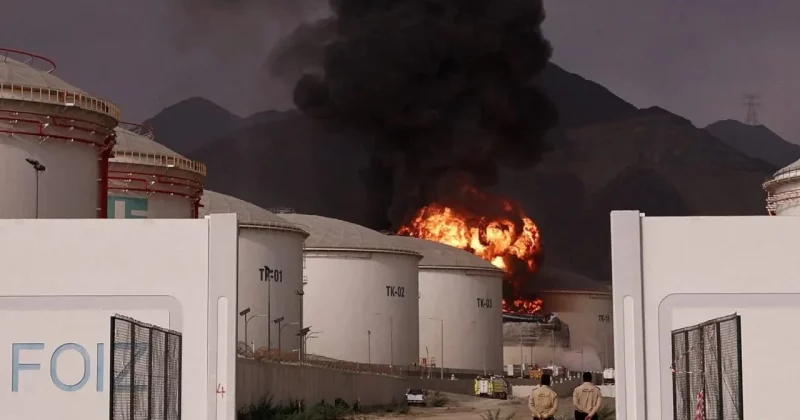
The UAE Ministry of Defence confirmed that air defenses intercepted two drones while a third struck a power generator in the vicinity of the Barakah Nuclear Power Plant. The strike ignited a fire, but authorities reported that radiological safety was not compromised and no injuries occurred.
What happened near Barakah
The Barakah Nuclear Power Plant, located in the Al Dhafra region of Abu Dhabi, is the UAE’s flagship nuclear energy project and the first operational nuclear power plant in the Arab world. A drone that evaded interception struck a power generator near the facility, sparking a fire that was subsequently contained.
The Ministry of Defence confirmed that its air defense systems successfully intercepted several ballistic missiles, cruise missiles, and drones as part of the broader engagement. Investigations into the attacks are underway. Authorities have urged residents to remain calm while security operations continue across national airspace.
A pattern of escalation in the Gulf
The UAE has previously engaged missiles and drones launched from Iran, successfully intercepting three out of four detected cruise missiles over its territorial waters in prior encounters. The current wave of attacks represents a continuation of these hostilities.
Macro, rates, and crypto—what moved markets and what matters next.
Daily. Free. Join 34,000+ readers across crypto, finance, and policy.
The Strait of Hormuz alone handles roughly a fifth of the world’s oil supply on any given day.
Why this matters for markets and crypto
The UAE, and Dubai in particular, has become one of the most important jurisdictions in the global digital asset ecosystem. Major crypto exchanges have established regional headquarters there. The Dubai Virtual Assets Regulatory Authority (VARA) has set up one of the more sophisticated licensing frameworks anywhere in the world.
Energy markets are the more immediate concern. Any disruption to Gulf energy infrastructure tends to send oil prices higher, which ripples through global inflation expectations, central bank policy, and risk asset pricing.