
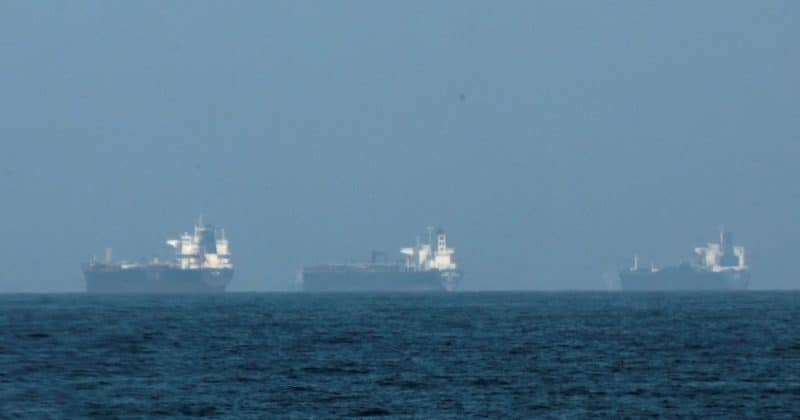
UAE restores oil exports to pre-war levels using bypass routes
Strategic pipeline infrastructure and underground storage help the UAE recover from a devastating export collapse in just three months
Three months ago, the UAE’s oil exports were cut nearly in half. Now they’re almost all the way back, and the playbook for how it happened is worth paying attention to.
By early June 2026, UAE oil exports rebounded to approximately 4.3 million barrels per day, roughly 85% of pre-war levels, according to data from the International Energy Agency. That’s a remarkable swing from March 2026, when exports cratered to 1.9 million bpd amid the Iran conflict that threw the entire Gulf region into chaos.
The pipeline that saved ADNOC’s export machine
The Habshan-Fujairah pipeline, which runs from Abu Dhabi’s inland oil fields to the port of Fujairah on the Gulf of Oman, has a capacity of around 1.8 million bpd. Its importance is simple: it completely bypasses the Strait of Hormuz, the narrow chokepoint between Iran and Oman that handles about 20% of global oil trade.
Backing up the pipeline is the Mandous underground storage facility, which can hold up to 42 million barrels of oil. Having that kind of reserve capacity meant the UAE could smooth out the supply shocks rather than letting them cascade into prolonged export declines.
Partial tanker traffic continued through the Strait of Hormuz itself, despite the ongoing regional tensions. Some vessels apparently found windows to move through the waterway, a calculated risk that contributed to pushing export numbers back toward normal.
ADNOC doubles down on bypass capacity
The Abu Dhabi National Oil Company isn’t treating this recovery as mission accomplished. ADNOC is fast-tracking a new West-East pipeline to Fujairah that would effectively double the port’s export capacity by 2027. As of May 2026, that project was approximately 50% complete.
Crown Prince Sheikh Khaled bin Mohamed bin Zayed Al Nahyan has personally directed the acceleration of bypass infrastructure developments.
An interim US-Iran peace deal has also helped stabilize the broader environment, easing some of the pressure on tanker routes and helping oil prices align closer to pre-war levels.
What this means for energy markets and investors
There’s a risk embedded in this story that’s easy to overlook. The recovery to 4.3 million bpd still represents a 15% gap from pre-war levels. The Mandous facility’s 42 million barrel capacity sounds large, but at 4.3 million bpd of exports, that’s less than 10 days of buffer. Investors should treat the infrastructure buildout as risk reduction, not risk elimination.