
Ukraine launches largest drone attack on Moscow, disrupts air traffic and halts major refinery

Ukraine launches largest drone attack on Moscow, disrupts air traffic and halts major refinery

The strike on Gazprom Neft's Kapotnya refinery knocked out over half its processing capacity, sending ripples through energy markets and raising questions about crypto's role as a geopolitical hedge

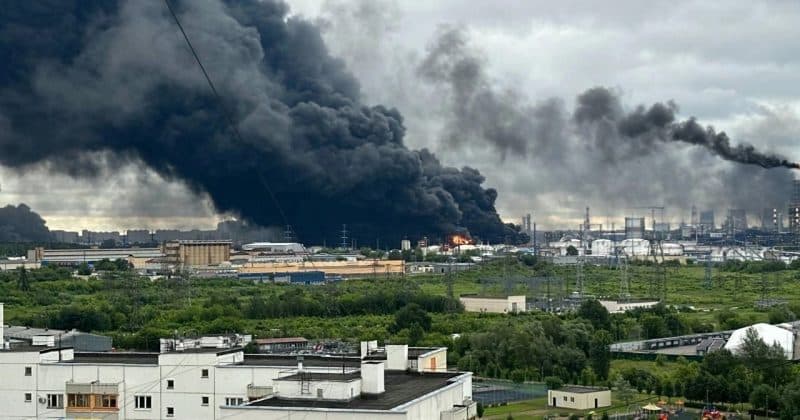
Ukraine hit Moscow with what’s being described as its largest drone assault since the war began, targeting the city’s biggest fuel supplier and forcing flights to reroute across the Russian capital. The June 16 strike on the Kapotnya oil refinery, owned by Gazprom Neft, knocked out refining units responsible for 53% of the facility’s total capacity.

That facility processes more than 11 million tons of oil annually.

What happened on the ground

Moscow’s mayor reported that air defenses intercepted somewhere between 60 and nearly 200 Ukrainian drones during the operation.

Fires broke out at the refinery as a direct result of the strikes. Operations at Kapotnya were halted entirely following the attack, cutting off a major source of refined fuel for the Moscow region.

Advertisement

Air traffic across Moscow was disrupted as the drones approached the city.

Ukrainian President Volodymyr Zelenskyy confirmed the successful strikes on the facility.

The energy infrastructure chess match

This fits into a pattern that has defined Ukraine’s military strategy throughout 2025 and into 2026: systematically degrading Russian energy infrastructure to squeeze the Kremlin’s war-funding pipeline.

The Kapotnya refinery sits within Moscow itself. Previous attacks on Russian energy infrastructure have targeted facilities across the country’s south and west, but strikes of this scale against the capital represent a notable escalation in capability and ambition. Ukraine’s domestically produced drones are capable of flying distances ranging from 500 to 1,000 kilometers.

What this means for markets and crypto investors

Rising oil prices create a domino effect. Consumer energy costs climb, inflation expectations shift, and central banks face renewed pressure on monetary policy decisions.

The more immediate risk for crypto traders is the broader risk-off sentiment that tends to accompany major geopolitical escalations. Crypto, for all its maturation, still sits firmly in the speculative asset category for most portfolio allocators.

Traders should watch crude oil futures, the dollar index, and Bitcoin’s correlation to both in the coming days. If oil spikes and Bitcoin follows, the safe-haven narrative gets another data point. If Bitcoin sells off alongside equities, it reinforces the idea that crypto remains a risk asset first and a hedge second.

Disclosure: This article was edited by Editorial Team. For more information on how we create and review content, see our Editorial Policy.

Ukraine launches largest drone attack on Moscow, disrupts air traffic and halts major refinery

Ukraine launches largest drone attack on Moscow, disrupts air traffic and halts major refinery

The strike on Gazprom Neft's Kapotnya refinery knocked out over half its processing capacity, sending ripples through energy markets and raising questions about crypto's role as a geopolitical hedge

Ukraine hit Moscow with what’s being described as its largest drone assault since the war began, targeting the city’s biggest fuel supplier and forcing flights to reroute across the Russian capital. The June 16 strike on the Kapotnya oil refinery, owned by Gazprom Neft, knocked out refining units responsible for 53% of the facility’s total capacity.

That facility processes more than 11 million tons of oil annually.

What happened on the ground

Moscow’s mayor reported that air defenses intercepted somewhere between 60 and nearly 200 Ukrainian drones during the operation.

Fires broke out at the refinery as a direct result of the strikes. Operations at Kapotnya were halted entirely following the attack, cutting off a major source of refined fuel for the Moscow region.

Advertisement

Air traffic across Moscow was disrupted as the drones approached the city.

Ukrainian President Volodymyr Zelenskyy confirmed the successful strikes on the facility.

The energy infrastructure chess match

This fits into a pattern that has defined Ukraine’s military strategy throughout 2025 and into 2026: systematically degrading Russian energy infrastructure to squeeze the Kremlin’s war-funding pipeline.

The Kapotnya refinery sits within Moscow itself. Previous attacks on Russian energy infrastructure have targeted facilities across the country’s south and west, but strikes of this scale against the capital represent a notable escalation in capability and ambition. Ukraine’s domestically produced drones are capable of flying distances ranging from 500 to 1,000 kilometers.

What this means for markets and crypto investors

Rising oil prices create a domino effect. Consumer energy costs climb, inflation expectations shift, and central banks face renewed pressure on monetary policy decisions.

The more immediate risk for crypto traders is the broader risk-off sentiment that tends to accompany major geopolitical escalations. Crypto, for all its maturation, still sits firmly in the speculative asset category for most portfolio allocators.

Traders should watch crude oil futures, the dollar index, and Bitcoin’s correlation to both in the coming days. If oil spikes and Bitcoin follows, the safe-haven narrative gets another data point. If Bitcoin sells off alongside equities, it reinforces the idea that crypto remains a risk asset first and a hedge second.

Disclosure: This article was edited by Editorial Team. For more information on how we create and review content, see our Editorial Policy.