
Ukraine cuts ground supply lines, isolates Crimea from Russia in drone-led logistics lockdown

Ukraine cuts ground supply lines, isolates Crimea from Russia in drone-led logistics lockdown

A $113 million drone campaign has slashed Russian cargo traffic into Crimea by more than two-thirds, creating fuel shortages on the peninsula and raising fresh geopolitical risk questions for markets.

Ukraine is systematically severing the overland arteries that keep Russian forces in Crimea fed, fueled, and supplied. The campaign, built almost entirely around long-range attack drones, has reduced cargo traffic on a critical highway by more than two-thirds in a matter of weeks.

How the logistics lockdown works

Ukrainian Defense Minister Mykhailo Fedorov formalized the initiative in late May 2026 with a dedicated funding package of $113 million. The money is being funneled into drone production and operations targeting every ground line of communication feeding into occupied Crimea.

Key targets include the R-280 Novorossiya highway, bridges, rail lines, and fuel convoys. Russian freight traffic on the Novorossiya highway has dropped by more than 66%, with one assessment pegging the decline at 71% as of mid-June 2026.

Advertisement

Fuel trucks have been a priority target. Gasoline shortages and rationing have been reported across Crimea as a direct consequence of the strikes. The situation compounds problems that began earlier, when Ukrainian attacks on the Kerch Bridge forced Russia to restrict fuel tanker crossings and reroute convoys onto less secure overland paths.

The strategic picture

Crimea has been a cornerstone of Russia’s military posture since its annexation in 2014. The peninsula hosts the Black Sea Fleet’s home port at Sevastopol and serves as a staging area for operations across southern Ukraine.

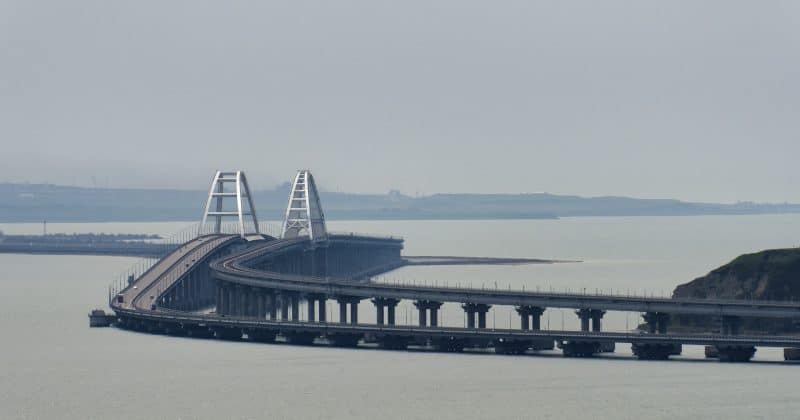
The Kerch Bridge, the 19-kilometer span connecting Crimea to mainland Russia, was already a known vulnerability. Ukraine struck it multiple times in previous years, forcing Russia to diversify its supply routes overland through occupied Ukrainian territory. The current drone campaign targets precisely those diversified routes.

What this means for investors

The isolation of Crimea raises the probability of a more protracted, intensifying conflict rather than a frozen one. Bitcoin has historically seen inflows during acute geopolitical stress, not because it is a perfect safe haven, but because it operates outside the banking rails that sanctions and capital controls target.

Fuel shortages in Crimea are a local phenomenon for now, but Russia remains a major oil and gas exporter. Any development that degrades its military position could affect the calculus around sanctions enforcement, export volumes, and the shadow fleet of tankers that has been moving Russian crude outside Western price caps.

Disclosure: This article was edited by Editorial Team. For more information on how we create and review content, see our Editorial Policy.

Ukraine cuts ground supply lines, isolates Crimea from Russia in drone-led logistics lockdown

Ukraine cuts ground supply lines, isolates Crimea from Russia in drone-led logistics lockdown

A $113 million drone campaign has slashed Russian cargo traffic into Crimea by more than two-thirds, creating fuel shortages on the peninsula and raising fresh geopolitical risk questions for markets.

Ukraine is systematically severing the overland arteries that keep Russian forces in Crimea fed, fueled, and supplied. The campaign, built almost entirely around long-range attack drones, has reduced cargo traffic on a critical highway by more than two-thirds in a matter of weeks.

How the logistics lockdown works

Ukrainian Defense Minister Mykhailo Fedorov formalized the initiative in late May 2026 with a dedicated funding package of $113 million. The money is being funneled into drone production and operations targeting every ground line of communication feeding into occupied Crimea.

Key targets include the R-280 Novorossiya highway, bridges, rail lines, and fuel convoys. Russian freight traffic on the Novorossiya highway has dropped by more than 66%, with one assessment pegging the decline at 71% as of mid-June 2026.

Advertisement

Fuel trucks have been a priority target. Gasoline shortages and rationing have been reported across Crimea as a direct consequence of the strikes. The situation compounds problems that began earlier, when Ukrainian attacks on the Kerch Bridge forced Russia to restrict fuel tanker crossings and reroute convoys onto less secure overland paths.

The strategic picture

Crimea has been a cornerstone of Russia’s military posture since its annexation in 2014. The peninsula hosts the Black Sea Fleet’s home port at Sevastopol and serves as a staging area for operations across southern Ukraine.

The Kerch Bridge, the 19-kilometer span connecting Crimea to mainland Russia, was already a known vulnerability. Ukraine struck it multiple times in previous years, forcing Russia to diversify its supply routes overland through occupied Ukrainian territory. The current drone campaign targets precisely those diversified routes.

What this means for investors

The isolation of Crimea raises the probability of a more protracted, intensifying conflict rather than a frozen one. Bitcoin has historically seen inflows during acute geopolitical stress, not because it is a perfect safe haven, but because it operates outside the banking rails that sanctions and capital controls target.

Fuel shortages in Crimea are a local phenomenon for now, but Russia remains a major oil and gas exporter. Any development that degrades its military position could affect the calculus around sanctions enforcement, export volumes, and the shadow fleet of tankers that has been moving Russian crude outside Western price caps.

Disclosure: This article was edited by Editorial Team. For more information on how we create and review content, see our Editorial Policy.