
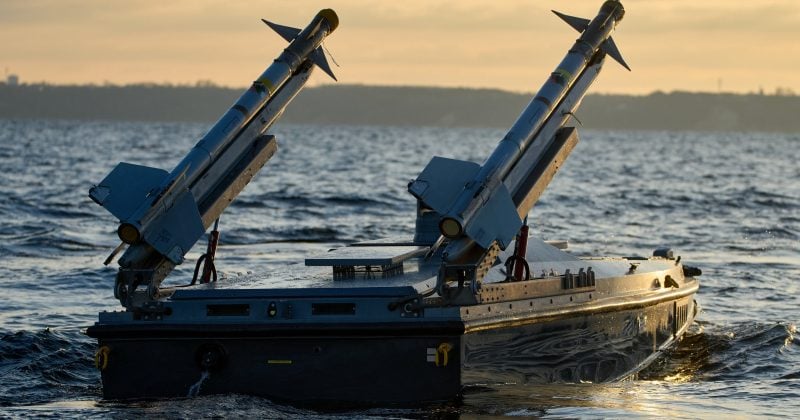
Ukraine sea drones strike over 12 Russian ships in Black and Azov Seas

https://www.the-independent.com/news/world/europe/black-sea-drones-ukraine-navy-b2879911.html

Ukraine sea drones strike over 12 Russian ships in Black and Azov Seas

Ukraine recapture of crimea

Ukraine’s unmanned sea drones have reportedly struck more than 12 Russian ships in the Black and Azov Seas, as indicated by a live tracker. This marks a significant escalation in Ukraine’s asymmetric naval warfare strategy, aimed at crippling Russia’s Black Sea Fleet. The latest developments underscore Ukraine’s use of low-cost, unmanned maritime technology to challenge Russian naval dominance in the region. This comes amid a broader context of maritime conflict, where Ukraine’s drones, such as the Sea Baby and Magura V7, have been effectively denying Russia control of open waters.

Advertisement

Key Takeaways

  • The recent drone attacks appear to suggest an intensification of Ukraine’s naval capabilities, consistent with increased pressure on Russia’s Black Sea Fleet.
  • Markets suggest these developments could bolster confidence in Ukraine’s potential to recapture Crimean territory by the end of 2026.
  • The pricing in relevant prediction markets indicates a modest uptick in the perceived likelihood of Ukraine achieving significant territorial gains.

What to Watch

Observers should monitor any further Ukrainian drone attacks on Russian naval assets, as these could impact the strategic balance in the Black Sea region. Key indicators include updates from the Institute for the Study of War (ISW) and any changes in the shading of Crimea on the ISW map. Developments in Ukrainian ground offensives or Russian defensive responses may also influence market perceptions related to Crimea’s recapture. Continued Ukrainian success in maritime operations could support scenarios favoring a YES outcome.

Get live prediction-market analysis, powered by Vera. Sign up for Vera.

Disclosure: This article was edited by Estefano Gomez. For more information on how we create and review content, see our Editorial Policy.

Ukraine sea drones strike over 12 Russian ships in Black and Azov Seas

Ukraine sea drones strike over 12 Russian ships in Black and Azov Seas

Ukraine recapture of crimea

https://www.the-independent.com/news/world/europe/black-sea-drones-ukraine-navy-b2879911.html

Ukraine’s unmanned sea drones have reportedly struck more than 12 Russian ships in the Black and Azov Seas, as indicated by a live tracker. This marks a significant escalation in Ukraine’s asymmetric naval warfare strategy, aimed at crippling Russia’s Black Sea Fleet. The latest developments underscore Ukraine’s use of low-cost, unmanned maritime technology to challenge Russian naval dominance in the region. This comes amid a broader context of maritime conflict, where Ukraine’s drones, such as the Sea Baby and Magura V7, have been effectively denying Russia control of open waters.

Advertisement

Key Takeaways

  • The recent drone attacks appear to suggest an intensification of Ukraine’s naval capabilities, consistent with increased pressure on Russia’s Black Sea Fleet.
  • Markets suggest these developments could bolster confidence in Ukraine’s potential to recapture Crimean territory by the end of 2026.
  • The pricing in relevant prediction markets indicates a modest uptick in the perceived likelihood of Ukraine achieving significant territorial gains.

What to Watch

Observers should monitor any further Ukrainian drone attacks on Russian naval assets, as these could impact the strategic balance in the Black Sea region. Key indicators include updates from the Institute for the Study of War (ISW) and any changes in the shading of Crimea on the ISW map. Developments in Ukrainian ground offensives or Russian defensive responses may also influence market perceptions related to Crimea’s recapture. Continued Ukrainian success in maritime operations could support scenarios favoring a YES outcome.

Get live prediction-market analysis, powered by Vera. Sign up for Vera.

Disclosure: This article was edited by Estefano Gomez. For more information on how we create and review content, see our Editorial Policy.