
Nexo Earn with Nexo
United Nations censures Iran for failing to account for uranium stockpile

United Nations censures Iran for failing to account for uranium stockpile

The IAEA resolution, backed by 19 countries, targets Iran's refusal to explain uranium particles found at undeclared sites as its enriched stockpile nears weapons-grade levels.

The International Atomic Energy Agency passed a resolution on June 12 censuring Iran for what it called unsatisfactory cooperation with nuclear non-proliferation obligations. The vote carried support from 19 countries, making it one of the most significant international rebukes Iran has faced on its nuclear program in recent memory.

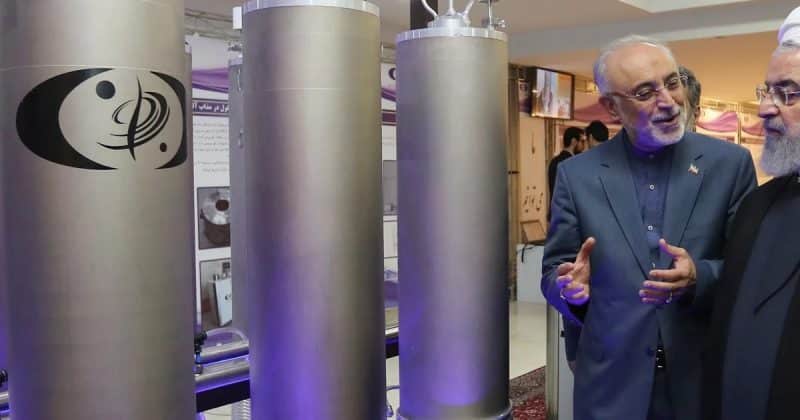
At the heart of the dispute: Iran’s failure to explain how uranium particles ended up at sites it never declared to international inspectors. The country has also taken steps to sanitize those locations, which, in plain English, means cleaning up evidence before the watchdog could examine it properly.

The numbers behind the concern

As of June 13, Iran held roughly 440.9 kg of uranium enriched to 60% U-235. That enrichment level sits uncomfortably close to the 90% threshold considered weapons-grade.

Advertisement

Iran is the only non-nuclear-weapon state party to the Non-Proliferation Treaty that has ever produced uranium at 60% enrichment. No other country in that category has come anywhere near that level. The total estimated Iranian stockpile sits at approximately 9,874.9 kg of enriched uranium across various levels.

The undeclared sites in question include locations at Varamin and Turquzabad, where inspectors found uranium traces that Iran has consistently declined to explain.

Making matters considerably worse, the IAEA has reportedly lost its ability to verify the current status of Iran’s enriched uranium stockpile. Military strikes on Iranian nuclear facilities in mid-June 2025 disrupted the agency’s monitoring infrastructure, effectively blinding the one organization tasked with keeping tabs on Iran’s nuclear activities.

A verification crisis with no easy fix

The combination of Iran’s stonewalling and the physical disruption of monitoring sites creates a verification gap that diplomats will struggle to close. Previous rounds of negotiations between Iran and world powers have always hinged on the IAEA’s ability to independently confirm Iranian compliance with any agreed-upon limits. Without that capability, the foundation for future deals becomes significantly weaker.

The 19-country support for the resolution is notable in itself. Achieving that level of consensus at the IAEA board, which includes countries with varying relationships with Iran, signals that patience with Tehran’s non-cooperation has worn thin across a broad diplomatic spectrum.

What this means for markets and investors

The military strikes on Iranian nuclear facilities that occurred in mid-June add a layer of volatility that markets are still pricing in. Energy commodities tend to respond sharply to Middle Eastern instability, and the loss of IAEA verification capability removes one of the few stabilizing mechanisms that gave markets some confidence about the trajectory of Iran’s nuclear program.

The more significant risk is broader market contagion. If the Iran situation escalates further, rising oil prices could feed inflation concerns, tighten monetary conditions, and create headwinds for risk assets across the board. The IAEA’s inability to verify Iran’s stockpile essentially removes a guardrail that markets relied on, even if they didn’t always acknowledge it explicitly.

Disclosure: This article was edited by Editorial Team. For more information on how we create and review content, see our Editorial Policy.

United Nations censures Iran for failing to account for uranium stockpile

United Nations censures Iran for failing to account for uranium stockpile

The IAEA resolution, backed by 19 countries, targets Iran's refusal to explain uranium particles found at undeclared sites as its enriched stockpile nears weapons-grade levels.

The International Atomic Energy Agency passed a resolution on June 12 censuring Iran for what it called unsatisfactory cooperation with nuclear non-proliferation obligations. The vote carried support from 19 countries, making it one of the most significant international rebukes Iran has faced on its nuclear program in recent memory.

At the heart of the dispute: Iran’s failure to explain how uranium particles ended up at sites it never declared to international inspectors. The country has also taken steps to sanitize those locations, which, in plain English, means cleaning up evidence before the watchdog could examine it properly.

The numbers behind the concern

As of June 13, Iran held roughly 440.9 kg of uranium enriched to 60% U-235. That enrichment level sits uncomfortably close to the 90% threshold considered weapons-grade.

Advertisement

Iran is the only non-nuclear-weapon state party to the Non-Proliferation Treaty that has ever produced uranium at 60% enrichment. No other country in that category has come anywhere near that level. The total estimated Iranian stockpile sits at approximately 9,874.9 kg of enriched uranium across various levels.

The undeclared sites in question include locations at Varamin and Turquzabad, where inspectors found uranium traces that Iran has consistently declined to explain.

Making matters considerably worse, the IAEA has reportedly lost its ability to verify the current status of Iran’s enriched uranium stockpile. Military strikes on Iranian nuclear facilities in mid-June 2025 disrupted the agency’s monitoring infrastructure, effectively blinding the one organization tasked with keeping tabs on Iran’s nuclear activities.

A verification crisis with no easy fix

The combination of Iran’s stonewalling and the physical disruption of monitoring sites creates a verification gap that diplomats will struggle to close. Previous rounds of negotiations between Iran and world powers have always hinged on the IAEA’s ability to independently confirm Iranian compliance with any agreed-upon limits. Without that capability, the foundation for future deals becomes significantly weaker.

The 19-country support for the resolution is notable in itself. Achieving that level of consensus at the IAEA board, which includes countries with varying relationships with Iran, signals that patience with Tehran’s non-cooperation has worn thin across a broad diplomatic spectrum.

What this means for markets and investors

The military strikes on Iranian nuclear facilities that occurred in mid-June add a layer of volatility that markets are still pricing in. Energy commodities tend to respond sharply to Middle Eastern instability, and the loss of IAEA verification capability removes one of the few stabilizing mechanisms that gave markets some confidence about the trajectory of Iran’s nuclear program.

The more significant risk is broader market contagion. If the Iran situation escalates further, rising oil prices could feed inflation concerns, tighten monetary conditions, and create headwinds for risk assets across the board. The IAEA’s inability to verify Iran’s stockpile essentially removes a guardrail that markets relied on, even if they didn’t always acknowledge it explicitly.

Disclosure: This article was edited by Editorial Team. For more information on how we create and review content, see our Editorial Policy.