
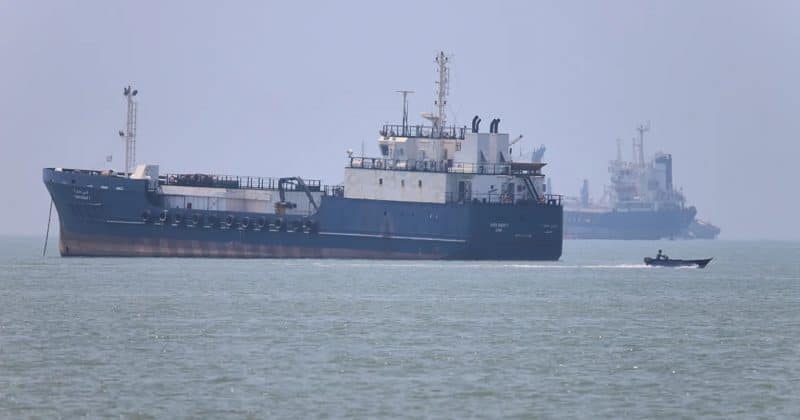
UN evacuates 11,000 stranded seafarers from Hormuz as US-Iran peace deal reopens critical shipping lane
The IMO is coordinating a massive maritime rescue operation after months of conflict trapped nearly 2,000 ships and tens of thousands of crew members in the Persian Gulf.
For months, the Strait of Hormuz, the narrow waterway connecting the Persian Gulf to the Gulf of Oman, was effectively closed for business. Now, the International Maritime Organization is trying to get roughly 11,000 stranded seafarers out.
The IMO disclosed plans on June 23, 2026, to evacuate approximately 11,000 of the estimated 20,000 seafarers still trapped in the Persian Gulf and Strait of Hormuz region. The operation follows a preliminary peace memorandum signed on June 17, 2026, by US President Trump and Iranian officials, which formally ended the conflict and lifted the US naval blockade that had effectively sealed the strait.
IMO Secretary-General Arsenio Dominguez confirmed that safety guarantees for navigation during the evacuation have been secured with regional states. Coordination with Iran, Oman, and neighboring governments will be required to move personnel and vessels through what remains an operationally complex corridor.
The scale of the crisis
Nearly 2,000 vessels were trapped during the conflict, of which an estimated 550 to 600 were merchant ships.
The Strait of Hormuz handles roughly 20% of the world’s oil and natural gas trade under normal conditions. When hostilities broke out, that flow essentially stopped, sending energy markets into prolonged volatility and triggering a humanitarian crisis for the tens of thousands of crew members stuck aboard vessels they could neither safely sail nor abandon.
The 11,000 seafarers now slated for evacuation represent just over half of the total stranded population. The IMO has not yet specified a timeline for addressing the remaining crew members, though the resumption of commercial shipping is expected to accelerate the broader relief effort.
For context, the 2021 Suez Canal blockage, caused by a single grounded container ship over six days, temporarily disrupted an estimated $9.6 billion in daily trade. The Hormuz closure lasted months and involved a chokepoint carrying a significantly larger share of global energy supply.
Crypto entered the conflict in an unexpected way
During the conflict, Iran was reportedly demanding cryptocurrency payments for transit fees, with reports of scams involving Bitcoin and Tether circulating among shipping operators trying to navigate the blockade.
Iran, long cut off from the SWIFT banking system, leaned into digital assets as a mechanism for extracting payments from desperate ship operators who needed passage or at least clarity on their vessels’ status.
Iran has used Bitcoin mining as a way to convert subsidized electricity into hard currency for years. But demanding crypto transit fees from commercial shipping operators, and the associated scam ecosystem that apparently emerged around it, represents a more direct insertion of digital assets into critical global infrastructure disputes.
Tether, in particular, has become the stablecoin of choice in sanction-adjacent economies precisely because it holds dollar value without requiring access to dollar-denominated banking. Its appearance in the Hormuz crisis illustrates how stablecoins are becoming the default payment layer in high-friction, high-risk international transactions.
What this means for markets
The reopening of the Strait of Hormuz should relieve sustained upward pressure on oil and natural gas prices. With 550 to 600 merchant vessels resuming movement and commercial shipping lanes officially cleared, the supply-side disruption that has characterized energy markets for months is beginning to unwind.
The documented use of Bitcoin and Tether in Hormuz transit negotiations adds to a growing body of evidence that digital assets are functioning as payment infrastructure in sanctions regimes, active conflict zones, and jurisdictions with limited banking access. That utility guarantees continued regulatory scrutiny from governments who would prefer that sanctioned actors not have a liquid, pseudonymous payment rail available at scale.