
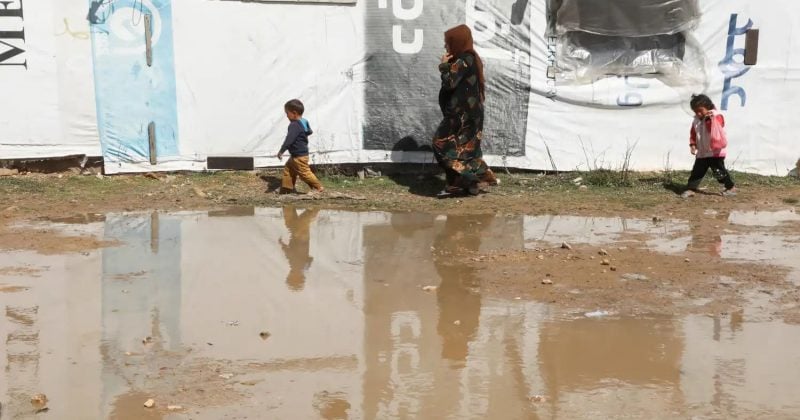
UN reports one million displaced in Lebanon amid Israel-Hezbollah conflict

https://www.brookings.edu/articles/why-syrian-refugees-in-lebanon-are-a-crisis-within-a-crisis/

UN reports one million displaced in Lebanon amid Israel-Hezbollah conflict

Israel-Hezbollah permanent peace deal

The United Nations has reported that approximately one million people remain displaced in Lebanon due to ongoing hostilities with Israel. This situation is part of the broader Israel–Hezbollah conflict, which has seen significant escalation since March 2026. Despite a U.S.-brokered ceasefire in April, violations continue, with Israeli operations persisting in southern Lebanon and Hezbollah maintaining attacks on northern Israel. The displacement represents a considerable humanitarian impact, affecting roughly 20% of Lebanon’s population and complicating peace efforts.

Advertisement

Key Takeaways

  • The report from the UN appears to highlight sustained instability in Lebanon, suggesting continued challenges for peace negotiations between Israel and Hezbollah.
  • Ongoing military operations and civilian displacement are consistent with scenarios where a permanent peace deal remains elusive, as reflected in current market pricing.
  • The market odds for a peace deal by June 30, 2026, are priced at 0.4% YES, indicating low confidence in a near-term resolution.

What to Watch

Watch for developments involving key actors such as Israeli Prime Minister Benjamin Netanyahu and Hezbollah’s leadership, as any change in their positions could influence peace negotiations. Additionally, continued violations of the ceasefire or new diplomatic initiatives by the U.S. or other international bodies may impact market perceptions of a potential peace deal. Monitoring statements from the United Nations and regional actors will also provide insight into the evolving situation.

Get prediction market intelligence as a structured API feed. Early access waitlist.

Disclosure: This article was edited by Estefano Gomez. For more information on how we create and review content, see our Editorial Policy.

UN reports one million displaced in Lebanon amid Israel-Hezbollah conflict

UN reports one million displaced in Lebanon amid Israel-Hezbollah conflict

Israel-Hezbollah permanent peace deal

https://www.brookings.edu/articles/why-syrian-refugees-in-lebanon-are-a-crisis-within-a-crisis/

The United Nations has reported that approximately one million people remain displaced in Lebanon due to ongoing hostilities with Israel. This situation is part of the broader Israel–Hezbollah conflict, which has seen significant escalation since March 2026. Despite a U.S.-brokered ceasefire in April, violations continue, with Israeli operations persisting in southern Lebanon and Hezbollah maintaining attacks on northern Israel. The displacement represents a considerable humanitarian impact, affecting roughly 20% of Lebanon’s population and complicating peace efforts.

Advertisement

Key Takeaways

  • The report from the UN appears to highlight sustained instability in Lebanon, suggesting continued challenges for peace negotiations between Israel and Hezbollah.
  • Ongoing military operations and civilian displacement are consistent with scenarios where a permanent peace deal remains elusive, as reflected in current market pricing.
  • The market odds for a peace deal by June 30, 2026, are priced at 0.4% YES, indicating low confidence in a near-term resolution.

What to Watch

Watch for developments involving key actors such as Israeli Prime Minister Benjamin Netanyahu and Hezbollah’s leadership, as any change in their positions could influence peace negotiations. Additionally, continued violations of the ceasefire or new diplomatic initiatives by the U.S. or other international bodies may impact market perceptions of a potential peace deal. Monitoring statements from the United Nations and regional actors will also provide insight into the evolving situation.

Get prediction market intelligence as a structured API feed. Early access waitlist.

Disclosure: This article was edited by Estefano Gomez. For more information on how we create and review content, see our Editorial Policy.