
Nexo Earn with Nexo
US to award $2 billion to quantum computing firms, takes equity stakes

US to award $2 billion to quantum computing firms, takes equity stakes

The federal government is muscling into the quantum computing race with a massive funding commitment that blurs the line between public investment and venture capital.

The US government is preparing to funnel $2 billion into quantum computing companies, and it’s not just writing checks. Washington plans to take equity stakes in the firms it backs, a move that looks less like traditional government grants and more like a sovereign wealth fund play.

The approach marks a notable departure from how the federal government typically funds emerging technologies. Instead of handing out research grants and hoping for the best, the equity model gives taxpayers a financial upside if these companies succeed. Think of it as Uncle Sam moonlighting as a venture capitalist, except with a defense budget behind him.

Why quantum, why now

Quantum computing has moved from theoretical physics curiosity to national security priority faster than most people realize. The technology promises to solve problems that would take classical computers millions of years, from drug discovery to logistics optimization to, most critically, breaking the encryption that secures everything from banking systems to military communications.

The US already has substantial quantum ambitions baked into existing legislation. The CHIPS and Science Act established multi-billion-dollar frameworks for quantum research, setting the stage for exactly these kinds of public-private partnerships. This $2 billion commitment takes that foundation and adds a sharper financial edge.

Here’s the thing: the equity stake model changes the incentive structure entirely. When the government just gives grants, companies take the money and the public bears all the risk. When Washington takes ownership positions, it creates alignment. If these quantum firms become the next generation of tech giants, the government, and by extension taxpayers, share in the returns.

The private sector is already sprinting

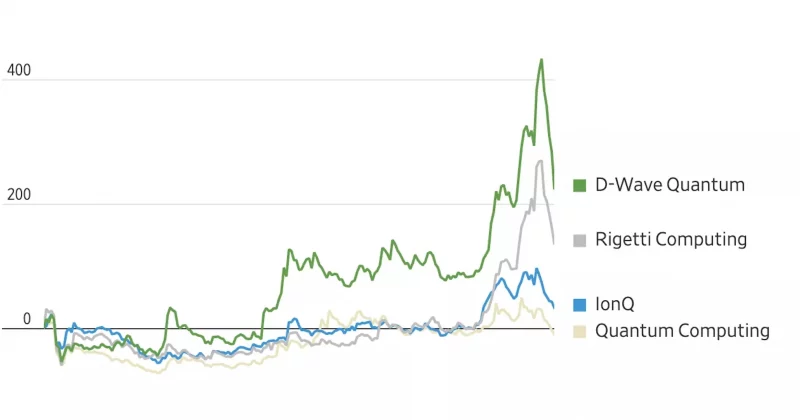
The government’s move comes as private capital is flooding into quantum at an unprecedented pace. The landscape right now is less “early-stage research” and more “full-blown arms race.”

Advertisement

IonQ, one of the sector’s most visible players, recently announced plans to acquire SkyWater Technology for $1.8 billion. The goal is to build a full-stack quantum platform, controlling everything from chip fabrication to the software layer. IonQ also completed a $2 billion equity offering with shares priced at $93 each, a sign of serious institutional confidence in the company’s trajectory.

It’s not just the big names pulling in capital. Nord Quantique, a Canadian firm focused on fault-tolerant quantum architectures, raised $30 million at a $1.4 billion valuation with ambitions to deliver error-corrected quantum systems by 2030. Photonic Inc. completed a $200 million funding round that pushed its valuation to $2 billion.

The pattern is clear: valuations are climbing, deal sizes are growing, and the timeline for commercially viable quantum systems keeps getting shorter. The US government apparently decided it would rather be at the table than watching from the sidelines.

What this means for crypto and beyond

For readers in the crypto space, quantum computing isn’t just an abstract technology story. It’s an existential one.

The cryptographic algorithms that secure Bitcoin, Ethereum, and virtually every other blockchain were designed to be unbreakable by classical computers. Quantum computers play by different rules. A sufficiently powerful quantum machine could theoretically crack the elliptic curve cryptography that protects private keys, meaning the security model underpinning hundreds of billions of dollars in digital assets could be compromised.

In English: the locks on your crypto wallet were built to resist traditional lockpicks. Quantum computing is a blowtorch.

Now, before anyone panic-sells, some context is important. The quantum machines that exist today are nowhere near powerful enough to threaten Bitcoin’s cryptography. The industry consensus is that this threat is still years away, possibly a decade or more. But “years away” in technology has a nasty habit of arriving faster than expected, and a $2 billion government investment with equity upside creates very real incentive to accelerate timelines.

The crypto industry isn’t ignoring this. Post-quantum cryptography research is already underway across multiple blockchain ecosystems. The National Institute of Standards and Technology (NIST) has been working on quantum-resistant cryptographic standards, and several projects are exploring how to migrate existing chains to quantum-safe algorithms before the threat materializes.

The bigger picture for investors is that the US government taking equity positions in quantum firms validates the sector in a way that no amount of venture capital does. Government money comes with strings, but it also comes with staying power. These aren’t investments that get pulled after a bad quarter.

For crypto holders, the calculus is straightforward. Monitor the pace of quantum hardware development and track which blockchain projects are actively building quantum-resistant infrastructure. The projects that take this transition seriously before it becomes urgent will be the ones that survive it.

The US isn’t just betting on quantum computing anymore. It’s buying in.

Disclosure: This article was edited by Editorial Team. For more information on how we create and review content, see our Editorial Policy.

US to award $2 billion to quantum computing firms, takes equity stakes

US to award $2 billion to quantum computing firms, takes equity stakes

The federal government is muscling into the quantum computing race with a massive funding commitment that blurs the line between public investment and venture capital.

The US government is preparing to funnel $2 billion into quantum computing companies, and it’s not just writing checks. Washington plans to take equity stakes in the firms it backs, a move that looks less like traditional government grants and more like a sovereign wealth fund play.

The approach marks a notable departure from how the federal government typically funds emerging technologies. Instead of handing out research grants and hoping for the best, the equity model gives taxpayers a financial upside if these companies succeed. Think of it as Uncle Sam moonlighting as a venture capitalist, except with a defense budget behind him.

Why quantum, why now

Quantum computing has moved from theoretical physics curiosity to national security priority faster than most people realize. The technology promises to solve problems that would take classical computers millions of years, from drug discovery to logistics optimization to, most critically, breaking the encryption that secures everything from banking systems to military communications.

The US already has substantial quantum ambitions baked into existing legislation. The CHIPS and Science Act established multi-billion-dollar frameworks for quantum research, setting the stage for exactly these kinds of public-private partnerships. This $2 billion commitment takes that foundation and adds a sharper financial edge.

Here’s the thing: the equity stake model changes the incentive structure entirely. When the government just gives grants, companies take the money and the public bears all the risk. When Washington takes ownership positions, it creates alignment. If these quantum firms become the next generation of tech giants, the government, and by extension taxpayers, share in the returns.

The private sector is already sprinting

The government’s move comes as private capital is flooding into quantum at an unprecedented pace. The landscape right now is less “early-stage research” and more “full-blown arms race.”

Advertisement

IonQ, one of the sector’s most visible players, recently announced plans to acquire SkyWater Technology for $1.8 billion. The goal is to build a full-stack quantum platform, controlling everything from chip fabrication to the software layer. IonQ also completed a $2 billion equity offering with shares priced at $93 each, a sign of serious institutional confidence in the company’s trajectory.

It’s not just the big names pulling in capital. Nord Quantique, a Canadian firm focused on fault-tolerant quantum architectures, raised $30 million at a $1.4 billion valuation with ambitions to deliver error-corrected quantum systems by 2030. Photonic Inc. completed a $200 million funding round that pushed its valuation to $2 billion.

The pattern is clear: valuations are climbing, deal sizes are growing, and the timeline for commercially viable quantum systems keeps getting shorter. The US government apparently decided it would rather be at the table than watching from the sidelines.

What this means for crypto and beyond

For readers in the crypto space, quantum computing isn’t just an abstract technology story. It’s an existential one.

The cryptographic algorithms that secure Bitcoin, Ethereum, and virtually every other blockchain were designed to be unbreakable by classical computers. Quantum computers play by different rules. A sufficiently powerful quantum machine could theoretically crack the elliptic curve cryptography that protects private keys, meaning the security model underpinning hundreds of billions of dollars in digital assets could be compromised.

In English: the locks on your crypto wallet were built to resist traditional lockpicks. Quantum computing is a blowtorch.

Now, before anyone panic-sells, some context is important. The quantum machines that exist today are nowhere near powerful enough to threaten Bitcoin’s cryptography. The industry consensus is that this threat is still years away, possibly a decade or more. But “years away” in technology has a nasty habit of arriving faster than expected, and a $2 billion government investment with equity upside creates very real incentive to accelerate timelines.

The crypto industry isn’t ignoring this. Post-quantum cryptography research is already underway across multiple blockchain ecosystems. The National Institute of Standards and Technology (NIST) has been working on quantum-resistant cryptographic standards, and several projects are exploring how to migrate existing chains to quantum-safe algorithms before the threat materializes.

The bigger picture for investors is that the US government taking equity positions in quantum firms validates the sector in a way that no amount of venture capital does. Government money comes with strings, but it also comes with staying power. These aren’t investments that get pulled after a bad quarter.

For crypto holders, the calculus is straightforward. Monitor the pace of quantum hardware development and track which blockchain projects are actively building quantum-resistant infrastructure. The projects that take this transition seriously before it becomes urgent will be the ones that survive it.

The US isn’t just betting on quantum computing anymore. It’s buying in.

Disclosure: This article was edited by Editorial Team. For more information on how we create and review content, see our Editorial Policy.