
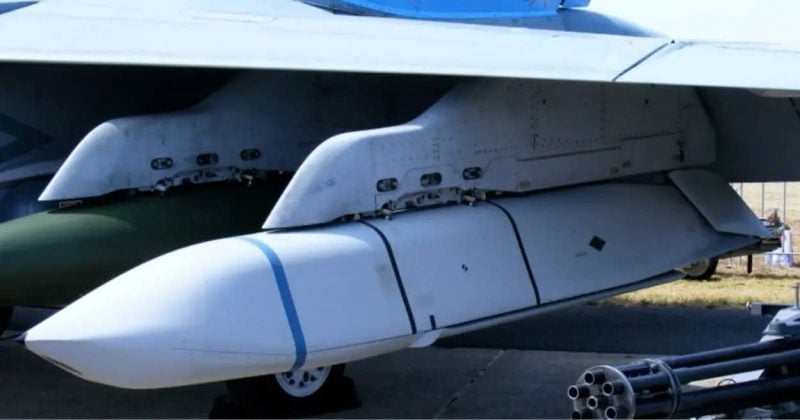
US Air Force develops long-range missile to counter China advances

https://brusselsmorning.com/agm-158-jassm-specifications-recent-use-in-warzone/27444/

US Air Force develops long-range missile to counter China advances

NATO and Russia military clash

The U.S. Air Force is actively pursuing the development of a new missile with an exceptionally long range, according to a report by Axios. The proposed missile, part of the Air Force Long Range Weapon (AFLRW) initiative, aims to achieve a range of at least 1,000 nautical miles. This development is seen as a strategic move to counter advances in Chinese hypersonic missile technology and to enhance the United States’ air-to-air combat capabilities. The missile would target high-value rear-area assets, such as airborne early warning and control planes and tankers. An industry day for this project is scheduled for August 2026 at Eglin Air Force Base, indicating the project’s progression into more concrete phases.

Advertisement

Key Takeaways

  • The Air Force’s initiative appears to underscore a strategic shift towards enhancing long-range air-to-air capabilities, suggesting a response to global military advancements.
  • Markets imply this development may increase the perceived likelihood of heightened military tensions, particularly in relation to NATO-Russia dynamics.
  • The AFLRW project is distinct from other hypersonic programs, indicating a focus on specific air-to-air applications, which may reflect broader defense strategy adjustments.

What to Watch

Observers will be closely monitoring the upcoming industry day at Eglin Air Force Base for further details on the AFLRW specifications and potential contractors involved. Additionally, any official statements from NATO or Russia regarding this missile development could provide insights into international reactions and potential geopolitical shifts. Market participants may look for indications that this advancement influences broader defense policies or escalates existing tensions, which could be consistent with scenarios supportive of increased NATO-Russia conflict probabilities.

Get prediction market intelligence as a structured API feed. Early access waitlist.

Disclosure: This article was edited by Estefano Gomez. For more information on how we create and review content, see our Editorial Policy.

US Air Force develops long-range missile to counter China advances

US Air Force develops long-range missile to counter China advances

NATO and Russia military clash

https://brusselsmorning.com/agm-158-jassm-specifications-recent-use-in-warzone/27444/

The U.S. Air Force is actively pursuing the development of a new missile with an exceptionally long range, according to a report by Axios. The proposed missile, part of the Air Force Long Range Weapon (AFLRW) initiative, aims to achieve a range of at least 1,000 nautical miles. This development is seen as a strategic move to counter advances in Chinese hypersonic missile technology and to enhance the United States’ air-to-air combat capabilities. The missile would target high-value rear-area assets, such as airborne early warning and control planes and tankers. An industry day for this project is scheduled for August 2026 at Eglin Air Force Base, indicating the project’s progression into more concrete phases.

Advertisement

Key Takeaways

  • The Air Force’s initiative appears to underscore a strategic shift towards enhancing long-range air-to-air capabilities, suggesting a response to global military advancements.
  • Markets imply this development may increase the perceived likelihood of heightened military tensions, particularly in relation to NATO-Russia dynamics.
  • The AFLRW project is distinct from other hypersonic programs, indicating a focus on specific air-to-air applications, which may reflect broader defense strategy adjustments.

What to Watch

Observers will be closely monitoring the upcoming industry day at Eglin Air Force Base for further details on the AFLRW specifications and potential contractors involved. Additionally, any official statements from NATO or Russia regarding this missile development could provide insights into international reactions and potential geopolitical shifts. Market participants may look for indications that this advancement influences broader defense policies or escalates existing tensions, which could be consistent with scenarios supportive of increased NATO-Russia conflict probabilities.

Get prediction market intelligence as a structured API feed. Early access waitlist.

Disclosure: This article was edited by Estefano Gomez. For more information on how we create and review content, see our Editorial Policy.