
US airstrikes hit Bandar Abbas as Iran tensions rattle crypto markets again
Strikes near IRGC positions and fishing piers in a key Iranian port city add fresh geopolitical pressure to an already volatile digital asset landscape.
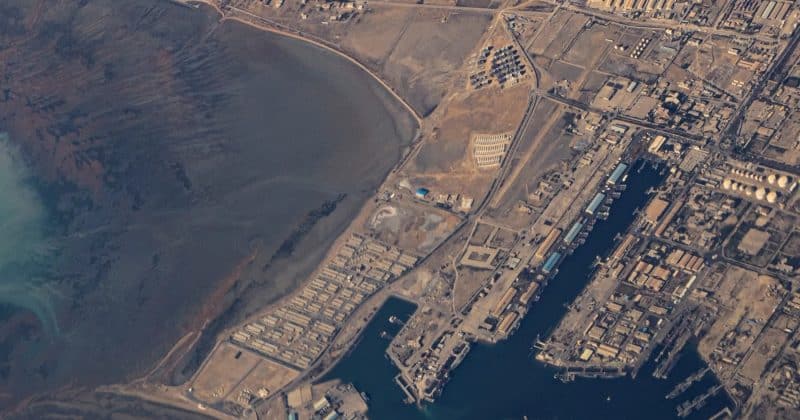
Early Wednesday morning, US airstrikes lit up the skies over Bandar Abbas, Iran, targeting fishing piers and positions associated with Iranian Revolutionary Guard Corps forces near the city’s fish market. The strikes follow attacks on three commercial vessels in the Strait of Hormuz and represent a significant rupture of the temporary ceasefire established in April 2026.
Bandar Abbas is Iran’s most strategically critical commercial port, sitting at the mouth of the Strait of Hormuz, the chokepoint through which a significant share of the world’s oil flows every single day.
What happened and why it matters
US Central Command confirmed targeting over 80 locations during the operation. Wednesday’s strikes bring the total number of US airstrikes around Bandar Abbas to at least 96 since late February 2026, when the current escalation cycle began in earnest.
The immediate trigger was the Strait of Hormuz vessel attacks. Three commercial ships were struck before Washington responded with force, and the sequence matters: the US framed its strikes as a direct response to aggression against international shipping, not an unprovoked escalation.
The April ceasefire, which had paused the back-and-forth of US and Israeli operations against Iranian military infrastructure, now appears to be over. Smoke was reported rising from the Bandar Abbas fishing pier area following the strikes, and IRGC forces were noted in proximity to the targeted zones.
The news moving money, markets, and the world—before your day starts.
Daily. Free. Join 34,000+ readers across crypto, finance, and policy.
Crypto markets and the Hormuz effect
In prior incidents tied to escalating US-Iran tensions earlier in 2026, Bitcoin dropped below $73,000, accompanied by more than $1 billion in crypto market liquidations. Leveraged positions in crypto are particularly exposed during geopolitical shock events because volatility spikes trigger automated liquidations regardless of long-term fundamentals.
There is also a less-discussed but structurally important dimension to the US-Iran conflict and crypto: sanctions enforcement. The US government has a documented track record of seizing Iranian-linked digital assets valued in the hundreds of millions, treating crypto as a vector for sanctions evasion. Each escalation in military tensions tends to sharpen regulatory scrutiny of crypto transactions with sanctioned-entity connections, which can ripple into compliance costs and exchange restrictions for broader market participants.
What investors should watch now
High-leverage positions are the most exposed. The earlier $1B-plus liquidation event during 2026’s prior tension spike showed how quickly cascading margin calls can amplify a geopolitical move into a full-blown market dislocation.
Regulatory follow-through is worth monitoring separately. Each military escalation against Iran historically produces a corresponding tightening of sanctions enforcement, and the US government has shown it views crypto as a meaningful sanctions-evasion tool worth pursuing aggressively. That translates to potential exchange-level compliance actions and transaction screening intensifications that can dampen market activity independent of price moves.
Bandar Abbas is now, by strike count, one of the most heavily targeted locations in a conflict that has been reshaping risk frameworks across asset classes for months.