
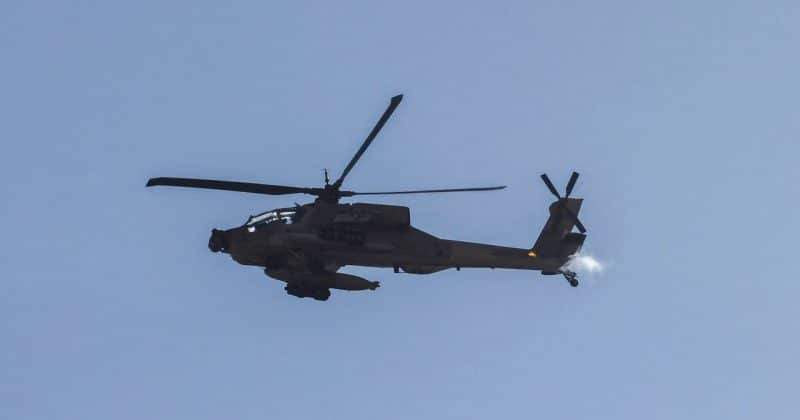
US military completes airstrikes on Iran after helicopter crash off Oman
An Apache helicopter collision with an Iranian drone triggered retaliatory strikes, escalating the 2026 Iran War and sending ripples through oil and crypto markets.
The US military struck Iranian targets on June 9, 2026, hours after an American Apache helicopter crashed into waters off the coast of Oman. The crash, which occurred around 3:30 a.m. local time, was caused by a collision with an Iranian drone, according to the Pentagon. Both crew members survived, rescued by a US Navy drone boat in what the military described as a first-of-its-kind autonomous recovery operation.
President Donald Trump publicly blamed Iran for the incident, framing the retaliatory strikes as a direct response. For crypto investors, the escalation matters because it compounds an already volatile geopolitical backdrop that has been reshaping capital flows since the conflict began in February.
What happened and why it escalated fast
Within hours, the US military confirmed it had completed strikes against Iranian targets. The Pentagon framed the operation as retaliatory, a pattern that has repeated itself multiple times since the 2026 Iran War officially began on February 28. That opening salvo involved joint US-Israeli airstrikes that killed key Iranian military leadership figures, setting the tone for a conflict defined by rapid escalation cycles.
A temporary ceasefire in April 2026 briefly cooled tensions, but it clearly did not hold. The June 9 incident demonstrates that the conflict’s underlying dynamics, Iranian drone operations near critical waterways, US force projection in the Gulf, remain fundamentally unresolved.
The broader conflict and its toll
The 2026 Iran War has already produced devastating consequences. Thousands have been killed and millions displaced since hostilities began, making it the most significant US military engagement in the Middle East in years.
The news moving money, markets, and the world—before your day starts.
Daily. Free. Join 34,000+ readers across crypto, finance, and policy.
The Strait of Hormuz remains the flashpoint that keeps global markets on edge. Roughly a fifth of the world’s oil supply passes through this corridor, and any sustained disruption would send energy prices into a spiral.
What this means for crypto investors
The pattern is becoming familiar. Conflict escalation triggers a flight from equities, a spike in oil, and a brief dip in crypto before Bitcoin recovers. Institutional investors appear to be treating Bitcoin as a partial hedge against exactly this kind of geopolitical uncertainty, allocating capital into digital assets when traditional safe havens like gold and treasuries become crowded.
During prior escalation phases of the Iran conflict, Bitcoin’s correlation with the VIX has been lower than that of tech stocks and other risk-on assets.
Millions of displaced people and disrupted regional economies create conditions where alternative financial infrastructure, including stablecoins and peer-to-peer crypto networks, sees increased adoption. This pattern has played out in previous conflicts, and the scale of the 2026 Iran War suggests it could accelerate further.