
Nexo Earn with Nexo
US Central Command disables oil tanker in Gulf of Oman after blockade violation

US Central Command disables oil tanker in Gulf of Oman after blockade violation

The Palau-flagged M/T Marivex becomes the seventh vessel disabled since the US blockade of Iran began in April, with crypto implications rippling through digital asset markets.

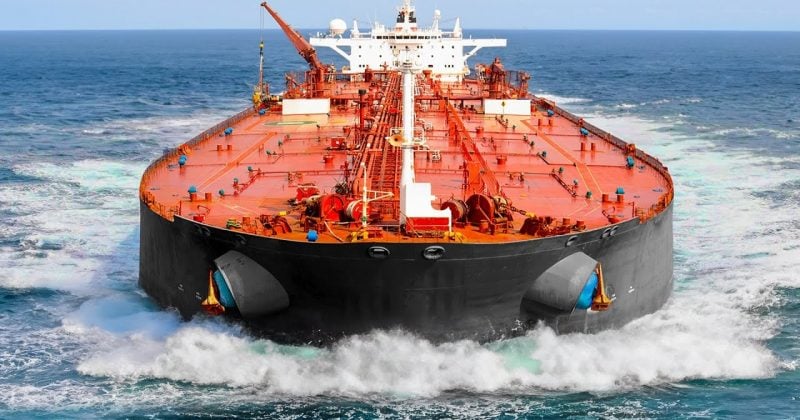
A US Navy fighter jet fired precision munitions at an oil tanker in the Gulf of Oman on June 8, disabling the vessel after its crew refused orders to cease operations. The M/T Marivex, an unladen tanker flying a Palau flag, is the seventh ship disabled since the US blockade of Iran began on April 13.

All 24 Indian nationals aboard the Marivex were airlifted to safety by Omani naval helicopters. The tanker itself was left stranded and incapacitated.

The blockade by the numbers

The F/A-18 Super Hornet that struck the Marivex launched from the USS Abraham Lincoln. CENTCOM says the crew was given orders to stand down before force was used.

Advertisement

Since April 13, US forces have redirected 134 vessels and allowed 42 humanitarian ships to pass through. Seven vessels have been disabled through kinetic action.

The Marivex joins a growing list of disabled ships. In May alone, the M/T Sea Star III, M/T Sevda, and M/T Hasna were all taken out of commission through similar operations.

Iran’s crypto toll proposal and digital asset freezes

In April, Iran proposed a crypto toll of roughly $1 per barrel on oil transiting the Strait of Hormuz, payable in cryptocurrency.

The US Treasury has frozen nearly $500M in Iranian digital assets, targeting the digital financial infrastructure supporting sanctions evasion. The freeze represents one of the largest state-level digital asset seizures to date.

What this means for crypto investors

The $500M in frozen Iranian digital assets demonstrates that the US government’s capacity to trace, seize, and freeze crypto holdings has matured considerably.

Bitcoin miners deserve special attention. Mining operations are energy-intensive, and sustained oil market disruptions can ripple into electricity costs, particularly in regions where natural gas prices are pegged to oil benchmarks.

Iran’s crypto toll proposal signals that nation-states are attempting to weaponize digital assets as infrastructure for trade and toll collection. The Treasury’s digital asset freeze total is a key metric: if that $500M figure keeps climbing, the regulatory implications for exchanges, DeFi protocols, and privacy tools could accelerate significantly.

Disclosure: This article was edited by Editorial Team. For more information on how we create and review content, see our Editorial Policy.

US Central Command disables oil tanker in Gulf of Oman after blockade violation

US Central Command disables oil tanker in Gulf of Oman after blockade violation

The Palau-flagged M/T Marivex becomes the seventh vessel disabled since the US blockade of Iran began in April, with crypto implications rippling through digital asset markets.

A US Navy fighter jet fired precision munitions at an oil tanker in the Gulf of Oman on June 8, disabling the vessel after its crew refused orders to cease operations. The M/T Marivex, an unladen tanker flying a Palau flag, is the seventh ship disabled since the US blockade of Iran began on April 13.

All 24 Indian nationals aboard the Marivex were airlifted to safety by Omani naval helicopters. The tanker itself was left stranded and incapacitated.

The blockade by the numbers

The F/A-18 Super Hornet that struck the Marivex launched from the USS Abraham Lincoln. CENTCOM says the crew was given orders to stand down before force was used.

Advertisement

Since April 13, US forces have redirected 134 vessels and allowed 42 humanitarian ships to pass through. Seven vessels have been disabled through kinetic action.

The Marivex joins a growing list of disabled ships. In May alone, the M/T Sea Star III, M/T Sevda, and M/T Hasna were all taken out of commission through similar operations.

Iran’s crypto toll proposal and digital asset freezes

In April, Iran proposed a crypto toll of roughly $1 per barrel on oil transiting the Strait of Hormuz, payable in cryptocurrency.

The US Treasury has frozen nearly $500M in Iranian digital assets, targeting the digital financial infrastructure supporting sanctions evasion. The freeze represents one of the largest state-level digital asset seizures to date.

What this means for crypto investors

The $500M in frozen Iranian digital assets demonstrates that the US government’s capacity to trace, seize, and freeze crypto holdings has matured considerably.

Bitcoin miners deserve special attention. Mining operations are energy-intensive, and sustained oil market disruptions can ripple into electricity costs, particularly in regions where natural gas prices are pegged to oil benchmarks.

Iran’s crypto toll proposal signals that nation-states are attempting to weaponize digital assets as infrastructure for trade and toll collection. The Treasury’s digital asset freeze total is a key metric: if that $500M figure keeps climbing, the regulatory implications for exchanges, DeFi protocols, and privacy tools could accelerate significantly.

Disclosure: This article was edited by Editorial Team. For more information on how we create and review content, see our Editorial Policy.