
Nexo Earn with Nexo
US crude oil inventories drop 6.75M barrels, nearly double the forecast

US crude oil inventories drop 6.75M barrels, nearly double the forecast

The American Petroleum Institute's latest weekly data shows US crude stocks falling at an accelerating pace, signaling tighter supply conditions heading into summer.

US crude oil inventories fell by 6.75 million barrels for the week ending May 29, according to the American Petroleum Institute’s weekly report. The market had been expecting a draw of roughly 3.6 million barrels. In other words, the actual decline was nearly double what traders had penciled in.

The previous week saw inventories decline by 2.8 million barrels, already signaling a tightening trend. But this latest figure represents a sharp acceleration.

Advertisement

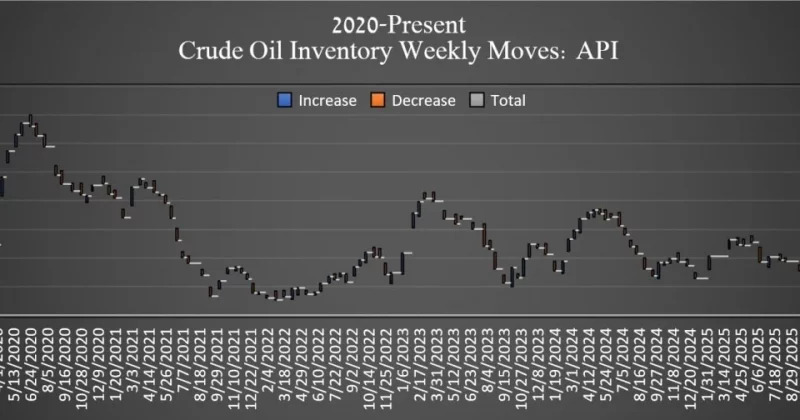
April had already set the tone with consecutive large draws, including declines of 4.4 million and 4.5 million barrels. To appreciate how unusual this is, consider the range of API data in recent years. In January 2023, the API recorded a build of 14.87 million barrels, the high-water mark for inventory additions. Just six months later, in July 2023, it logged a draw of 15.40 million barrels at the opposite extreme. The current 6.75 million barrel decline sits comfortably in the upper range of significant draws.

The API releases its inventory figures weekly, typically on Tuesday evenings, ahead of the official Energy Information Administration (EIA) report. The EIA numbers usually follow within a day. A miss this large tends to move markets before the government data even arrives.

When the API reports a draw that’s nearly twice the consensus estimate, the immediate market interpretation is straightforward: bullish for oil prices. Less supply sitting in tanks means the physical market is tighter than futures traders had assumed. Larger-than-expected inventory declines have historically pushed crude futures higher in the sessions following the report.

The key data point to watch next is the EIA’s official inventory report. If the government data confirms a draw anywhere close to 6.75 million barrels, expect the bullish narrative around crude to solidify. If the EIA number comes in significantly smaller, it could dampen some of the enthusiasm.

Disclosure: This article was edited by Editorial Team. For more information on how we create and review content, see our Editorial Policy.

US crude oil inventories drop 6.75M barrels, nearly double the forecast

US crude oil inventories drop 6.75M barrels, nearly double the forecast

The American Petroleum Institute's latest weekly data shows US crude stocks falling at an accelerating pace, signaling tighter supply conditions heading into summer.

US crude oil inventories fell by 6.75 million barrels for the week ending May 29, according to the American Petroleum Institute’s weekly report. The market had been expecting a draw of roughly 3.6 million barrels. In other words, the actual decline was nearly double what traders had penciled in.

The previous week saw inventories decline by 2.8 million barrels, already signaling a tightening trend. But this latest figure represents a sharp acceleration.

Advertisement

April had already set the tone with consecutive large draws, including declines of 4.4 million and 4.5 million barrels. To appreciate how unusual this is, consider the range of API data in recent years. In January 2023, the API recorded a build of 14.87 million barrels, the high-water mark for inventory additions. Just six months later, in July 2023, it logged a draw of 15.40 million barrels at the opposite extreme. The current 6.75 million barrel decline sits comfortably in the upper range of significant draws.

The API releases its inventory figures weekly, typically on Tuesday evenings, ahead of the official Energy Information Administration (EIA) report. The EIA numbers usually follow within a day. A miss this large tends to move markets before the government data even arrives.

When the API reports a draw that’s nearly twice the consensus estimate, the immediate market interpretation is straightforward: bullish for oil prices. Less supply sitting in tanks means the physical market is tighter than futures traders had assumed. Larger-than-expected inventory declines have historically pushed crude futures higher in the sessions following the report.

The key data point to watch next is the EIA’s official inventory report. If the government data confirms a draw anywhere close to 6.75 million barrels, expect the bullish narrative around crude to solidify. If the EIA number comes in significantly smaller, it could dampen some of the enthusiasm.

Disclosure: This article was edited by Editorial Team. For more information on how we create and review content, see our Editorial Policy.