
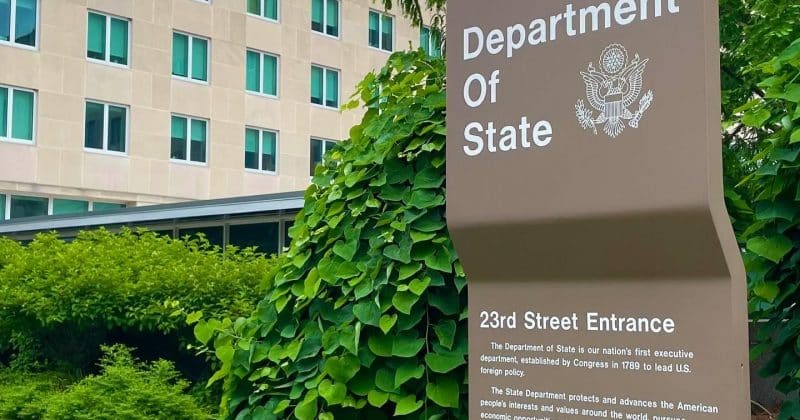
US government official denies Iran media report on $12B MOU payment
American officials call Iranian state media claims of upfront frozen asset release a fabrication, insisting any deal would be performance-based
A US government official has pushed back against Iranian state media reports claiming that a proposed Memorandum of Understanding between the two countries would unlock $12 billion in frozen assets held in Qatar. The official stated flatly that the agreement is entirely performance-based, with no upfront payments involved.
A senior US official went further, labeling the reported MOU terms a “complete fabrication.”
Two countries, two narratives
Here’s what Iranian state television reportedly told its audience: that a future deal would grant Tehran full access to $12 billion in frozen assets within a 60-day timeframe. Iranian negotiators have allegedly demanded guaranteed access to these funds as a precondition for moving forward with talks.
The American side sees it differently. US officials insist that no cash transfers or asset unfreezes would occur simply because a document gets signed. Any release of funds, they maintain, would be contingent on Iran meeting specific benchmarks.
What’s actually on the table
The broader negotiations extend well beyond the $12 billion dispute. The discussions reportedly encompass nuclear restraints, an end to regional conflicts, reopening of the strategically critical Strait of Hormuz, and comprehensive sanctions relief.
Under the structure being discussed, a signed MOU would trigger a 60-day period of technical negotiations. That means even in the most optimistic scenario, any concrete outcomes would be months away from the signing date, not immediate.
The news moving money, markets, and the world—before your day starts.
Daily. Free. Join 34,000+ readers across crypto, finance, and policy.
These are indirect negotiations taking place under the Trump administration as of mid-June 2026. The $12 billion itself sits in Qatar, frozen under US sanctions.
No crypto angle, despite the backdrop
One notable absence in the entire MOU discussion: cryptocurrency. Despite the US government’s separate and ongoing efforts to crack down on Iranian crypto networks allegedly used for sanctions evasion, no references to digital assets have surfaced in connection with the proposed payment terms.
The US Treasury has previously targeted networks it claims Iran has used to move money through digital channels, bypassing traditional banking restrictions. These negotiations are playing out entirely within traditional financial frameworks.
What this means for investors
The Strait of Hormuz alone is worth paying attention to. Roughly a fifth of the world’s oil supply passes through that narrow waterway.
The performance-based structure the US is insisting on means that even if a deal eventually materializes, the timeline for any actual fund release would be extended. The American position, at least as stated publicly, rules out a sudden injection of $12 billion into Iranian coffers based on a signature alone.