
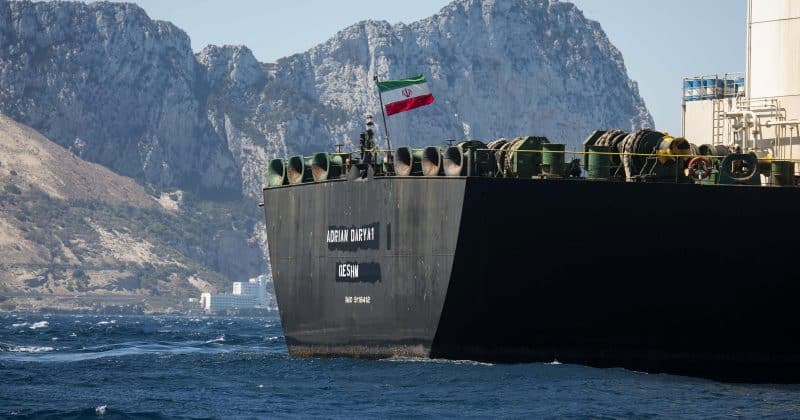
United States eases enforcement of sanctions on Iranian oil exports
A temporary general license covering 140 million barrels of Iranian crude signals tactical flexibility, not a policy reversal
The US Treasury issued a temporary general license on March 20, allowing the sale and delivery of Iranian-origin crude oil and petroleum products already loaded on vessels. The authorization covers approximately 140 million barrels and runs through April 19, 2026.
At roughly $100 per barrel, the average price at the time of issuance, that translates to a potential one-time windfall of around $14 billion. It’s a significant number, but it’s not quite the $100 billion annual revenue figure that Iran generated in pre-sanctions eras.
What the temporary license actually does
The license specifically covers oil that was already physically loaded onto vessels before the announcement.
Treasury Secretary Scott Bessent confirmed the authorization would expire as scheduled on April 19, with no plans for renewal. By mid-April, officials doubled down on that position, stating there would be no extension.
Regional conflicts, particularly around the Strait of Hormuz, had been driving supply disruptions and pushing oil prices higher. Letting already-loaded tankers complete their deliveries was a way to relieve pressure on global energy markets without fundamentally changing the US posture toward Tehran.
Macro, rates, and crypto—what moved markets and what matters next.
Daily. Free. Join 34,000+ readers across crypto, finance, and policy.
Sanctions enforcement continued unaltered in other areas. The US maintained its targeting of military-linked oil sales networks. Sanctioned entities still include the National Iranian Oil Company and Sepehr Energy Jahan Nama Pars Company, among others.
The broader geopolitical chessboard
The US also extended waivers for Russian oil shipments into May and June 2026.
US sanctions on Iranian oil intensified significantly after 2018, when the previous administration withdrew from the Iran nuclear deal.
Iran’s pre-sanctions oil revenue ran around $100 billion annually. This one-time authorization represents roughly 14% of what Iran used to earn in a full year from oil exports.
What this means for investors
No involvement of cryptocurrency markets or digital assets was reported in connection with this decision.