
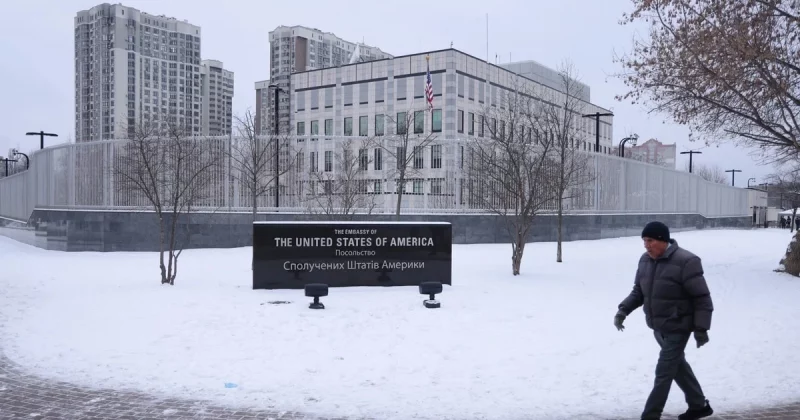
US Embassy warns of potential large-scale attack on Ukraine within 24 hours
The Kyiv embassy urged American citizens to shelter as intelligence pointed to an imminent air assault, which materialized overnight with Russia's second-ever use of the Oreshnik ballistic missile.
The US Embassy in Kyiv issued a security alert on January 8 warning of a “potentially significant air attack” expected within the following day, urging American citizens to take shelter immediately during air alerts.
The warning proved prescient. Overnight into January 9, Russian forces launched a large-scale strike across Ukraine, deploying the Oreshnik intermediate-range ballistic missile for only the second time in the conflict. The assault targeted the Lviv region in western Ukraine alongside a barrage of other missiles and drones aimed at critical energy and infrastructure sites, killing at least four people in Kyiv.
What happened and why it matters
The embassy’s alert did not name Russia as the expected aggressor. The Oreshnik missile is an intermediate-range ballistic missile capable of carrying nuclear warheads, first deployed by Russia in late 2024. Its second deployment near Lviv, deep in western Ukraine and closer to NATO borders, signals that Moscow is willing to keep expanding both the geographic scope and the destructive capability of its strikes. Analysts suggest the strike is part of a broader effort to deter further Western military assistance and troop deployments into the region.
Ukrainian authorities recovered debris from the Oreshnik and classified its use as a war crime, citing the targeting of civilian infrastructure. At least four people were confirmed dead in Kyiv from the broader overnight assault.
The US Embassy has issued multiple similar alerts since 2024 as the pace and scale of Russian missile and drone campaigns have escalated.
The crypto angle: donations, sanctions, and safe-haven flows
Since the early days of the conflict in 2022, crypto has played a dual role in the war. Ukraine has received significant cryptocurrency donations to fund its defense and humanitarian efforts. On the other side, sanctions enforcement has created a cat-and-mouse dynamic where regulators attempt to block Russian entities from using digital assets to circumvent financial restrictions.
No direct cryptocurrency market reactions or token-specific developments have been linked to the January alert or ensuing strike. Sanctions compliance remains a live issue for exchanges and DeFi protocols operating in jurisdictions that enforce restrictions on Russian financial flows. Chainalysis and other blockchain analytics firms have documented how sanctioned entities adapt their on-chain behavior over time, moving to privacy-preserving protocols and decentralized exchanges.