
Nexo Earn with Nexo
US government escorts oil shipments through Strait of Hormuz at night

US government escorts oil shipments through Strait of Hormuz at night

Interior Secretary Doug Burgum says US forces guide over 20 ships per night through the critical chokepoint, comparing Iran's regional behavior to piracy

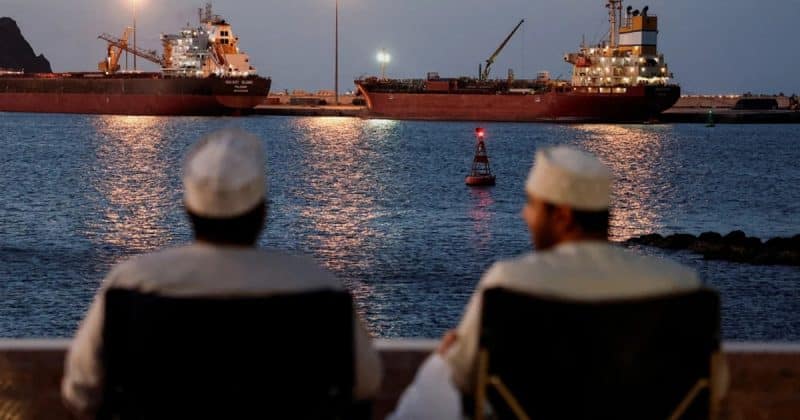
The US military is actively shepherding commercial oil shipments through one of the world’s most strategically important waterways. US Interior Secretary Doug Burgum disclosed that American forces escort over 20 ships per night through the Strait of Hormuz, the narrow passage between Iran and Oman through which roughly a fifth of the world’s oil supply flows daily.

Burgum didn’t mince words about who’s creating the problem. He compared Iran’s operations in the region to “Somali pirates,” framing Tehran’s behavior as an attempt to leverage its geographic position to control global energy supplies.

Advertisement

The US Navy escort discussions began in March 2026, with active guidance of ships ramping up during the middle of the year. The fact that these convoys are happening at night adds a layer of operational seriousness that suggests the threat assessment is more than theoretical.

Iran has reportedly proposed collecting transit fees of roughly $1 per barrel on laden tankers passing through the strait, with a twist: the fees would be payable in Bitcoin. The proposal is tied to projected ceasefire windows, suggesting Tehran sees it as a way to monetize its geographic leverage during periods of reduced hostility.

Iran is also reportedly exploring a Bitcoin-settled maritime insurance platform called “Hormuz Safe.” The concept would allow shipping companies to purchase insurance coverage for strait transits using cryptocurrency, creating an entirely parallel financial infrastructure for one of the world’s most critical trade routes.

The immediate market impact of Hormuz-related tensions has already shown up in the data. Late May 2026 saw about $958 million in liquidations across crypto markets within a single 24-hour period, with the majority hitting long positions.

Disclosure: This article was edited by Editorial Team. For more information on how we create and review content, see our Editorial Policy.

US government escorts oil shipments through Strait of Hormuz at night

US government escorts oil shipments through Strait of Hormuz at night

Interior Secretary Doug Burgum says US forces guide over 20 ships per night through the critical chokepoint, comparing Iran's regional behavior to piracy

The US military is actively shepherding commercial oil shipments through one of the world’s most strategically important waterways. US Interior Secretary Doug Burgum disclosed that American forces escort over 20 ships per night through the Strait of Hormuz, the narrow passage between Iran and Oman through which roughly a fifth of the world’s oil supply flows daily.

Burgum didn’t mince words about who’s creating the problem. He compared Iran’s operations in the region to “Somali pirates,” framing Tehran’s behavior as an attempt to leverage its geographic position to control global energy supplies.

Advertisement

The US Navy escort discussions began in March 2026, with active guidance of ships ramping up during the middle of the year. The fact that these convoys are happening at night adds a layer of operational seriousness that suggests the threat assessment is more than theoretical.

Iran has reportedly proposed collecting transit fees of roughly $1 per barrel on laden tankers passing through the strait, with a twist: the fees would be payable in Bitcoin. The proposal is tied to projected ceasefire windows, suggesting Tehran sees it as a way to monetize its geographic leverage during periods of reduced hostility.

Iran is also reportedly exploring a Bitcoin-settled maritime insurance platform called “Hormuz Safe.” The concept would allow shipping companies to purchase insurance coverage for strait transits using cryptocurrency, creating an entirely parallel financial infrastructure for one of the world’s most critical trade routes.

The immediate market impact of Hormuz-related tensions has already shown up in the data. Late May 2026 saw about $958 million in liquidations across crypto markets within a single 24-hour period, with the majority hitting long positions.

Disclosure: This article was edited by Editorial Team. For more information on how we create and review content, see our Editorial Policy.