
US evacuates aircraft from Qatar’s Al Udeid Air Base to Israel as Bitcoin slides toward $63K

US evacuates aircraft from Qatar’s Al Udeid Air Base to Israel as Bitcoin slides toward $63K

The Pentagon's repositioning of dozens of aerial refueling tankers signals growing strike concerns, and crypto markets are already pricing in the risk.

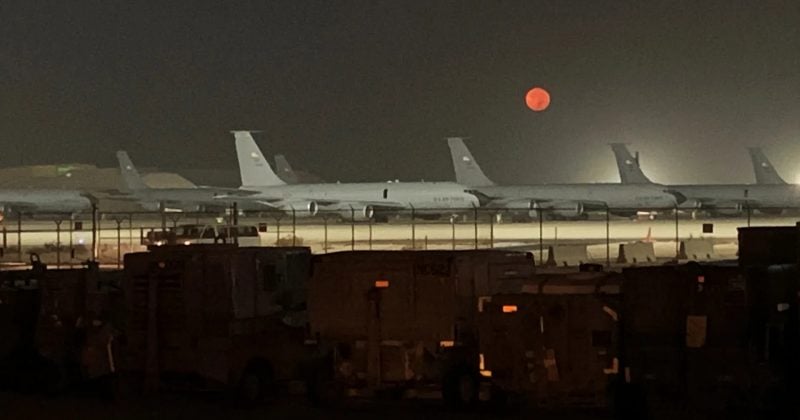
The US military has begun evacuating KC-135 Stratotanker aircraft from Al Udeid Air Base in Qatar and repositioning them to Israel, a move that tells you everything you need to know about how seriously Washington is taking the current threat environment in the Middle East.

Bitcoin responded by sliding toward $63K, while oil climbed toward $80 per barrel.

What’s happening on the ground

Starting in mid-July 2026, flight tracking data and satellite imagery confirmed dozens of KC-135 Stratotankers departing Al Udeid, the sprawling air base that serves as the nerve center for US Central Command operations across the region. More than 60 US aerial refueling aircraft have been reported in Israel so far, with at least 33 confirmed stationed at Ben Gurion Airport. More arrivals were expected on July 18-19.

Advertisement

The Iranian Revolutionary Guard has made claims regarding strikes on Al Udeid. Al Udeid previously faced Iranian threats including ballistic missile strikes noted in reports from 2025.

Moving refueling tankers to Israel accomplishes two things simultaneously. It gets critical assets out of potential strike range, and it pre-positions them closer to where they’d need to be if offensive operations against Iran were to materialize. Aerial refueling capability is the unglamorous backbone of any sustained air campaign. Without tankers, fighter jets and bombers have dramatically reduced range and loiter time.

Markets are paying attention

Bitcoin’s drop toward $63K amid these developments is a textbook example of how crypto has evolved from a niche asset class into something that reacts to geopolitical headlines in near real-time.

Oil’s move toward $80 per barrel is far more intuitive. Any military escalation involving Iran threatens the Strait of Hormuz, through which roughly a fifth of the world’s oil passes daily.

The bigger picture for crypto investors

What is consistent is that volatility spikes. And volatility, regardless of direction, tends to trigger liquidations across leveraged positions in crypto markets. Traders running high leverage on perpetual futures are particularly exposed during these episodes, because geopolitical headlines tend to arrive without warning and cause sharp moves that cascade through the liquidation engine.

The operational repositioning happening right now is reminiscent of earlier 2026 military responses to Iranian nuclear developments. Each escalation step has corresponded with temporary crypto selloffs followed by recoveries, creating a sawtooth pattern that rewards patient holders but punishes leveraged traders.

Disclosure: This article was edited by Editorial Team. For more information on how we create and review content, see our Editorial Policy.

US evacuates aircraft from Qatar’s Al Udeid Air Base to Israel as Bitcoin slides toward $63K

US evacuates aircraft from Qatar’s Al Udeid Air Base to Israel as Bitcoin slides toward $63K

The Pentagon's repositioning of dozens of aerial refueling tankers signals growing strike concerns, and crypto markets are already pricing in the risk.

The US military has begun evacuating KC-135 Stratotanker aircraft from Al Udeid Air Base in Qatar and repositioning them to Israel, a move that tells you everything you need to know about how seriously Washington is taking the current threat environment in the Middle East.

Bitcoin responded by sliding toward $63K, while oil climbed toward $80 per barrel.

What’s happening on the ground

Starting in mid-July 2026, flight tracking data and satellite imagery confirmed dozens of KC-135 Stratotankers departing Al Udeid, the sprawling air base that serves as the nerve center for US Central Command operations across the region. More than 60 US aerial refueling aircraft have been reported in Israel so far, with at least 33 confirmed stationed at Ben Gurion Airport. More arrivals were expected on July 18-19.

Advertisement

The Iranian Revolutionary Guard has made claims regarding strikes on Al Udeid. Al Udeid previously faced Iranian threats including ballistic missile strikes noted in reports from 2025.

Moving refueling tankers to Israel accomplishes two things simultaneously. It gets critical assets out of potential strike range, and it pre-positions them closer to where they’d need to be if offensive operations against Iran were to materialize. Aerial refueling capability is the unglamorous backbone of any sustained air campaign. Without tankers, fighter jets and bombers have dramatically reduced range and loiter time.

Markets are paying attention

Bitcoin’s drop toward $63K amid these developments is a textbook example of how crypto has evolved from a niche asset class into something that reacts to geopolitical headlines in near real-time.

Oil’s move toward $80 per barrel is far more intuitive. Any military escalation involving Iran threatens the Strait of Hormuz, through which roughly a fifth of the world’s oil passes daily.

The bigger picture for crypto investors

What is consistent is that volatility spikes. And volatility, regardless of direction, tends to trigger liquidations across leveraged positions in crypto markets. Traders running high leverage on perpetual futures are particularly exposed during these episodes, because geopolitical headlines tend to arrive without warning and cause sharp moves that cascade through the liquidation engine.

The operational repositioning happening right now is reminiscent of earlier 2026 military responses to Iranian nuclear developments. Each escalation step has corresponded with temporary crypto selloffs followed by recoveries, creating a sawtooth pattern that rewards patient holders but punishes leveraged traders.

Disclosure: This article was edited by Editorial Team. For more information on how we create and review content, see our Editorial Policy.