
Nexo Earn with Nexo
US existing home sales rise to 4.02M in April, missing expectations as housing market limps along

US existing home sales rise to 4.02M in April, missing expectations as housing market limps along

The housing market's sluggish recovery has implications for Fed policy and, by extension, crypto markets eyeing looser monetary conditions.

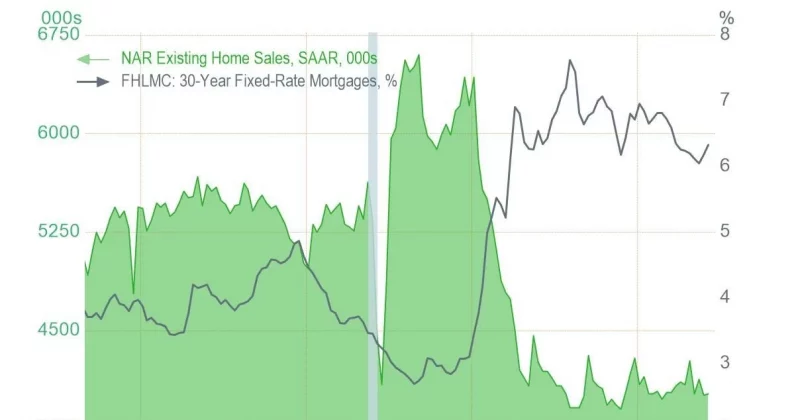
The US housing market managed a pulse in April, but barely. Existing home sales ticked up to 4.02 million units on an annualized basis, falling short of the 4.05 million that economists had penciled in.

That 0.2% month-over-month increase follows a 3.6% decline in March, which means April’s uptick is less “recovery” and more “stopped bleeding.”

The numbers behind the malaise

Total housing inventory climbed to 1.36 million units in April, a 3% increase from the prior month.

High borrowing costs remain the primary villain here. Mortgage rates have stayed elevated as the Federal Reserve maintains its cautious stance on rate cuts. Potential buyers who locked in sub-3% rates during the pandemic era have little incentive to sell and re-enter the market at significantly higher rates, a dynamic that housing economists have been calling the “lock-in effect” for over two years now.

Why crypto traders are watching the housing market

Research has found that each $1 increase in per capita cryptocurrency wealth corresponds to roughly a 21-cent increase in local median home prices.

One striking data point illustrates how dramatically the Bitcoin-to-housing ratio has shifted. The median US home price, when measured in Bitcoin, fell to an all-time low of 3.29 BTC in April.

Tokenized real estate enters the chat

Tokenized real estate is projected to grow from under $300 billion in 2024 to over $4 trillion by 2035.

Meanwhile, $138 billion in Treasury buybacks this year has injected liquidity into the financial system in a way that may favor crypto over equities.

Disclosure: This article was edited by Editorial Team. For more information on how we create and review content, see our Editorial Policy.

US existing home sales rise to 4.02M in April, missing expectations as housing market limps along

US existing home sales rise to 4.02M in April, missing expectations as housing market limps along

The housing market's sluggish recovery has implications for Fed policy and, by extension, crypto markets eyeing looser monetary conditions.

The US housing market managed a pulse in April, but barely. Existing home sales ticked up to 4.02 million units on an annualized basis, falling short of the 4.05 million that economists had penciled in.

That 0.2% month-over-month increase follows a 3.6% decline in March, which means April’s uptick is less “recovery” and more “stopped bleeding.”

The numbers behind the malaise

Total housing inventory climbed to 1.36 million units in April, a 3% increase from the prior month.

High borrowing costs remain the primary villain here. Mortgage rates have stayed elevated as the Federal Reserve maintains its cautious stance on rate cuts. Potential buyers who locked in sub-3% rates during the pandemic era have little incentive to sell and re-enter the market at significantly higher rates, a dynamic that housing economists have been calling the “lock-in effect” for over two years now.

Why crypto traders are watching the housing market

Research has found that each $1 increase in per capita cryptocurrency wealth corresponds to roughly a 21-cent increase in local median home prices.

One striking data point illustrates how dramatically the Bitcoin-to-housing ratio has shifted. The median US home price, when measured in Bitcoin, fell to an all-time low of 3.29 BTC in April.

Tokenized real estate enters the chat

Tokenized real estate is projected to grow from under $300 billion in 2024 to over $4 trillion by 2035.

Meanwhile, $138 billion in Treasury buybacks this year has injected liquidity into the financial system in a way that may favor crypto over equities.

Disclosure: This article was edited by Editorial Team. For more information on how we create and review content, see our Editorial Policy.