
US factory orders fall 1.3% in May as Boeing’s aircraft demand dries up
Core manufacturing orders quietly grew while a 14% plunge in transportation equipment stole the headline, raising questions about what this split signal means for risk assets.
US factory orders for durable goods dropped 4.5% in May to $332.1B, a $15.6B decline driven almost entirely by vanishing demand for commercial aircraft. The overall factory orders figure fell 1.3%, reversing April’s 4.8% surge that had been fueled by a wave of Boeing bookings.
The US Census Bureau published the advance report on June 25, and the numbers paint a picture of two very different manufacturing economies living under the same roof. One is getting crushed by volatile aircraft cycles. The other is quietly humming along.
Boeing’s bad month did most of the damage
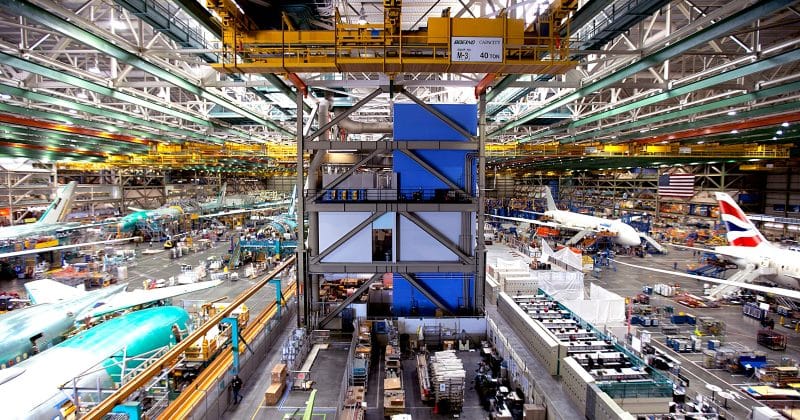
Transportation equipment orders plunged 14.0% in May, landing at $113.5B.
Boeing secured just 27 gross new orders during the month. For context, Airbus pulled in 379 gross orders over the same period.
Core orders, which strip out the transportation category, rose 1.3% month-over-month. Core capital goods orders, the non-defense and non-aircraft slice that economists watch as a proxy for business investment intentions, climbed 1.6% on a monthly basis. Year-over-year, that same core capex metric was up 10.5%.
Macro, rates, and crypto—what moved markets and what matters next.
Daily. Free. Join 34,000+ readers across crypto, finance, and policy.
The split signal and what it means for markets
The 27-versus-379 order disparity with Airbus reflects competitive dynamics that have been building as Boeing works through its well-documented production and quality challenges.
For broader equities, the resilience in core capital goods spending is a more relevant datapoint. A 10.5% year-over-year increase in business investment suggests corporate America hasn’t pulled back on capex despite trade policy uncertainty and geopolitical risks. Some of that spending appears linked to ongoing AI infrastructure buildouts, which continue to drive demand for specialized equipment and components.
What crypto investors should actually watch here
The key question is whether this report changes the Fed’s calculus on interest rates. The Fed watches core capital goods orders precisely because they filter out the noise from volatile categories like aircraft and defense. A 1.6% monthly gain in core capex, paired with 10.5% annual growth, doesn’t scream “economy needs rescue,” giving the Fed more room to hold rates steady.
The 10.5% year-over-year growth in core capex remains the most investable datapoint in this release, and it’s the one most likely to show up in future Fed commentary.