
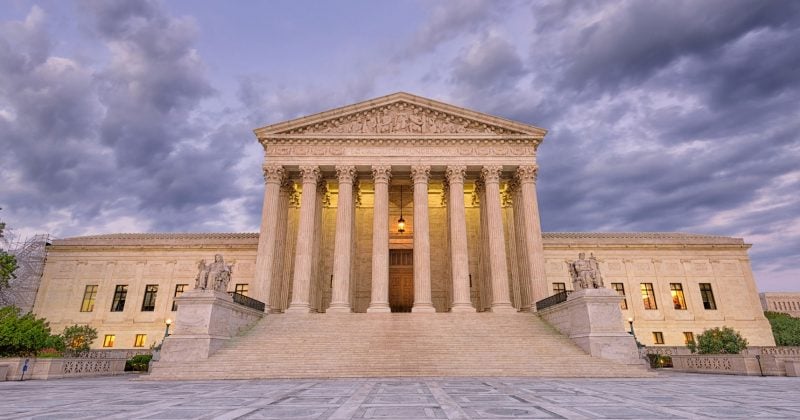
US government refunds $81B in tariffs after Supreme Court ruling, ballooning federal deficit

US government refunds $81B in tariffs after Supreme Court ruling, ballooning federal deficit

The Supreme Court's 6-3 decision striking down Trump's IEEPA tariffs has forced the Treasury to pay out billions, with ripple effects reaching far beyond traditional markets.

The US government has handed back $81 billion in tariff refunds this fiscal year after the Supreme Court ruled that key tariffs imposed under President Donald Trump’s International Emergency Economic Powers Act authority were, in fact, illegal. That is not a typo. Eighty-one billion dollars, roughly the GDP of Luxembourg, flowing back to importers who were overcharged under a trade policy the nation’s highest court just torched with a 6-3 decision.

To put that number in perspective, the government refunded just $5 billion in tariffs during the previous fiscal year. The 16x spike landed almost entirely in May and June 2026, immediately following the court’s ruling. The Treasury has confirmed the surge ties directly to the decision.

What happened, and why it matters now

The Supreme Court’s ruling struck down tariffs that Trump had imposed using IEEPA, a statute traditionally reserved for genuine national emergencies rather than broad trade policy. The court’s majority found that the executive branch had overstepped its authority. Six justices agreed. Three did not.

Advertisement

The practical fallout has been swift. Importers who paid duties under the now-invalidated tariffs have been lining up for refunds. Companies ranging from FedEx to Costco have pursued claims, with Costco notably involved in class-action litigation seeking to pass refund savings along to its members.

Earlier estimates pegged the total potential refund liability at $166 billion, meaning the $81 billion disbursed so far may only be the halfway mark. The Treasury opened a dedicated refund portal back in April 2026 to handle the volume.

The deficit problem just got worse

The federal budget deficit has surged to $1.367 trillion in the first nine months of the fiscal year. The $81 billion in tariff refunds is a meaningful contributor to that widening gap.

New tariffs already on the horizon

The Supreme Court ruling didn’t end Trump’s tariff ambitions. It ended one specific legal pathway. The administration has already pivoted, with a temporary 10% global tariff currently in place that is set to expire on July 24, 2026. There are also reported threats of new duties targeting digital services taxes imposed by other countries and fresh levies on various trading partners.

This creates an unusual market environment where importers are simultaneously collecting refunds on old tariffs while bracing for new ones. For crypto-adjacent businesses, the tariff landscape has direct cost implications. Mining rigs, ASICs, and networking equipment are predominantly manufactured overseas. Any new tariff regime that survives judicial review would increase capital expenditure for US-based mining operations.

What this means for investors

The Costco class-action and similar litigation could set precedents for how refunds flow through supply chains. If companies are compelled to pass tariff refunds to end consumers, that represents a meaningful one-time boost to disposable income.

The temporary 10% global tariff expiring in late July could be a catalyst event. If digital services taxes become a flashpoint, the intersection of tech regulation and trade policy could create new headwinds or tailwinds for platforms operating across borders. Coinbase, Kraken, and other US exchanges with international operations would be among the first to feel the effects of any retaliatory digital trade measures.

Disclosure: This article was edited by Editorial Team. For more information on how we create and review content, see our Editorial Policy.

US government refunds $81B in tariffs after Supreme Court ruling, ballooning federal deficit

US government refunds $81B in tariffs after Supreme Court ruling, ballooning federal deficit

The Supreme Court's 6-3 decision striking down Trump's IEEPA tariffs has forced the Treasury to pay out billions, with ripple effects reaching far beyond traditional markets.

The US government has handed back $81 billion in tariff refunds this fiscal year after the Supreme Court ruled that key tariffs imposed under President Donald Trump’s International Emergency Economic Powers Act authority were, in fact, illegal. That is not a typo. Eighty-one billion dollars, roughly the GDP of Luxembourg, flowing back to importers who were overcharged under a trade policy the nation’s highest court just torched with a 6-3 decision.

To put that number in perspective, the government refunded just $5 billion in tariffs during the previous fiscal year. The 16x spike landed almost entirely in May and June 2026, immediately following the court’s ruling. The Treasury has confirmed the surge ties directly to the decision.

What happened, and why it matters now

The Supreme Court’s ruling struck down tariffs that Trump had imposed using IEEPA, a statute traditionally reserved for genuine national emergencies rather than broad trade policy. The court’s majority found that the executive branch had overstepped its authority. Six justices agreed. Three did not.

Advertisement

The practical fallout has been swift. Importers who paid duties under the now-invalidated tariffs have been lining up for refunds. Companies ranging from FedEx to Costco have pursued claims, with Costco notably involved in class-action litigation seeking to pass refund savings along to its members.

Earlier estimates pegged the total potential refund liability at $166 billion, meaning the $81 billion disbursed so far may only be the halfway mark. The Treasury opened a dedicated refund portal back in April 2026 to handle the volume.

The deficit problem just got worse

The federal budget deficit has surged to $1.367 trillion in the first nine months of the fiscal year. The $81 billion in tariff refunds is a meaningful contributor to that widening gap.

New tariffs already on the horizon

The Supreme Court ruling didn’t end Trump’s tariff ambitions. It ended one specific legal pathway. The administration has already pivoted, with a temporary 10% global tariff currently in place that is set to expire on July 24, 2026. There are also reported threats of new duties targeting digital services taxes imposed by other countries and fresh levies on various trading partners.

This creates an unusual market environment where importers are simultaneously collecting refunds on old tariffs while bracing for new ones. For crypto-adjacent businesses, the tariff landscape has direct cost implications. Mining rigs, ASICs, and networking equipment are predominantly manufactured overseas. Any new tariff regime that survives judicial review would increase capital expenditure for US-based mining operations.

What this means for investors

The Costco class-action and similar litigation could set precedents for how refunds flow through supply chains. If companies are compelled to pass tariff refunds to end consumers, that represents a meaningful one-time boost to disposable income.

The temporary 10% global tariff expiring in late July could be a catalyst event. If digital services taxes become a flashpoint, the intersection of tech regulation and trade policy could create new headwinds or tailwinds for platforms operating across borders. Coinbase, Kraken, and other US exchanges with international operations would be among the first to feel the effects of any retaliatory digital trade measures.

Disclosure: This article was edited by Editorial Team. For more information on how we create and review content, see our Editorial Policy.