
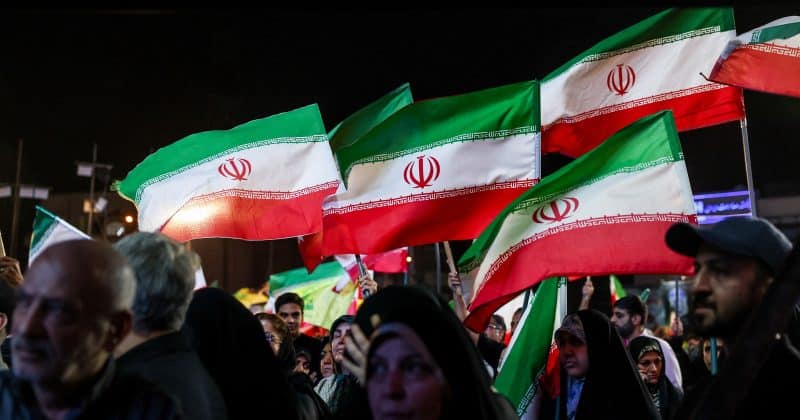
US government reads 14-point pact with Iran to advance talks
The memorandum of understanding includes sanctions relief, $300 billion in reconstruction assistance, and a freeze on Iran's nuclear enrichment activities.
A senior US official publicly outlined the details of a 14-point Memorandum of Understanding with Iran on June 17, 2026, laying the groundwork for what could become the most significant diplomatic breakthrough in the Middle East in over a decade.
The interim framework covers everything from an immediate ceasefire to the reopening of the Strait of Hormuz, the narrow waterway through which roughly a fifth of the world’s oil supply passes. A formal signing is scheduled for June 19 in Switzerland.
What’s actually in the deal
Among the headline provisions: $300 billion in reconstruction assistance, which includes the return of frozen Iranian assets.
Iran, for its part, commits to halting nuclear weapon development and freezing enrichment activities. The agreement is explicitly described as non-binding, which means neither side is legally locked in.
The framework also calls for the immediate reopening of the Strait of Hormuz within 30 days.
Core issues surrounding Iran’s nuclear program are pushed into a 60-day negotiation window following the formal signing. That window can be extended if needed.
Macro, rates, and crypto—what moved markets and what matters next.
Daily. Free. Join 34,000+ readers across crypto, finance, and policy.
Echoes of the JCPOA
This framework carries unmistakable DNA from the 2015 Joint Comprehensive Plan of Action, the nuclear deal brokered under the Obama administration. The US withdrew from the JCPOA in 2018, reimposing sanctions and effectively killing the agreement.
The 14-point structure itself emerged as Iran’s counterproposal to an earlier US nine-point plan.
The agreement also side-steps critical issues such as Iran’s missile program and its support for regional proxies, indicating a willingness to prioritize immediate relief over comprehensive disarmament discussions.
What this means for markets and crypto investors
The reopening of the Strait of Hormuz within 30 days would remove a major risk premium that has been baked into crude prices during the period of heightened tensions.
For crypto specifically, the US Treasury maintains sanctions against Iranian digital asset exchanges, and nothing in the publicly outlined MOU addresses cryptocurrency or digital assets directly. Iran has historically used crypto mining and digital asset transactions to circumvent sanctions, which has kept it firmly on the Treasury’s enforcement radar.
The 60-day negotiation window is what traders should watch most closely. If talks stall or collapse, the oil premium returns. If negotiations progress toward a binding agreement, the sustained reduction in geopolitical risk could provide a tailwind that lifts markets across the board.