
US-Iran conflict escalates with strikes and drone attacks in Persian Gulf, rattling oil and crypto markets
Military confrontation over the Strait of Hormuz threatens global oil supply while Iran's crypto toll scheme adds a bizarre new dimension to sanctions evasion
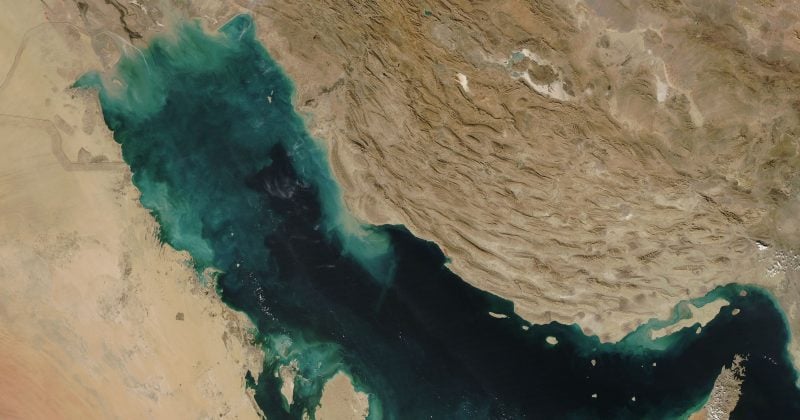
The US and Iran are back at each other’s throats. Over the past 24 hours, the military confrontation between the two nations has intensified with fresh strikes, missile launches, and drone attacks across the Persian Gulf. Shipping through the Strait of Hormuz, the narrow waterway that handles roughly 20-25% of the world’s seaborne oil trade, is increasingly disrupted.
For crypto markets, this isn’t just another geopolitical headline to scroll past. Iran has been quietly collecting transit fees from vessels passing through the Strait using Bitcoin, USDT, and Chinese yuan since mid-March 2026, turning one of the world’s most critical shipping chokepoints into what might be history’s most expensive crypto toll booth.
What happened
US Central Command launched strikes on over 80 Iranian targets after Iranian forces attacked three commercial vessels in the Strait of Hormuz on July 6 and 7. President Trump declared the June 2026 ceasefire and memorandum of understanding officially dead around July 8, though some diplomatic channels reportedly remain open.
The Islamic Revolutionary Guard Corps has been the primary aggressor on the Iranian side, leveraging its control over the Strait to impose a payment protocol on transiting vessels. Fees reportedly start at $1 per barrel of oil and can climb as high as $2 million per vessel. The IRGC has demanded these payments in cryptocurrencies or yuan, a deliberate move to sidestep the US-led sanctions regime that has choked Iran’s access to the traditional financial system.
Here’s the thing: despite Iran’s claims about crypto toll collections, blockchain analytics firms have not found significant evidence of large-scale Bitcoin toll settlements on-chain. That gap between the publicized policy and verifiable blockchain data suggests the crypto toll scheme may be more theatrical than operational, or that Iran is using privacy-enhancing techniques that make the flows harder to track.
Oil markets and the Bitcoin correlation
Earlier in 2026, Bitcoin swung between $61,000 and $71,000 as geopolitical tensions with Iran waxed and waned. That $10,000 range reflects real capital rotating in and out of risk assets based on headline risk from the Persian Gulf.
Macro, rates, and crypto—what moved markets and what matters next.
Daily. Free. Join 34,000+ readers across crypto, finance, and policy.
Oil and Bitcoin have developed an uncomfortable entanglement in 2026. Rising energy costs increase mining expenses, squeeze consumer spending, and feed inflation expectations, all of which affect how institutional allocators think about crypto positioning. When crude spikes because a major shipping lane is under fire, the ripple effects don’t stop at the gas pump.
Iran’s crypto sanctions playbook
Iran’s use of digital assets for revenue collection isn’t new, but using them as toll fees for one of the world’s busiest shipping lanes represents a significant escalation in state-level crypto adoption for sanctions evasion.
Traditional banking rails are closed to Iran thanks to years of US sanctions. Cryptocurrencies, particularly stablecoins like USDT that move on public blockchains but can be harder to freeze in real-time, offer an alternative payment infrastructure. Adding Chinese yuan as an accepted currency signals the broader de-dollarization strategy Iran shares with several US adversaries.
If shipping companies are indeed paying crypto tolls to transit the Strait, those transactions could expose them to secondary sanctions risk. That’s a compliance nightmare for insurers, shipowners, and the banks that finance maritime trade.
What this means for investors
Traders should watch three things closely. First, oil price movements above $90 per barrel tend to trigger broader risk repricing that hits crypto hard. Second, any Treasury Department guidance on secondary sanctions related to crypto toll payments would signal a regulatory escalation. Third, on-chain analytics from firms tracking IRGC-linked wallets will reveal whether the toll scheme is generating meaningful flow, or whether it remains mostly a propaganda tool dressed up in blockchain jargon.