
US-Iran deal set for Friday signing as gas prices face long road to recovery
Oil benchmarks dropped $4 per barrel on the news, but analysts warn pump prices won't normalize for months
After nearly four months of conflict that rattled global energy markets, US and Iranian officials are set to formally sign a deal on Friday, June 19, aimed at ending hostilities that began with US-Israel strikes on Iran back in February. Oil prices dropped sharply on the announcement.
The tentative agreement, reached over the weekend of June 14-15, includes provisions for reopening the Strait of Hormuz, lifting the US naval blockade of Iranian ports, and implementing an extended ceasefire. The formal signing ceremony is planned for Switzerland, with a framework for further talks on Iran’s nuclear program within a 60-day window baked into the deal.
What the deal actually covers
The conflict traces back to February 28, when US and Israeli forces launched strikes on Iran, triggering a chain of escalation that included a naval blockade of Iranian ports and the effective closure of one of the world’s most critical shipping chokepoints. The Strait of Hormuz handles roughly a fifth of the world’s oil supply on any given day.
President Trump announced the agreement and authorized the removal of the blockade. On the Iranian side, Parliament Speaker Mohammad Bagher Qalibaf has been a central figure. Pakistani Prime Minister Shehbaz Sharif served as the lead mediator.
Reports indicate that ships have already begun moving through the Strait of Hormuz even before the ink is dry on the formal agreement.
Macro, rates, and crypto—what moved markets and what matters next.
Daily. Free. Join 34,000+ readers across crypto, finance, and policy.
Energy markets reacted fast, but recovery won’t
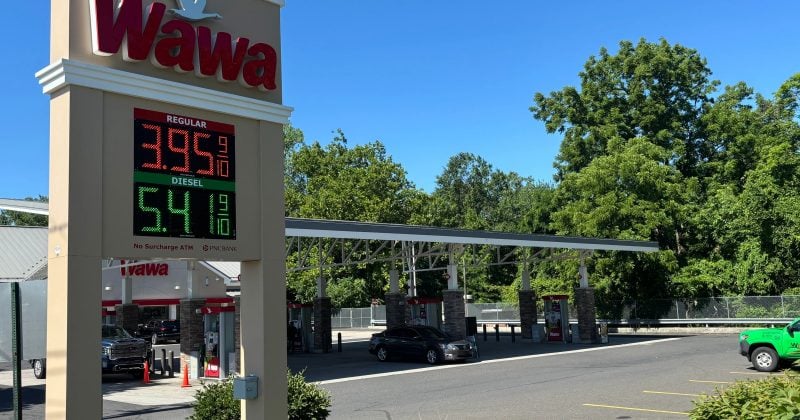
Oil benchmarks fell approximately $4 per barrel following the announcement, dropping to around $80, a three-month low. US gas prices slipped below $4 per gallon. Analysts caution that meaningful normalization in gas prices could take months, not weeks, as production needs to ramp back up and logistical bottlenecks that accumulated during the blockade unwind. All of this is happening as summer driving season pushes demand higher.
What this means for investors and the broader economy
High energy prices over the past four months have fed into inflation across multiple sectors, from transportation to food production to manufacturing. The 60-day nuclear negotiation window introduces a new layer of uncertainty: if those talks collapse, markets could reprice geopolitical risk just as quickly as they discounted it.
For crypto markets specifically, lower energy costs reduce operational pressure on proof-of-work miners such as those on the Bitcoin network, which can affect hash rate dynamics and network economics.
Tanker traffic data, refinery utilization rates, and inventory reports will tell the real story of whether this deal translates into the kind of supply recovery that actually moves prices at the pump.