
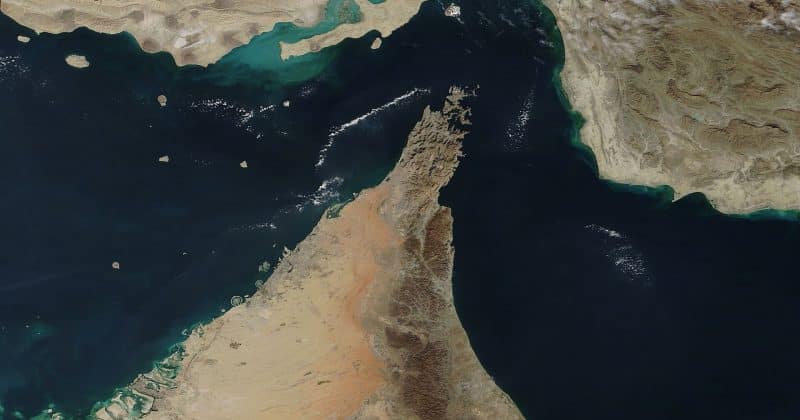
US and Iran reach preliminary pact to end war and reopen Strait of Hormuz
The deal includes a 60-day ceasefire, toll-free shipping through the strait, and the end of the US naval blockade, with a formal signing set for June 19 in Switzerland
US and Iranian officials have agreed to a preliminary framework to end their conflict and reopen the Strait of Hormuz, the narrow waterway through which roughly 20% of the world’s oil supply has historically transited. The deal, announced on June 14, represents the first major de-escalation since US and Israeli forces launched strikes against Iran on February 28.
The agreement’s core terms: toll-free reopening of the Strait of Hormuz to international shipping, an end to the US naval blockade on Iranian ports, and a 60-day ceasefire designed to create space for further negotiations. A formal memorandum of understanding is scheduled for signing on June 19 in Switzerland.
Oil prices dropped on the news. For crypto markets, the implications are more nuanced.
What the deal actually covers
President Donald Trump confirmed the agreement through a post on Truth Social, emphasizing that the Strait of Hormuz would be toll-free and that the naval blockade would be removed immediately.
In April, Iran had explored imposing tolls on vessels transiting the strait. Iranian officials explored accepting cryptocurrencies, including Bitcoin and stablecoins, as payment for those tolls. The US responded by sanctioning crypto wallets tied to the toll scheme worth $344 million. Iran tried to use crypto to get around the financial pressure of the blockade, the US slapped sanctions on the wallets involved, and now the entire toll concept is off the table as part of the peace framework.
One thing the deal explicitly does not cover is Iran’s nuclear program. Those negotiations have been deferred to a separate track. The framework focuses narrowly on the ceasefire, shipping lanes, and blockade relief.
The crypto angle
When the US-Iran conflict escalated earlier this year, Bitcoin dipped below $80,000 as risk assets broadly sold off. Iran’s experiment with crypto toll payments turned digital assets into a geopolitical flashpoint, and the $344 million in sanctioned wallets connected to Iran’s toll payment scheme demonstrated that crypto’s permissionless nature gave Iran a potential workaround for traditional financial sanctions and gave US regulators a visible target.
What investors should actually watch
The 60-day ceasefire window is the most important number in this deal. The June 19 signing in Switzerland is the next concrete catalyst. Markets are pricing in the deal’s completion, which means the risk is asymmetric: a successful signing is largely priced in, while a breakdown would catch positioning offsides.
For crypto-specific investors, the sanctioned wallet situation deserves monitoring. The $344 million in frozen crypto assets tied to Iran’s toll scheme raises questions about whether those funds get released, remain frozen, or become the subject of further enforcement actions.
A sovereign nation attempted to use Bitcoin and stablecoins as instruments of state financial policy during a shooting war. The US responded with targeted sanctions. The resolution of that conflict includes terms that effectively shut down the crypto payment experiment.