
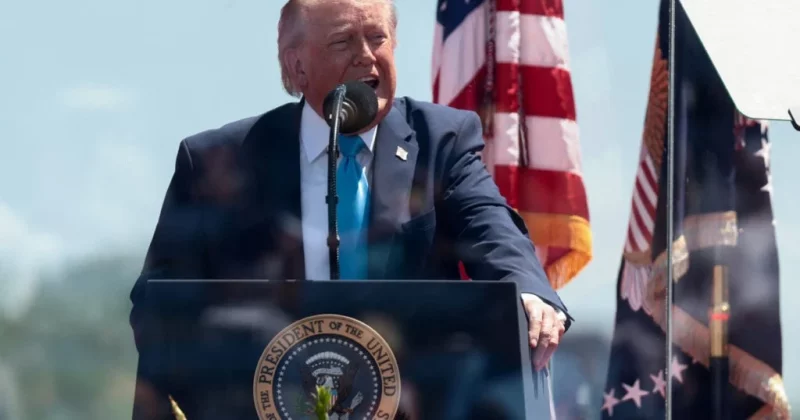
US and Iran nearing agreement to end Middle East war, Trump says
A Pakistan-brokered framework deal could reshape oil markets, risk assets, and crypto's role as a sanctions workaround.
The US and Iran are reportedly close to signing a framework agreement that would chart a path toward ending their military conflict, with a decision expected within 48 hours. Pakistan brokered the proposal, which sets a 30-to-60-day window for negotiating the finer details.
Nuclear issues are explicitly excluded from the immediate framework. But President Trump said there’s a “very good chance” of reaching a broader deal that would also limit Iran’s nuclear capabilities, based on proposals Iran submitted through Pakistani intermediaries.
What’s on the table
The conflict between the US and Iran erupted with military strikes in February 2026 and has roiled global markets for months. Pakistan stepped in as mediator, facilitating a two-week ceasefire that began on April 8, 2026.
Officials who discussed the deal’s progress spoke on condition of anonymity, which is standard for active diplomatic negotiations but also means the public is operating on incomplete information.
Crypto’s wartime role and market reaction
Bitcoin was trading at approximately $78,400, reflecting a 0.7% increase in one session as traders digested the negotiation news. That puts Bitcoin squarely in the $78,000 to $80,000 range it has occupied while markets wait for clarity on the peace talks.
The news moving money, markets, and the world—before your day starts.
Daily. Free. Join 34,000+ readers across crypto, finance, and policy.
Iran has increasingly turned to digital assets like Bitcoin to circumvent the sanctions imposed during the war. Crypto trading activity in oil-linked perpetuals surged during weekend escalations of the conflict, periods when traditional stock and commodity markets were closed.
What this means for investors
Oil markets would likely see the most immediate impact. The conflict has been a persistent source of supply uncertainty, and any credible path to peace would take pressure off crude prices.
If sanctions are eventually eased as part of a broader peace deal, Iran’s need to use crypto as a sanctions workaround diminishes. But it also removes regulatory concerns about crypto’s role in sanctions evasion, which has been a talking point for lawmakers pushing for stricter oversight of digital asset platforms.
The 48-hour timeline Trump referenced means markets won’t have to wait long for the next catalyst. Traders should watch for confirmation of the framework signing, the specific terms of the negotiation window, and any signals about whether nuclear discussions will eventually be folded in.