
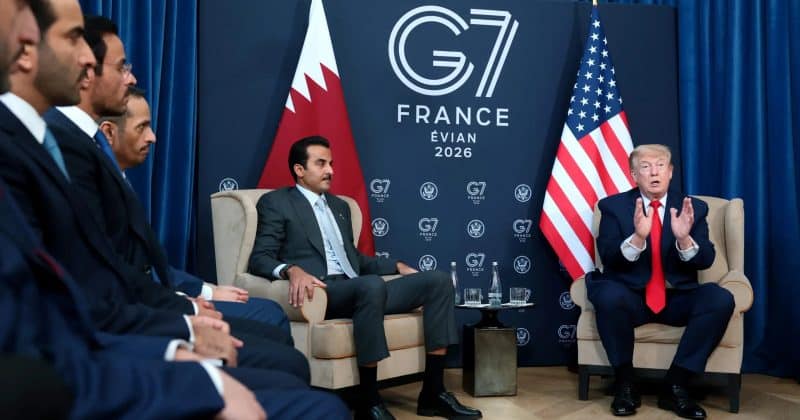
US and Iran sign peace deal at G7, ending naval blockade and reopening Strait of Hormuz
The agreement limits Iran's nuclear program and lifts the US naval blockade imposed in April, with major implications for global oil markets and crypto
The United States and Iran have signed a peace deal at the G7 summit in France, agreeing to limit nuclear weapons, end the naval blockade that choked one of the world’s most critical shipping lanes, and reopen the Strait of Hormuz to international traffic.
The agreement, finalized around June 17-18, 2026, represents the most significant diplomatic breakthrough between Washington and Tehran in decades.
What the deal covers
The core of the agreement rests on three pillars: restrictions on Iran’s nuclear activities, cessation of military operations by both sides, and the reopening of trade routes through the Strait of Hormuz.
The Strait of Hormuz is the narrow waterway between Iran and Oman through which roughly a fifth of the world’s oil supply passes daily. The US imposed a naval blockade on Iran starting April 13, 2026, effectively strangling that flow.
President Trump spoke about the agreement at the G7, striking an optimistic but cautious tone. He indicated the Strait of Hormuz could reopen imminently, though he expressed some uncertainty about whether he would attend the formal signing ceremony himself.
Diplomatic talks between Washington and Tehran stretched across multiple international meetings from 2025 into mid-2026, with parallel discussions taking place in Switzerland and other venues, including Muscat, Oman, and Geneva. The G7 summit in France provided the stage for the culmination of those efforts.
Macro, rates, and crypto—what moved markets and what matters next.
Daily. Free. Join 34,000+ readers across crypto, finance, and policy.
Canadian Prime Minister Mark Carney was among the world leaders who weighed in on the deal’s significance.
Why energy markets are watching closely
The two-month blockade created a supply shock that rippled through commodity markets globally. Oil prices spiked. Shipping insurance costs ballooned.
The deal is structured as a memorandum of understanding, which means compliance is everything. Any signs that either side is backsliding on commitments, whether Iran resumes prohibited nuclear activity or the US reimposes restrictions, could trigger swift reversals in market sentiment.
What this means for crypto investors
During the blockade period, Bitcoin and other major crypto assets experienced heightened volatility as traders toggled between risk-on and risk-off positioning.
The smarter play is to watch for concrete follow-through: actual ship traffic resuming through the strait, verified compliance with nuclear restrictions, and sustained diplomatic engagement.