
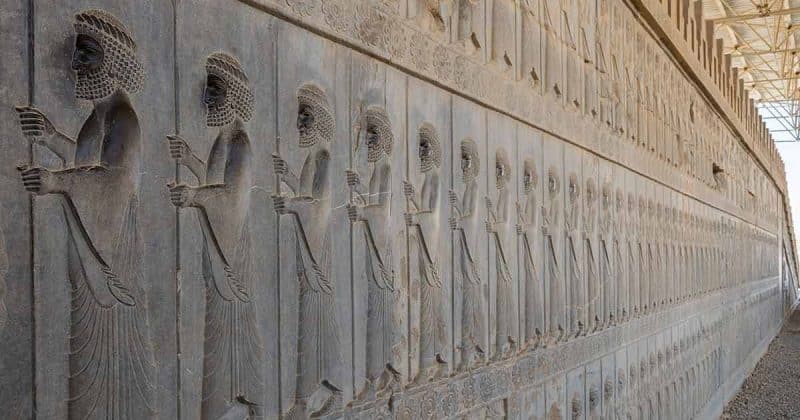
US and Israeli strikes damage Iran’s UNESCO cultural sites as crypto sanctions tighten

US and Israeli strikes damage Iran’s UNESCO cultural sites as crypto sanctions tighten

Military escalation has hit over 100 cultural heritage locations while the US Treasury freezes nearly $500 million linked to Iran's largest crypto exchange

Bombs don’t distinguish between military targets and 500-year-old palaces. That’s the uncomfortable reality playing out across Iran, where US and Israeli airstrikes that began on February 28, 2026, have damaged at least four UNESCO World Heritage sites and more than 100 cultural heritage locations nationwide.

The US Treasury has sanctioned Nobitex, Iran’s largest digital asset exchange, along with three other entities, freezing nearly $500 million in assets linked to the Iranian regime.

What happened to the heritage sites

Golestan Palace, a 19th-century royal compound in central Tehran and one of the country’s most recognizable landmarks, sustained damage on or around March 2, 2026. The palace wasn’t directly hit. Instead, shockwaves and debris from nearby missile strikes did the work, cracking walls and shattering glass across a site that has stood since the Qajar dynasty.

Advertisement

Isfahan took hits too. The Chehel Sotoun Palace, known for its mirror-work ceilings and elaborate frescoes, and Ali Qapu Palace, a six-story royal residence from the early 17th century, both sustained confirmed damage.

UNESCO has issued statements expressing deep concern and calling for protective measures.

Over 100 cultural sites across the country have reported some level of impact, making this one of the most significant episodes of cultural heritage loss in a military conflict in recent memory.

The crypto sanctions playbook

On June 2, 2026, the US Treasury imposed sanctions on Nobitex and three affiliated entities, freezing nearly $500 million in assets linked to the regime.

Back in April 2026, the Treasury targeted crypto wallets linked to Iran, freezing $344 million in assets. Combined with the June action, that’s over $840 million in digital assets frozen in roughly two months.

The targeting of Nobitex signals that US regulators are getting increasingly precise in their ability to identify and freeze crypto infrastructure used for sanctions evasion. The Treasury isn’t just blocking wallet addresses anymore. It’s going after entire platforms.

Disclosure: This article was edited by Editorial Team. For more information on how we create and review content, see our Editorial Policy.

US and Israeli strikes damage Iran’s UNESCO cultural sites as crypto sanctions tighten

US and Israeli strikes damage Iran’s UNESCO cultural sites as crypto sanctions tighten

Military escalation has hit over 100 cultural heritage locations while the US Treasury freezes nearly $500 million linked to Iran's largest crypto exchange

Bombs don’t distinguish between military targets and 500-year-old palaces. That’s the uncomfortable reality playing out across Iran, where US and Israeli airstrikes that began on February 28, 2026, have damaged at least four UNESCO World Heritage sites and more than 100 cultural heritage locations nationwide.

The US Treasury has sanctioned Nobitex, Iran’s largest digital asset exchange, along with three other entities, freezing nearly $500 million in assets linked to the Iranian regime.

What happened to the heritage sites

Golestan Palace, a 19th-century royal compound in central Tehran and one of the country’s most recognizable landmarks, sustained damage on or around March 2, 2026. The palace wasn’t directly hit. Instead, shockwaves and debris from nearby missile strikes did the work, cracking walls and shattering glass across a site that has stood since the Qajar dynasty.

Advertisement

Isfahan took hits too. The Chehel Sotoun Palace, known for its mirror-work ceilings and elaborate frescoes, and Ali Qapu Palace, a six-story royal residence from the early 17th century, both sustained confirmed damage.

UNESCO has issued statements expressing deep concern and calling for protective measures.

Over 100 cultural sites across the country have reported some level of impact, making this one of the most significant episodes of cultural heritage loss in a military conflict in recent memory.

The crypto sanctions playbook

On June 2, 2026, the US Treasury imposed sanctions on Nobitex and three affiliated entities, freezing nearly $500 million in assets linked to the regime.

Back in April 2026, the Treasury targeted crypto wallets linked to Iran, freezing $344 million in assets. Combined with the June action, that’s over $840 million in digital assets frozen in roughly two months.

The targeting of Nobitex signals that US regulators are getting increasingly precise in their ability to identify and freeze crypto infrastructure used for sanctions evasion. The Treasury isn’t just blocking wallet addresses anymore. It’s going after entire platforms.

Disclosure: This article was edited by Editorial Team. For more information on how we create and review content, see our Editorial Policy.