Nexo Earn with Nexo
US jobless claims rise slightly to highest level in over a month

US jobless claims rise slightly to highest level in over a month

Initial claims ticked up to 200,000 but still came in below economist expectations, reinforcing the picture of a labor market that refuses to crack.

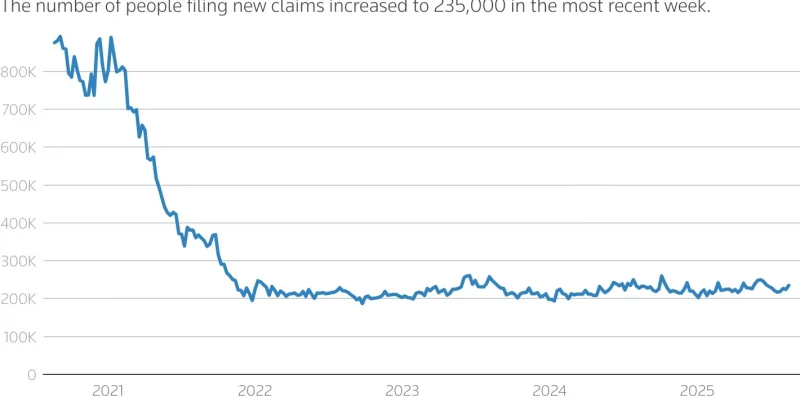
The US labor market continues to do its best impression of a brick wall. Initial unemployment claims rose by 10,000 to 200,000 for the week ending May 2, 2026, marking the highest reading in more than a month but still landing below the 205,000 that economists had penciled in.

The prior week’s figure was revised down to 190,000, a number that flirted with multi-decade lows.

What the numbers actually show

The four-week moving average of claims actually declined to 203,250, smoothing out the weekly noise and painting a steadier picture than any single data point can offer.

Continuing claims fell to their lowest level since January 2024. In English: people who lose their jobs are finding new ones relatively quickly.

Advertisement

For context, claims consistently below 225,000 are generally considered healthy. The Department of Labor released the data on May 7.

The Fed factor and why crypto cares

A resilient labor market gives the Fed zero urgency to cut interest rates, which means tighter financial conditions stick around longer than many risk-asset enthusiasts would prefer.

The logic chain is straightforward. Strong employment supports consumer spending. Consumer spending keeps inflation sticky. Sticky inflation keeps the Fed cautious. A cautious Fed means higher rates for longer. Higher rates for longer mean less cheap money flowing into speculative assets, including crypto.

When similar jobless claims figures surfaced in February 2026, Bitcoin briefly dipped below $68,000 as traders recalibrated their expectations for when rate cuts might arrive. The sell-off was short-lived.

The current data reinforces what analysts have been calling a “hold steady” signal for risk assets.

What this means for crypto investors

The February 2026 precedent is instructive. When Bitcoin dipped below $68,000 on similar labor data, the recovery came within days.

The number to watch going forward isn’t just initial claims but continuing claims. If that figure starts climbing back toward early-2024 levels, it would signal that the labor market is genuinely softening. That’s the kind of shift that could reshape Fed expectations and, by extension, the entire risk-asset outlook.

Disclosure: This article was edited by Editorial Team. For more information on how we create and review content, see our Editorial Policy.

US jobless claims rise slightly to highest level in over a month

US jobless claims rise slightly to highest level in over a month

Initial claims ticked up to 200,000 but still came in below economist expectations, reinforcing the picture of a labor market that refuses to crack.

The US labor market continues to do its best impression of a brick wall. Initial unemployment claims rose by 10,000 to 200,000 for the week ending May 2, 2026, marking the highest reading in more than a month but still landing below the 205,000 that economists had penciled in.

The prior week’s figure was revised down to 190,000, a number that flirted with multi-decade lows.

What the numbers actually show

The four-week moving average of claims actually declined to 203,250, smoothing out the weekly noise and painting a steadier picture than any single data point can offer.

Continuing claims fell to their lowest level since January 2024. In English: people who lose their jobs are finding new ones relatively quickly.

Advertisement

For context, claims consistently below 225,000 are generally considered healthy. The Department of Labor released the data on May 7.

The Fed factor and why crypto cares

A resilient labor market gives the Fed zero urgency to cut interest rates, which means tighter financial conditions stick around longer than many risk-asset enthusiasts would prefer.

The logic chain is straightforward. Strong employment supports consumer spending. Consumer spending keeps inflation sticky. Sticky inflation keeps the Fed cautious. A cautious Fed means higher rates for longer. Higher rates for longer mean less cheap money flowing into speculative assets, including crypto.

When similar jobless claims figures surfaced in February 2026, Bitcoin briefly dipped below $68,000 as traders recalibrated their expectations for when rate cuts might arrive. The sell-off was short-lived.

The current data reinforces what analysts have been calling a “hold steady” signal for risk assets.

What this means for crypto investors

The February 2026 precedent is instructive. When Bitcoin dipped below $68,000 on similar labor data, the recovery came within days.

The number to watch going forward isn’t just initial claims but continuing claims. If that figure starts climbing back toward early-2024 levels, it would signal that the labor market is genuinely softening. That’s the kind of shift that could reshape Fed expectations and, by extension, the entire risk-asset outlook.

Disclosure: This article was edited by Editorial Team. For more information on how we create and review content, see our Editorial Policy.