
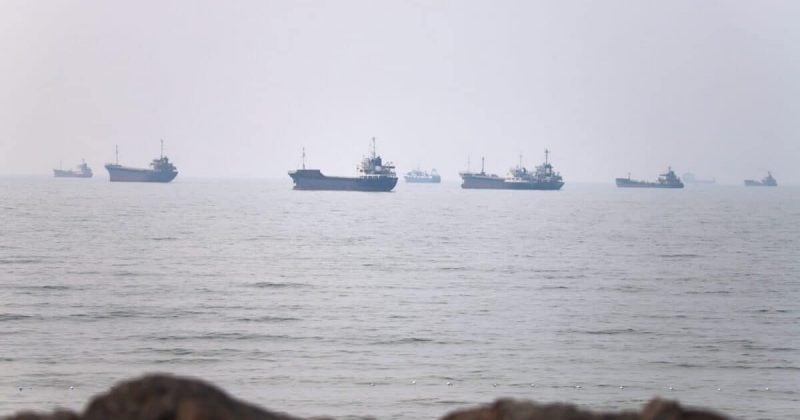
US launches military strikes on Iran after tanker attacks in Strait of Hormuz

https://globalnation.inquirer.net/330070/us-launches-new-strikes-on-iran-after-3-ships-hit-in-strait-of-hormuz

US launches military strikes on Iran after tanker attacks in Strait of Hormuz

US invasion of Iran

Explosions have been reported along the Iranian coast as the United States initiates a series of military strikes against Iran, following recent hostilities involving commercial vessels in the Strait of Hormuz. The U.S. action is a response to Iranian attacks on tankers, including those from Qatar and Saudi Arabia, in this vital oil transit route. This escalation marks the end of an interim ceasefire established after Operation Epic Fury, a joint U.S.-Israeli military campaign earlier this year. The U.S. strikes are targeting Iranian military installations, with President Trump emphasizing that this does not indicate a return to full-scale war. Market activity reflects heightened concerns over potential further escalation.

Advertisement

Key Takeaways

  • Market activity suggests increased odds of a U.S. invasion of Iran before 2027, consistent with recent military actions.
  • The U.S. has revoked Iran’s oil export waiver, escalating economic and military tensions in the region.
  • Market participants appear to view the situation as indicative of potential further military involvement by the U.S. and its allies.

What to Watch

Observers will be keenly watching for any additional military responses from Iran, which could further influence market perspectives on a potential U.S. invasion. Developments in diplomatic channels, particularly any new negotiations or talks, will be critical in assessing the likelihood of a peaceful resolution. The July 17 deadline for Iran to wind down oil transactions may also serve as a key focal point for further geopolitical developments.

Get prediction market intelligence as a structured API feed. Early access waitlist.

Disclosure: This article was edited by Estefano Gomez. For more information on how we create and review content, see our Editorial Policy.

US launches military strikes on Iran after tanker attacks in Strait of Hormuz

US launches military strikes on Iran after tanker attacks in Strait of Hormuz

US invasion of Iran

https://globalnation.inquirer.net/330070/us-launches-new-strikes-on-iran-after-3-ships-hit-in-strait-of-hormuz

Explosions have been reported along the Iranian coast as the United States initiates a series of military strikes against Iran, following recent hostilities involving commercial vessels in the Strait of Hormuz. The U.S. action is a response to Iranian attacks on tankers, including those from Qatar and Saudi Arabia, in this vital oil transit route. This escalation marks the end of an interim ceasefire established after Operation Epic Fury, a joint U.S.-Israeli military campaign earlier this year. The U.S. strikes are targeting Iranian military installations, with President Trump emphasizing that this does not indicate a return to full-scale war. Market activity reflects heightened concerns over potential further escalation.

Advertisement

Key Takeaways

  • Market activity suggests increased odds of a U.S. invasion of Iran before 2027, consistent with recent military actions.
  • The U.S. has revoked Iran’s oil export waiver, escalating economic and military tensions in the region.
  • Market participants appear to view the situation as indicative of potential further military involvement by the U.S. and its allies.

What to Watch

Observers will be keenly watching for any additional military responses from Iran, which could further influence market perspectives on a potential U.S. invasion. Developments in diplomatic channels, particularly any new negotiations or talks, will be critical in assessing the likelihood of a peaceful resolution. The July 17 deadline for Iran to wind down oil transactions may also serve as a key focal point for further geopolitical developments.

Get prediction market intelligence as a structured API feed. Early access waitlist.

Disclosure: This article was edited by Estefano Gomez. For more information on how we create and review content, see our Editorial Policy.