
US military denies reports of warships struck in Strait of Hormuz as crypto insurance schemes emerge
CENTCOM flatly rejects Iranian claims of missile strikes while a shadowy bitcoin-settled maritime insurance platform called 'Hormuz Safe' targets $10 billion in policies amid the ongoing crisis.
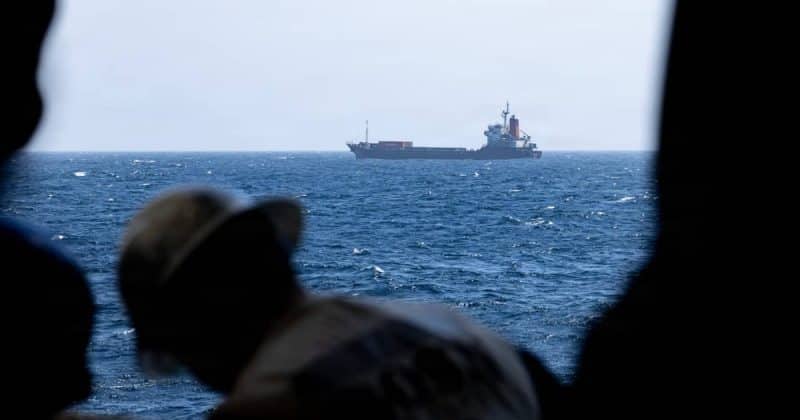
US Central Command wants to be very clear: no American warships have been hit in the Strait of Hormuz. The denial, issued on May 4, came in direct response to Iranian state media claims that two missiles struck a US Navy vessel after it allegedly ignored warnings from the Revolutionary Guard.
CENTCOM’s statement was unambiguous. “No U.S. Navy ships have been struck,” the command said, adding that the missiles did not come close to any vessels.
What’s actually happening in the Strait
The Strait of Hormuz is the narrow waterway between Iran and Oman through which roughly 20% of global oil supply flows daily.
Since late February 2026, shipping through the strait has faced severe disruptions. The situation escalated further with the launch of President Trump’s “Project Freedom,” a military operation deploying guided-missile destroyers to escort commercial vessels through the corridor.
The US naval blockade on Iranian ports has only deepened the crisis.
Enter crypto, because of course
Amid the chaos, an Iranian-linked bitcoin-settled maritime insurance platform called “Hormuz Safe” has emerged, reportedly targeting up to $10 billion in policies.
The news moving money, markets, and the world—before your day starts.
Daily. Free. Join 34,000+ readers across crypto, finance, and policy.
Reports from April and May 2026 indicate that Bitcoin and USDT transit fees are being demanded from vessels navigating the region. Some of these appear to be straightforward extortion schemes: pay in crypto or face unspecified consequences. Others are wrapped in the language of legitimate insurance products, making them harder to distinguish from actual risk management tools.
What this means for investors
The more specific concern for the crypto industry is the sanctions evasion angle. If Iranian-linked entities are genuinely using Bitcoin and USDT to facilitate maritime insurance, transit fees, or outright tolls, that puts digital asset infrastructure squarely in the crosshairs of US Treasury enforcement.
OFAC, the Treasury Department’s sanctions arm, has shown zero hesitation in going after crypto platforms and wallets associated with sanctioned entities. Any exchange or DeFi protocol that touches funds flowing through schemes like Hormuz Safe could face serious regulatory consequences, regardless of whether they knew the source of the funds.
For individual investors, the practical takeaway is simpler. Be extremely skeptical of any crypto product or token that claims to be tied to Strait of Hormuz shipping insurance. The $10 billion figure attached to Hormuz Safe sounds impressive, but unregulated insurance products denominated in volatile digital assets and linked to a sanctioned nation are not exactly a blue-chip investment thesis.
Traders should also watch for secondary effects on stablecoin markets. If USDT is genuinely being used as a medium of exchange for quasi-legal maritime transactions in the Persian Gulf, that creates both demand pressure and regulatory scrutiny. Tether has faced questions about its reserves and compliance posture for years. Being associated with sanctions evasion in a hot conflict zone would not help.