
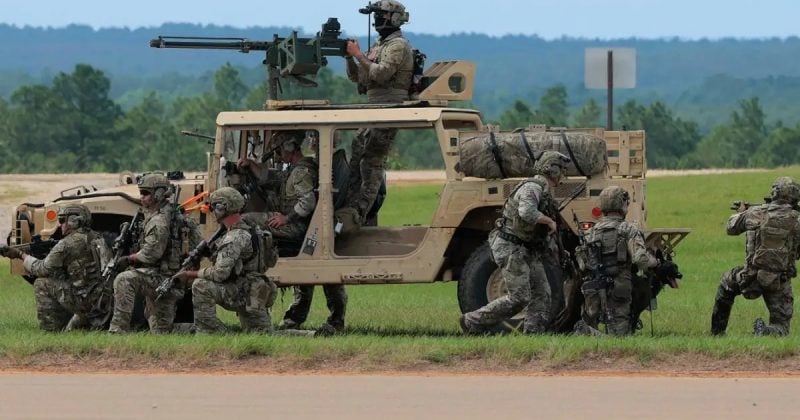
US military prepares plans for ground operation in Iran to seize uranium
Trump paused the operation over fears of casualties and retaliation, drawing parallels to the failed 1980 hostage rescue mission
The Pentagon drafted plans to send US ground forces into Iran to physically seize the country’s stockpile of highly enriched uranium. President Trump ultimately hit the brakes, citing concerns about American casualties and the risk of violent Iranian retaliation.
The stockpile in question: roughly 970 pounds of highly enriched uranium, stored in hardened underground facilities including Fordow and Natanz. Trump reportedly concluded the uranium was effectively “entombed” in those locations, making a ground seizure extraordinarily dangerous for US troops.
The shadow of Desert One
Trump’s hesitation reportedly carried echoes of Operation Eagle Claw, the disastrous 1980 attempt to rescue American hostages in Tehran. That mission ended with eight US servicemembers dead in the Iranian desert before rescuers ever reached the embassy. It remains one of the most painful military failures in modern American history, and apparently it weighed on the decision-making process here.
From bombs to diplomacy, and back again
US airstrikes on Iranian nuclear facilities began in 2025, marking a dramatic departure from decades of diplomatic-first approaches to Iran’s nuclear program. The situation intensified further on February 28, 2026, when strikes were notably escalated.
That escalation had immediate financial consequences far beyond the Middle East. Crypto markets saw over $595 million in bullish positions liquidated during the US bombing campaign.
The trajectory shifted on June 11, 2026, when Trump canceled planned airstrikes. The reason: diplomatic negotiations had progressed far enough toward a deal involving the removal or destruction of Iran’s nuclear material that continued bombing became counterproductive. Regional mediators helped broker discussions that focused on dismantling critical elements of Iran’s nuclear program and ensuring safe passage through the Strait of Hormuz.
What this means for crypto investors
The $595 million liquidation event during the 2025 airstrikes was a case study in why leverage in crypto during periods of elevated geopolitical risk is dangerous. When the US started bombing Iranian nuclear sites, traders who were positioned for continuation of a bull trend found themselves on the wrong side of a geopolitical event they couldn’t have timed.
The Strait of Hormuz carries roughly a fifth of the world’s oil supply. Any disruption there doesn’t just move energy prices, it moves everything. The ground operation plans may be paused, but the fact that they exist at all means the tail risk of a major US-Iran military confrontation hasn’t disappeared.