
US military boards Iran-flagged oil tanker Wen Yao as naval blockade tightens pressure on Tehran

US military boards Iran-flagged oil tanker Wen Yao as naval blockade tightens pressure on Tehran

The boarding of a sanctioned supertanker in the Gulf of Oman marks an escalation that could ripple through energy prices, and by extension, crypto markets correlated with macro volatility.

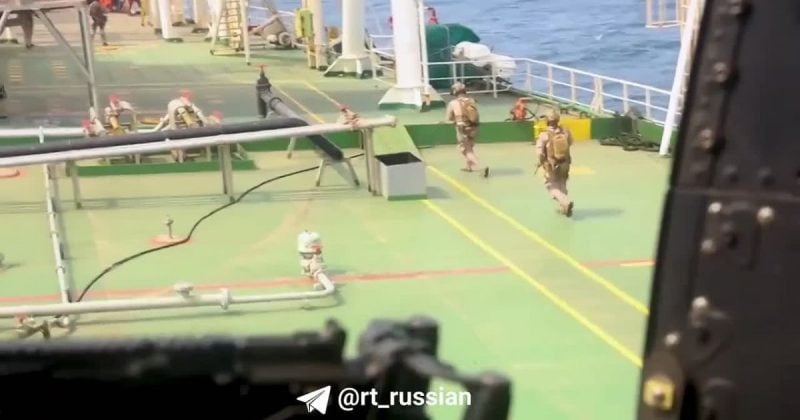
US Marines boarded and inspected a massive Iranian oil tanker in the Gulf of Oman on July 16, making one of the most visible shows of force yet in the ongoing naval blockade of Iran’s ports. The vessel, the M/T Wen Yao, is a Very Large Crude Carrier with roughly 299,000 deadweight tonnage, enough capacity to haul over two million barrels of crude oil. It has been on the US Treasury Department’s sanctions list since October 2024.

The boarding was carried out by Marines from the 11th Marine Expeditionary Unit, according to US Central Command. CENTCOM also reported that US forces had redirected three commercial vessels attempting to breach the blockade and disabled one ship for non-compliance.

Advertisement

What the blockade actually looks like

The Wen Yao isn’t some obscure fishing trawler. It’s a supertanker flagged to Iran and linked to the National Iranian Oil Company, which is why the Office of Foreign Assets Control sanctioned it in the first place. The verification boarding was designed to assess whether the vessel was complying with international sanctions targeting Iranian crude shipments.

The Gulf of Oman sits at the mouth of the Strait of Hormuz, the narrow waterway through which roughly a fifth of the world’s oil supply passes on any given day.

The sanctions enforcement pipeline

The Wen Yao’s OFAC designation dates back to October 2024, meaning this vessel has been on the US government’s radar for well over a year before Marines physically stepped aboard. That timeline illustrates how sanctions enforcement works in practice: financial designations come first, kinetic enforcement follows when the financial measures alone don’t achieve compliance.

CENTCOM’s operational reporting focused entirely on traditional maritime enforcement, with no cryptocurrency or digital asset activity associated with this incident.

Disclosure: This article was edited by Editorial Team. For more information on how we create and review content, see our Editorial Policy.

US military boards Iran-flagged oil tanker Wen Yao as naval blockade tightens pressure on Tehran

US military boards Iran-flagged oil tanker Wen Yao as naval blockade tightens pressure on Tehran

The boarding of a sanctioned supertanker in the Gulf of Oman marks an escalation that could ripple through energy prices, and by extension, crypto markets correlated with macro volatility.

US Marines boarded and inspected a massive Iranian oil tanker in the Gulf of Oman on July 16, making one of the most visible shows of force yet in the ongoing naval blockade of Iran’s ports. The vessel, the M/T Wen Yao, is a Very Large Crude Carrier with roughly 299,000 deadweight tonnage, enough capacity to haul over two million barrels of crude oil. It has been on the US Treasury Department’s sanctions list since October 2024.

The boarding was carried out by Marines from the 11th Marine Expeditionary Unit, according to US Central Command. CENTCOM also reported that US forces had redirected three commercial vessels attempting to breach the blockade and disabled one ship for non-compliance.

Advertisement

What the blockade actually looks like

The Wen Yao isn’t some obscure fishing trawler. It’s a supertanker flagged to Iran and linked to the National Iranian Oil Company, which is why the Office of Foreign Assets Control sanctioned it in the first place. The verification boarding was designed to assess whether the vessel was complying with international sanctions targeting Iranian crude shipments.

The Gulf of Oman sits at the mouth of the Strait of Hormuz, the narrow waterway through which roughly a fifth of the world’s oil supply passes on any given day.

The sanctions enforcement pipeline

The Wen Yao’s OFAC designation dates back to October 2024, meaning this vessel has been on the US government’s radar for well over a year before Marines physically stepped aboard. That timeline illustrates how sanctions enforcement works in practice: financial designations come first, kinetic enforcement follows when the financial measures alone don’t achieve compliance.

CENTCOM’s operational reporting focused entirely on traditional maritime enforcement, with no cryptocurrency or digital asset activity associated with this incident.

Disclosure: This article was edited by Editorial Team. For more information on how we create and review content, see our Editorial Policy.