
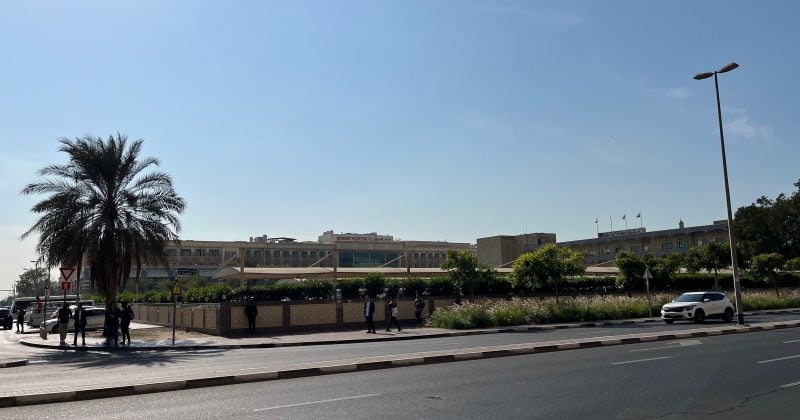
US missile fragments hit Iranian hospital amid rising tensions

https://en.wikipedia.org/wiki/Iranian_Hospital,_Dubai

US missile fragments hit Iranian hospital amid rising tensions

Iran full airspace closure

Islamic Republic of Iran Broadcasting (IRIB) reported that fragments from a U.S. missile strike have struck the Imam Ali Hospital in Chabahar, Iran. This incident follows the recent collapse of a ceasefire between the United States, Israel, and Iran, marking a significant escalation in the ongoing conflict. The attack came shortly after President Trump announced a resumption of military action against Iran, targeting facilities near the strategic Chabahar Free Trade Zone. This development has heightened tensions, with Iran already targeting U.S. military sites in the region, adding further complexity to the geopolitical situation.

Advertisement

Key Takeaways

  • The latest reports of U.S. missile fragments hitting an Iranian hospital appear to be consistent with increased military tensions in the region.
  • Market activity suggests increased likelihood of Iran considering a full airspace closure, with the July 31 market reflecting a rise to 30.5% YES.
  • The July 15 market also saw a significant increase to 21.4% YES, suggesting participants are bracing for further immediate escalations.

What to Watch

Observers should monitor statements from the Civil Aviation Organization of Iran (CAOI) for any announcements regarding airspace closures, which could indicate a response to perceived military threats. Additionally, any official confirmation of the U.S. strike from major news agencies could further influence market perceptions. Developments from President Trump’s administration regarding military actions will also be crucial in shaping the trajectory of the conflict and related market expectations.

Get prediction market intelligence as a structured API feed. Early access waitlist.

Disclosure: This article was edited by Estefano Gomez. For more information on how we create and review content, see our Editorial Policy.

US missile fragments hit Iranian hospital amid rising tensions

US missile fragments hit Iranian hospital amid rising tensions

Iran full airspace closure

https://en.wikipedia.org/wiki/Iranian_Hospital,_Dubai

Islamic Republic of Iran Broadcasting (IRIB) reported that fragments from a U.S. missile strike have struck the Imam Ali Hospital in Chabahar, Iran. This incident follows the recent collapse of a ceasefire between the United States, Israel, and Iran, marking a significant escalation in the ongoing conflict. The attack came shortly after President Trump announced a resumption of military action against Iran, targeting facilities near the strategic Chabahar Free Trade Zone. This development has heightened tensions, with Iran already targeting U.S. military sites in the region, adding further complexity to the geopolitical situation.

Advertisement

Key Takeaways

  • The latest reports of U.S. missile fragments hitting an Iranian hospital appear to be consistent with increased military tensions in the region.
  • Market activity suggests increased likelihood of Iran considering a full airspace closure, with the July 31 market reflecting a rise to 30.5% YES.
  • The July 15 market also saw a significant increase to 21.4% YES, suggesting participants are bracing for further immediate escalations.

What to Watch

Observers should monitor statements from the Civil Aviation Organization of Iran (CAOI) for any announcements regarding airspace closures, which could indicate a response to perceived military threats. Additionally, any official confirmation of the U.S. strike from major news agencies could further influence market perceptions. Developments from President Trump’s administration regarding military actions will also be crucial in shaping the trajectory of the conflict and related market expectations.

Get prediction market intelligence as a structured API feed. Early access waitlist.

Disclosure: This article was edited by Estefano Gomez. For more information on how we create and review content, see our Editorial Policy.