
US missile strike on Iranian oil tanker near Kharg Island rattles energy markets, ripples into crypto

US missile strike on Iranian oil tanker near Kharg Island rattles energy markets, ripples into crypto

The military escalation in the Persian Gulf threatens to squeeze Bitcoin miners and boost stablecoin demand across the region

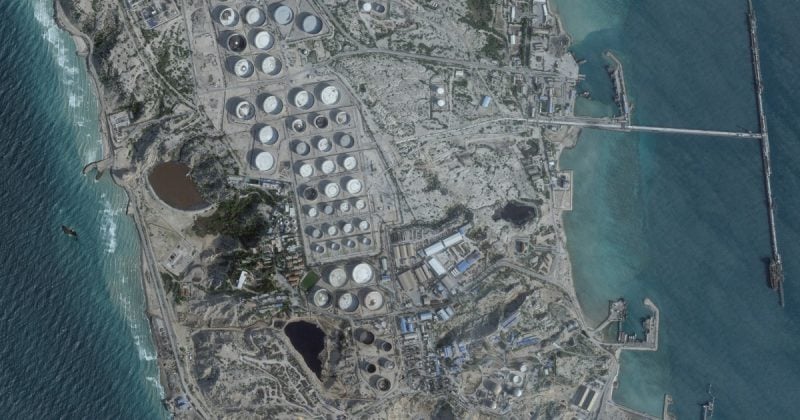
US forces fired Hellfire missiles at a supertanker approaching Iran’s most critical oil export terminal, marking a sharp escalation in the naval blockade of Iranian ports. Bushehr Deputy Governor Ehsan Jahanian confirmed the strike near Kharg Island, the chokepoint responsible for roughly 90% of Iran’s crude exports.

The targeted vessel, the Curacao-flagged M/T Belma, was unladen at the time. No oil spill occurred.

What happened in the Persian Gulf

The strike took place near Kharg Island after the M/T Belma reportedly ignored multiple warnings from US Central Command. CENTCOM has been enforcing a re-imposed naval blockade on Iranian ports since mid-April, following airstrikes on over 90 military sites inside Iran back in March.

Advertisement

The US deliberately avoided hitting oil infrastructure in those March strikes. This latest action stays consistent with that pattern. An empty tanker got the message, not a loaded one.

The Strait of Hormuz, which sits nearby, handles approximately 20% of the world’s oil supply.

The crypto connection: mining margins and stablecoin surges

Iran has been a notable player in Bitcoin mining for years, largely because of its subsidized energy costs. When oil prices rise due to supply disruptions, domestic energy costs in Iran tend to follow, which could push some operations offline entirely.

Geopolitical instability in the Middle East historically drives demand for dollar-denominated assets in the region. With traditional banking channels under pressure from sanctions and conflict, stablecoins like USDT and USDC become the path of least resistance for people looking to park value in something pegged to the dollar.

Earlier in 2026, Iran had even floated the idea of using Bitcoin for payments related to shipping fees through the Strait of Hormuz.

Broader market implications for crypto investors

Stablecoin volumes in Middle Eastern and Central Asian markets are worth watching closely in the coming weeks. A sustained uptick would signal that the conflict is already reshaping capital flows on the ground. For investors positioned in mining-related equities or tokens, energy cost assumptions built into Q3 models may need revisiting sooner than expected.

Disclosure: This article was edited by Editorial Team. For more information on how we create and review content, see our Editorial Policy.

US missile strike on Iranian oil tanker near Kharg Island rattles energy markets, ripples into crypto

US missile strike on Iranian oil tanker near Kharg Island rattles energy markets, ripples into crypto

The military escalation in the Persian Gulf threatens to squeeze Bitcoin miners and boost stablecoin demand across the region

US forces fired Hellfire missiles at a supertanker approaching Iran’s most critical oil export terminal, marking a sharp escalation in the naval blockade of Iranian ports. Bushehr Deputy Governor Ehsan Jahanian confirmed the strike near Kharg Island, the chokepoint responsible for roughly 90% of Iran’s crude exports.

The targeted vessel, the Curacao-flagged M/T Belma, was unladen at the time. No oil spill occurred.

What happened in the Persian Gulf

The strike took place near Kharg Island after the M/T Belma reportedly ignored multiple warnings from US Central Command. CENTCOM has been enforcing a re-imposed naval blockade on Iranian ports since mid-April, following airstrikes on over 90 military sites inside Iran back in March.

Advertisement

The US deliberately avoided hitting oil infrastructure in those March strikes. This latest action stays consistent with that pattern. An empty tanker got the message, not a loaded one.

The Strait of Hormuz, which sits nearby, handles approximately 20% of the world’s oil supply.

The crypto connection: mining margins and stablecoin surges

Iran has been a notable player in Bitcoin mining for years, largely because of its subsidized energy costs. When oil prices rise due to supply disruptions, domestic energy costs in Iran tend to follow, which could push some operations offline entirely.

Geopolitical instability in the Middle East historically drives demand for dollar-denominated assets in the region. With traditional banking channels under pressure from sanctions and conflict, stablecoins like USDT and USDC become the path of least resistance for people looking to park value in something pegged to the dollar.

Earlier in 2026, Iran had even floated the idea of using Bitcoin for payments related to shipping fees through the Strait of Hormuz.

Broader market implications for crypto investors

Stablecoin volumes in Middle Eastern and Central Asian markets are worth watching closely in the coming weeks. A sustained uptick would signal that the conflict is already reshaping capital flows on the ground. For investors positioned in mining-related equities or tokens, energy cost assumptions built into Q3 models may need revisiting sooner than expected.

Disclosure: This article was edited by Editorial Team. For more information on how we create and review content, see our Editorial Policy.