
US Navy reassesses Gulf bases after Iranian strikes damage Bahrain hub

US Navy reassesses Gulf bases after Iranian strikes damage Bahrain hub

The February 28 attacks on Fifth Fleet headquarters mark an unprecedented escalation, forcing Washington to rethink decades of forward-deployed military posture in the Persian Gulf

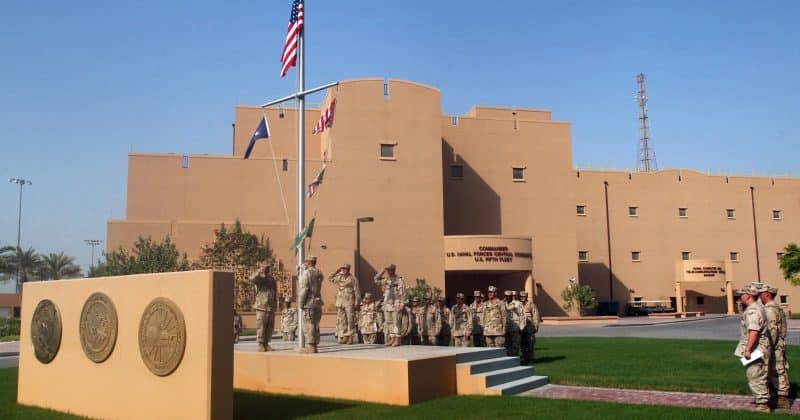
The US Navy’s crown jewel in the Persian Gulf, Naval Support Activity Bahrain, home to the Fifth Fleet since 1995, took direct hits from Iranian missiles and drones on February 28. Now Washington is doing something it hasn’t seriously considered in decades: questioning whether keeping major military assets within striking distance of Iran still makes strategic sense.

Multiple structures at the base in Bahrain’s Juffair district were damaged in the attack, with satellite imagery revealing extensive destruction that extended beyond the military perimeter, sending debris into civilian areas. The Iranian Islamic Revolutionary Guard Corps claimed responsibility, framing the strikes as retaliation for prior actions by the US and Israel.

Advertisement

The scope of the damage

The Wall Street Journal and corroborating satellite analysis have painted a picture of significant destruction at the Bahrain facility. Multiple structures within the naval support activity were hit, and the repair bill for US facilities affected across the broader conflict is estimated in the billions of dollars.

The 2026 Iran conflict has seen over 200 targets struck across Gulf states, turning what was once considered a stable rear-area for US military operations into something closer to a contested battleground.

US Central Command has reported successful interceptions of follow-on Iranian missile threats targeting the Gulf region.

A strategic rethink decades in the making

The US is now reportedly contemplating a multi-pronged response. First, repairing the damaged Bahrain facility. Second, considering potential reductions in military presence in other Gulf states like Kuwait and Saudi Arabia. Third, exploring the possibility of relocating assets further west, beyond the effective range of Iranian strike capabilities.

What this means for markets and geopolitical stability

Any drawdown of US military presence in the Gulf reshapes the security guarantee that has underpinned oil shipments through the Strait of Hormuz for decades. Roughly 20% of the world’s petroleum passes through that chokepoint. The billions in estimated repair costs represent just the direct financial impact, with indirect costs measured in insurance premiums for Gulf shipping, energy price volatility, and the expense of potentially establishing new basing arrangements further west.

Disclosure: This article was edited by Editorial Team. For more information on how we create and review content, see our Editorial Policy.

US Navy reassesses Gulf bases after Iranian strikes damage Bahrain hub

US Navy reassesses Gulf bases after Iranian strikes damage Bahrain hub

The February 28 attacks on Fifth Fleet headquarters mark an unprecedented escalation, forcing Washington to rethink decades of forward-deployed military posture in the Persian Gulf

The US Navy’s crown jewel in the Persian Gulf, Naval Support Activity Bahrain, home to the Fifth Fleet since 1995, took direct hits from Iranian missiles and drones on February 28. Now Washington is doing something it hasn’t seriously considered in decades: questioning whether keeping major military assets within striking distance of Iran still makes strategic sense.

Multiple structures at the base in Bahrain’s Juffair district were damaged in the attack, with satellite imagery revealing extensive destruction that extended beyond the military perimeter, sending debris into civilian areas. The Iranian Islamic Revolutionary Guard Corps claimed responsibility, framing the strikes as retaliation for prior actions by the US and Israel.

Advertisement

The scope of the damage

The Wall Street Journal and corroborating satellite analysis have painted a picture of significant destruction at the Bahrain facility. Multiple structures within the naval support activity were hit, and the repair bill for US facilities affected across the broader conflict is estimated in the billions of dollars.

The 2026 Iran conflict has seen over 200 targets struck across Gulf states, turning what was once considered a stable rear-area for US military operations into something closer to a contested battleground.

US Central Command has reported successful interceptions of follow-on Iranian missile threats targeting the Gulf region.

A strategic rethink decades in the making

The US is now reportedly contemplating a multi-pronged response. First, repairing the damaged Bahrain facility. Second, considering potential reductions in military presence in other Gulf states like Kuwait and Saudi Arabia. Third, exploring the possibility of relocating assets further west, beyond the effective range of Iranian strike capabilities.

What this means for markets and geopolitical stability

Any drawdown of US military presence in the Gulf reshapes the security guarantee that has underpinned oil shipments through the Strait of Hormuz for decades. Roughly 20% of the world’s petroleum passes through that chokepoint. The billions in estimated repair costs represent just the direct financial impact, with indirect costs measured in insurance premiums for Gulf shipping, energy price volatility, and the expense of potentially establishing new basing arrangements further west.

Disclosure: This article was edited by Editorial Team. For more information on how we create and review content, see our Editorial Policy.