
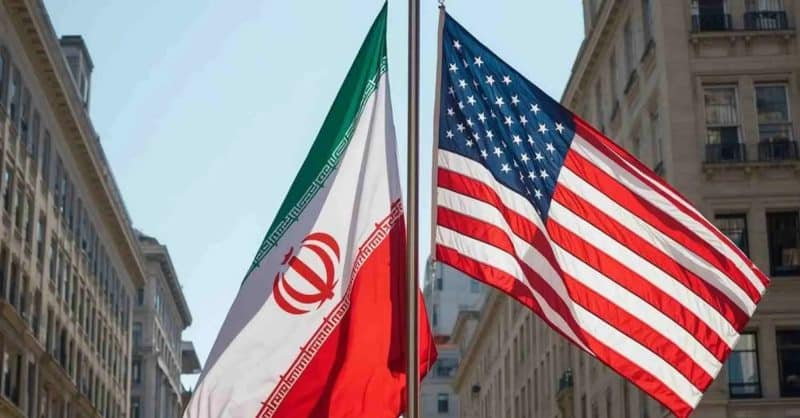
US official views Iran’s hardline stance as negotiating tactic amid ceasefire doubts: FT
US-Iran Ceasefire
A US official labeled Iran’s hardline response as a negotiating tactic, hinting that Trump might delay actions if a deal seems possible. The odds of a US-Iran ceasefire by April 7 have plummeted to 1% YES, down from 12% last week.
The markets show little optimism, with the April 7 market stuck at 1% YES, indicating traders doubt a deal will be reached in the next four days. Longer-term markets like April 15 and April 30 are more active, with 6% and 18% YES, respectively, suggesting cautious optimism for a mid-April resolution.
The broader term structure shows increasing probabilities over time. The April 30 to May 31 spread rises 19 points, indicating traders expect a catalyst in late April or early May. The largest price move in the last 24 hours was a 2-point increase for the April 30 market, showing some traders are cautiously betting on a shift.
Daily trading volume is $430,773 in USDC across these markets, with $22,948 for April 7. It takes $12,367 to move the April 7 market 5 points, indicating it’s thin and vulnerable to large trades. In contrast, moving the April 15 market requires $40,022, reflecting more interest and liquidity.
The official’s comments suggest a possible pause in hostilities, but traders remain skeptical. At 1¢, a YES share on April 7 pays $1 if a ceasefire occurs — a 100x return. For this bet to be viable, a rapid de-escalation within four days is necessary. Without a clear shift from either side, these odds are likely to stay low.
Watch for statements from Trump or Secretary of State Rubio, intermediary activity involving Oman or Qatar, or a change in Iran’s public stance. These could significantly impact the markets.
Markets Impacted
- US x Iran ceasefire by April 7? — currently 1.1% YES
- US x Iran ceasefire by April 15? — currently 6.5% YES
- US x Iran ceasefire by April 30? — currently 17.5% YES
- US x Iran ceasefire by May 31? — currently 36.5% YES
- US x Iran ceasefire by June 30? — currently 51.5% YES
- US x Iran ceasefire by December 31? — currently 68.5% YES
Get live prediction-market analysis, powered by Vera. Sign up for Vera.