
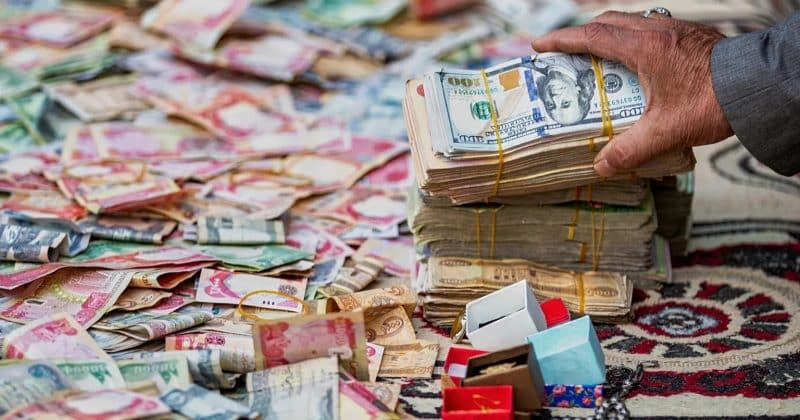
US government to release frozen Iranian assets for agricultural aid to Iran

US government to release frozen Iranian assets for agricultural aid to Iran

Approximately $6 billion in Iranian oil revenues will be unlocked for humanitarian purchases, with every dollar earmarked for US-grown corn, soybeans, and wheat.

The US is preparing to release billions in frozen Iranian assets, but with a catch that would make any trade negotiator smile: Iran can only spend the money on American farm products.

Approximately $6 billion in Iranian oil revenues, currently held in Qatari banks, will be made accessible for humanitarian purchases of food and medicine. The funds must be sourced exclusively from US agricultural producers, covering commodities like corn, soybeans, and wheat.

How we got here

These assets have a winding history. The money originated from Iranian oil sales to South Korea and was transferred to Qatar in September 2023 as part of a prisoner exchange deal. That earlier arrangement established a financial channel that both sides are now building upon.

Advertisement

The current agreement was finalized around June 17-20, 2026, as part of a broader diplomatic push to reduce hostilities and advance nuclear talks between Washington and Tehran. President Trump and Vice President JD Vance have both confirmed that the released funds will finance purchases of US agricultural products.

A dual oversight mechanism has been established by the US Treasury and Qatari authorities to ensure that every dollar flows strictly toward humanitarian purposes. No unrestricted cash transfers.

The arrangement operates under longstanding exemptions from the Office of Foreign Assets Control (OFAC), which has long permitted limited humanitarian trade with Iran under specific conditions. The key restriction is that no designated entities, including the Islamic Revolutionary Guard Corps (IRGC), can be involved in any transactions.

The agricultural angle

And the numbers could grow substantially. Depending on how nuclear negotiations and broader diplomatic efforts progress, future fund releases could escalate to between $12 billion and $24 billion.

What this means for investors

For crypto markets, the relevance is more about what’s absent than what’s present. This asset release mechanism involves zero cryptocurrency. The US has maintained a clear preference for traditional financial channels when navigating sanctions-related transfers. That’s notable because parallel US sanctions have specifically targeted Iranian crypto wallets, suggesting regulators view digital currencies as a compliance risk in sanctioned scenarios rather than a viable tool.

The choice to route everything through conventional banking, with Treasury and Qatari oversight, reinforces a pattern that crypto investors should recognize. When it comes to high-stakes geopolitical finance, governments still default to traditional rails.

Investors watching this space should track two variables closely: the speed at which initial purchases are executed through the Qatari channel, and whether the nuclear talks yield enough progress to trigger the larger $12-24 billion tranche.

Disclosure: This article was edited by Editorial Team. For more information on how we create and review content, see our Editorial Policy.

US government to release frozen Iranian assets for agricultural aid to Iran

US government to release frozen Iranian assets for agricultural aid to Iran

Approximately $6 billion in Iranian oil revenues will be unlocked for humanitarian purchases, with every dollar earmarked for US-grown corn, soybeans, and wheat.

The US is preparing to release billions in frozen Iranian assets, but with a catch that would make any trade negotiator smile: Iran can only spend the money on American farm products.

Approximately $6 billion in Iranian oil revenues, currently held in Qatari banks, will be made accessible for humanitarian purchases of food and medicine. The funds must be sourced exclusively from US agricultural producers, covering commodities like corn, soybeans, and wheat.

How we got here

These assets have a winding history. The money originated from Iranian oil sales to South Korea and was transferred to Qatar in September 2023 as part of a prisoner exchange deal. That earlier arrangement established a financial channel that both sides are now building upon.

Advertisement

The current agreement was finalized around June 17-20, 2026, as part of a broader diplomatic push to reduce hostilities and advance nuclear talks between Washington and Tehran. President Trump and Vice President JD Vance have both confirmed that the released funds will finance purchases of US agricultural products.

A dual oversight mechanism has been established by the US Treasury and Qatari authorities to ensure that every dollar flows strictly toward humanitarian purposes. No unrestricted cash transfers.

The arrangement operates under longstanding exemptions from the Office of Foreign Assets Control (OFAC), which has long permitted limited humanitarian trade with Iran under specific conditions. The key restriction is that no designated entities, including the Islamic Revolutionary Guard Corps (IRGC), can be involved in any transactions.

The agricultural angle

And the numbers could grow substantially. Depending on how nuclear negotiations and broader diplomatic efforts progress, future fund releases could escalate to between $12 billion and $24 billion.

What this means for investors

For crypto markets, the relevance is more about what’s absent than what’s present. This asset release mechanism involves zero cryptocurrency. The US has maintained a clear preference for traditional financial channels when navigating sanctions-related transfers. That’s notable because parallel US sanctions have specifically targeted Iranian crypto wallets, suggesting regulators view digital currencies as a compliance risk in sanctioned scenarios rather than a viable tool.

The choice to route everything through conventional banking, with Treasury and Qatari oversight, reinforces a pattern that crypto investors should recognize. When it comes to high-stakes geopolitical finance, governments still default to traditional rails.

Investors watching this space should track two variables closely: the speed at which initial purchases are executed through the Qatari channel, and whether the nuclear talks yield enough progress to trigger the larger $12-24 billion tranche.

Disclosure: This article was edited by Editorial Team. For more information on how we create and review content, see our Editorial Policy.