
US government bets on stablecoins to enhance dollar dominance
The GENIUS Act creates America's first federal stablecoin framework, but structural threats to dollar hegemony remain firmly in play.
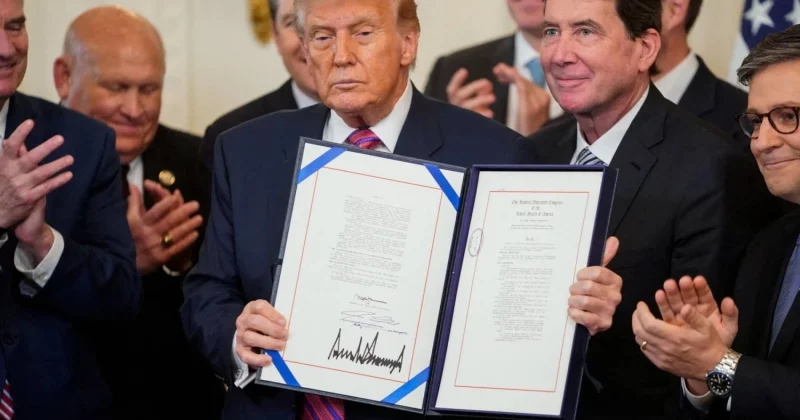
The United States just passed its first comprehensive federal law governing stablecoins, a move designed to turn a corner of the crypto market into a weapon for dollar supremacy. The GENIUS Act, signed into law on July 18, 2025, essentially says: if you’re going to issue digital dollars, you’re going to do it on America’s terms.
What the GENIUS Act actually does
The full name is the Guiding and Establishing National Innovation for U.S. Stablecoins Act. It’s a rulebook for companies that want to issue tokens pegged to the dollar.
Every stablecoin must be backed 1:1 by high-quality US dollar assets. That means cash, bank deposits, and short-term Treasuries. No fractional reserve games, no exotic collateral.
Issuers are required to submit monthly disclosures and undergo regular audits of their reserves.
One notable provision: the law prohibits stablecoin issuers from paying interest or yields to holders. This isn’t a savings account. It’s a payment instrument. The distinction matters because it keeps stablecoins from competing directly with bank deposits.
The bill cleared the Senate on June 17, 2025, with a 68-30 vote. The House followed on July 17 with a 308-122 vote, and President Donald Trump signed it the next day.
Treasury Secretary Scott Bessent framed the legislation as a once-in-a-generation opportunity to bolster America’s financial power and innovation capacity.
The news moving money, markets, and the world—before your day starts.
Daily. Free. Join 34,000+ readers across crypto, finance, and policy.
The dollar dominance play
USD-pegged tokens account for roughly 98-99% of the entire stablecoin market, which carries a total market cap exceeding $200B.
By mandating that stablecoin reserves consist primarily of short-term Treasuries, the law effectively manufactures new demand for US government debt. Every dollar locked in a regulated stablecoin is a dollar that needs a home in Treasury bills.
Visa unveiled a pilot program for USDC in December 2025 to facilitate specific transaction types, a signal that traditional financial infrastructure is preparing to integrate stablecoin rails into everyday commerce.
Why this might not be enough
Bloomberg’s analysis notes that while stablecoins can increase demand for the dollar, they cannot prevent future threats to its dominance. Stablecoins are a distribution mechanism, not a substitute for sound fiscal policy or stable geopolitical relationships.
There’s also the question of whether heavy regulation will push innovation offshore. The prohibition on yield payments makes US-regulated stablecoins less attractive than offshore alternatives that might offer returns.
What this means for investors
The 1:1 backing requirement should reduce the existential risk that has historically haunted stablecoin holders. When every token is matched by cash or short-term Treasuries, the de-peg scenarios that kept risk managers up at night become less likely.
The no-yield rule creates a clear line between stablecoins and interest-bearing products, which means the DeFi protocols that generate returns on stablecoin deposits might face increased scrutiny. If regulators decide those yields constitute securities offerings, the downstream effects on decentralized finance could be significant.
Visa’s USDC pilot is the kind of integration that signals where the market is heading. The real winners may not be the stablecoin issuers themselves, operating under tight regulatory margins, but the picks-and-shovels providers enabling the broader ecosystem.